The Top 75 Conductors #35: Herbert von Karajan
With recommended recordings

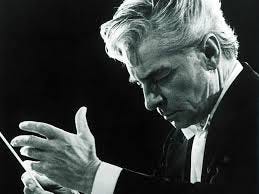
The Top 75 Conductors Series
#35: Herbert von Karajan (1908 - 1989)
________________
At #35 in the Top 75 conductors is the legendary Austrian conductor, Herbert von Karajan. Karajan is undoubtedly among the most famous conductors of all-time, and it is believed he has sold more classical albums than any other artist in history, with some estimates being put at over 300 million records sold. Karajan’s impact and influence on classical music in the twentieth century, and even now, is immeasurable. While Karajan is a sometimes controversial and divisive figure, he is arguably more responsible for our modern-day image of the “conductor” than anyone else.
Herbert von Karajan
The Karajan family were of Greek heritage, but by the time of Herbert’s birth in 1908, they had been in Austria since 1767 when his great-great grandfather Georg moved to Vienna from Greece. The original family surname was Karajánnis, but when Georg and his brother became well known in Saxony for their cloth manufacturing, they were made nobles and hence the “von” was added. Karajánnis was thus also shortened to Karajan. Herbert’s mother also had some Slovenian heritage.
Herbert was born in Salzburg, Austria in 1908 to surgeon Ernst von Karajan and mother Marta (Martha Kosmač). Karajan studied piano as a young boy, and then studied piano, harmony, and composition at the famous Mozarteum in Salzburg from 1916 to 1926. His potential as a conductor was recognized, and he was encouraged to pursue that as a possible career. After graduating from the Mozarteum, he continued his studies in piano and also conducting at the Vienna Academy.
Karajan made his conducting debut in Salzburg in January 1929, and the performance caught the eye of the manager of the Stadttheater in Ulm, and Karajan was hired for his first job as the Assistant Kapellmeister of the theater. The Kapellmeister at the time was Jewish conductor Otto Schulmann. After the rise of the Nazis in 1933, Schulmann was forced to leave Germany, and Karajan was elevated to Kapellmeister.
In 1933, Karajan made his debut conducting at the Salzburg Festival, leading Gounod’s Faust. In 1934 in Salzburg he first conducted the Vienna Philharmonic and then from 1934 to 1941 he was employed conducting both opera and orchestral concerts in Aachen. A big career jump happened for Karajan in 1935 when was named General Music Director of the Theater Aachen and he traveled to guest conduct in Brussels, Paris, Stockholm, Bucharest, and Amsterdam. Meanwhile, in 1938 Karajan made his conducting debut with the Berlin Philharmonic, and that same year he also conducted Beethoven’s Fidelio and Wagner’s Tristan und Isolde at the Berlin State Opera. One critic dubbed him “Wunder Karajan” (or Karajan the miracle), and he was already being compared to Furtwängler. That same year, at the age of 30, he scored a recording contract with Deutsche Grammophon and first embarked on what would be an historic recording career.
During the war, Karajan’s career continued to advance. In 1939 he was named State Kapellmeister at the Berlin State Opera and director of concerts with the Prussian State Orchestra. After becoming Music Director of the Staatskapelle Berlin, he conducted a series of acclaimed concerts in Rome. But then the next year, his contract in Aachen was nullified. He had married Anita Gütermann, who had one Jewish grandparent, and his agent Rudolf Vedder was prosecuted. Karajan was reduced to only conducting occasional concerts with the Staatskapelle Berlin. Even so, the concerts he conducted with the Staatskapelle during the war were widely acclaimed and generated a lot of interest.
In the waning days of the war, even as Karajan knew his stock was falling among the Nazis, he continued conducting concerts in Berlin. But soon Victor de Sabata offered Karajan and his wife the opportunity to relocate to Milan, which Karajan gratefully accepted.
Karajan’s first conducting engagement after the war, after his denazification process, was in Vienna with the Vienna Philharmonic. However, the Soviet authorities occupying Vienna at the time banned him from conducting any further due to his Nazi party membership. After the ban was lifted, Karajan gave his first concert in October 1947 with the Vienna Philharmonic, leading a performance of Brahms’ A German Requiem. It was recorded and later released by EMI.
In 1949, things really began taking shape for Karajan. In addition to being named the Artistic Director of the Gesellschaft der Musikfreunde in Vienna (Society of Friends of Music in Vienna or also known as the Viennese Music Association), he also began conducting at La Scala in Milan. But most importantly, he began recording with a new orchestra in London named the Philharmonia Orchestra and he was also deeply involved in building the orchestra into one of the finest orchestras in the world. In 1949 he also began his lifelong association with the Lucerne Festival. Then in 1951 and 1952 Karajan was invited to conduct at Bayreuth.
In 1955, Karajan took the Berlin Philharmonic on tour to the United States. Due to Karajan’s past association with the Nazis, he was banned from conducting in Detroit, and in Philadelphia their conductor Eugene Ormandy refused to shake Karajan’s hand. When they arrived in New York City for a concert at Carnegie Hall, they were met by protesters and picket signs.
In 1956, Karajan was named Principal Conductor for Life of the Berlin Philharmonic, being named Wilhelm Furtwängler’s successor. From 1957 to 1964, Karajan was the Artistic Director of the Vienna State Opera, which put him in close association with the Vienna Philharmonic as well as the Salzburg Festival. For the rest of his career, he primarily conducted the Berlin Philharmonic along with very occasional appearances with the Vienna Philharmonic.
As Karajan aged, he began to suffer from heart and back problems. His health forced him to step down from his Berlin Philharmonic post in 1989. His last concert, and final recording, was a live performance of Bruckner’s Symphony no. 7 with the Vienna Philharmonic. He died from a heart attack at his home in Anif, Austria on July 16,1989 at the age of 81. The following day, in accordance with his wishes, he was buried without a funeral ceremony in the local cemetery in Anif. Although Karajan was said to believe in reincarnation, by the end of his life he had reportedly reconciled with the Catholic Church and requested a Catholic burial. He is survived by his wife Eliette and two daughters. His estate was estimated to be worth the equivalent of almost $300 million.
In his personal life, Karajan was known to be an avid sportsman and a pilot. He was a skier and swimmer, and practiced yoga daily. He raced his yacht Helisara at several regattas and enjoyed flying his Learjet. Karajan also loved cars, especially Porsches.
Association with the Nazis
Karajan joined the Nazi party twice. Karsten Kammholz comments in Die Welt:
“...the truth is that Karajan actually joined the Nazi Party twice. The first time this happened was on 8 April 1933 in Salzburg. He paid the admission fee, received the membership number 1607525 and moved to Ulm. It is said that this accession was never formally carried out. It is also certain that Karajan rejoined the Nazi Party in Aachen in March 1935, this time receiving the membership number 3430914. After the annexation of Austria, the responsible Reich Treasurer of the Nazi Party discovered Karajan’s double membership in Munich and declared the first accession invalid. The second was made retroactive to 1 May 1933.”
Naturally after the war years Karajan was quiet about his membership in the Nazi Party. Stories vary, but it appears due to the political uncertainty in 1933, Karajan attempted to join the Nazi Party but never followed up on his application. But he did indeed join the Nazi Party in 1935 in Aachen, the delay implying that he was not eager to join. There is clear evidence that during the time the Nazis were in power, Karajan always opened the concerts with the Nazi endorsed Horst-Wessel-Lied. Nevertheless, Karajan always held that he joined the party purely for career reasons.
Because Karajan’s career was seemingly boosted significantly during the years of the Third Reich, the argument that he joined the party to help his career did not necessarily help his cause. After all, conductors such as Arturo Toscanini, Otto Klemperer, Erich Kleiber, and Fritz Busch all fled Germany or Italy at the time. However, many noteworthy conductors remained in Germany in those years including Wilhelm Furtwängler, Carl Schuricht, Karl Böhm, Hans Knappertsbusch, and Clemens Krauss. But among those names, Karajan was the youngest and the least advanced in terms of his career and so he certainly had something to gain by joining the Nazi Party and remaining in Germany. He was allowed to travel abroad, and even conducted a concert for the Nazis on at least one occasion. He was also listed on the Gottbegnadeten list of so-called “God-gifted artists” exempt from military mobilization. Karajan’s denazification hearing was held in Vienna in March of 1946, and he was cleared of any illegal activity and was free to conduct again.
In 2023 the Theater Aachen removed a bust of Karajan from the foyer of the house due to his significant involvement in the Nazi era, planning to replace it with a bust of Mozart.
Musical Legacy
Perhaps Karajan’s greatest legacy was the way he built the Berlin Philharmonic into the world’s best orchestra by refining their sound down to the smallest detail. At least on the surface, this resulted in a sound which was close to perfection in terms of precision, unity, and extreme dynamic sensitivity. Karajan was known to be an exacting perfectionist in terms of the sound he wanted, and he was rather obsessed with it. As time went on, he also took an oversized interest and role in sound engineering and reproduction.
It was notable that Karajan often conducted with eyes closed, an unusual trait for a conductor in that many conductors rely on eye contact to communicate with the orchestra. It may have been unusual, but it was certainly effective. Allegedly the reason for closing his eyes was because Karajan had memorized scores, and this was a way for him to keep his focus. Another unusual quality Karajan had was that he never made marks or his own indications on scores, preferring to commit his intentions to memory and it was rumored he could absorb scores quickly and efficiently.
Karajan also claimed to have a perfect sense of tempo which he had learned over the years, and he even tested himself against a computer to judge the accuracy. It also became known that inconsistencies in tempo performance from an orchestra could quickly raise his ire, even more so than wrong notes. He was eventually able to get the Berlin Philharmonic to follow his every mood, such was the symbiosis built between him and the orchestra.
While Karajan conducted and recorded an extremely wide range of repertoire, he certainly excelled in some composers more than others. The music of Bruckner and Sibelius held importance for him, where he seemed to feel a connection with how the music feels elemental and a reflection of nature. Karajan also cited similarities between Bruckner and Sibelius which drew him in consistently, and which reminded him of the mountains near his home. Sibelius himself noted “Karajan is the only conductor who plays what I meant.”
Karajan was a frequent opera conductor as well, in particular with the operas of Wagner, Verdi, Richard Strauss, and Puccini. Karajan especially enjoyed conducting Verdi’s Falstaff, and he was instrumental in bringing Italian opera to greater prominence in Germany and Austria. Part of the credit for this comes from Karajan’s observation of Toscanini’s rehearsals in Salzburg and Vienna, where Karajan became proficient at learning Italian and the kind of Italian phrasing common in Verdi and Puccini. Karajan was also steeped in the music of Richard Strauss, both his operas and his orchestral music. Strauss admired Karajan’s treatment of his music, but on the one occasion they met Strauss encouraged him to let the music flow more freely, no doubt noticing that Karajan was keen to emphasize details and dynamics, which Strauss downplayed. Of course Karajan also conducted and recorded a lot of Beethoven, Mozart, Brahms, as well as other 20th century composers such as Honegger, Debussy, Ravel, Prokofiev, Hindemith, Schoenberg, Shostakovich, Berg, Webern, and Bartók among others. He came late to Mahler, but eventually showed he was a very good Mahler interpreter, at least in the works he chose to conduct and record.
Although Karajan guest conducted other orchestras such as the New York Philharmonic, NHK Symphony Orchestra, Concertgebouw, Orchestre de Paris, La Scala, and the Staatskapelle Dresden, the vast majority of his recordings were made with the Berlin Philharmonic and the Vienna Philharmonic. He also made a considerable number of recordings with the Philarmonia Orchestra for EMI, at least up until 1960.
As we know, Karajan recorded prolifically, primarily for the EMI and Deutsche Grammophon labels. However, he made many more recordings (330 recordings to be exact) with Deutsche Grammophon. His 1981 DG recording of Strauss’ An Alpine Symphony was the first work to be pressed for the compact disc format. Once digital recordings took hold, Karajan became intent on recording many of the works he had already recorded, but now with the new digital technology. In some cases, this led to some truly revealing new recordings, but in many other cases the results did not eclipse his earlier recordings. Karajan also made a point of making video productions of many of his performances both on the Unitel label and on his own Telemondial label.
Karajan had his ardent supporters, but also had some harsh critics. Whether you warm to Karajan’s “big band” treatment of Bach, Mozart, and Haydn will depend on your tastes, but for me there could be some lack of charm and vibrancy with those composers. At times he could be utterly spellbinding in his conducting, and could really bring out the emotion and energy to elevate a performance above the everyday. At other times, it was all too smooth and homogenous, sometimes lacking distinction or personality, and I’m sure there were certain pieces he became bored conducting. But when Karajan was good, he was very, very good, and his concerts were special events and celebrities and dignitaries would often be present at his concerts.
Even though Karajan achieved a sort of “rock star” status in the classical music world, and even though he was given a lot of exposure internationally, he really did not seek the limelight except for the purpose of highlighting the music. He commented, “When I am on the podium, I forget all about the public…I am not interested in publicity. I can only hope there is an advantage to my being known in the world, that through the interest people take in me, they will then move on to an interest in music.”
Two of Karajan’s interpretations were popularized through their inclusion in the soundtrack of the film 2001: A Space Odyssey. The version of Johann Strauss’ The Blue Danube heard during the film’s early outer space scenes is that of Karajan with the Berlin Philharmonic. The version of Richard Strauss’s Also sprach Zarathustra used in the film is that of Karajan with the Vienna Philharmonic.
Recommended Karajan Recordings
Karajan made over 800 recordings, so it is an understatement to say that choosing the ones to recommend has been a challenge. I’m sure some people may find some of their favorite Karajan recordings missing, but what I’ve tried to do is make recommendations of my own personal favorites, while allowing that this is not meant to be an exhaustive list.
I have listed the recommended recordings below alphabetically by composer.
Adam
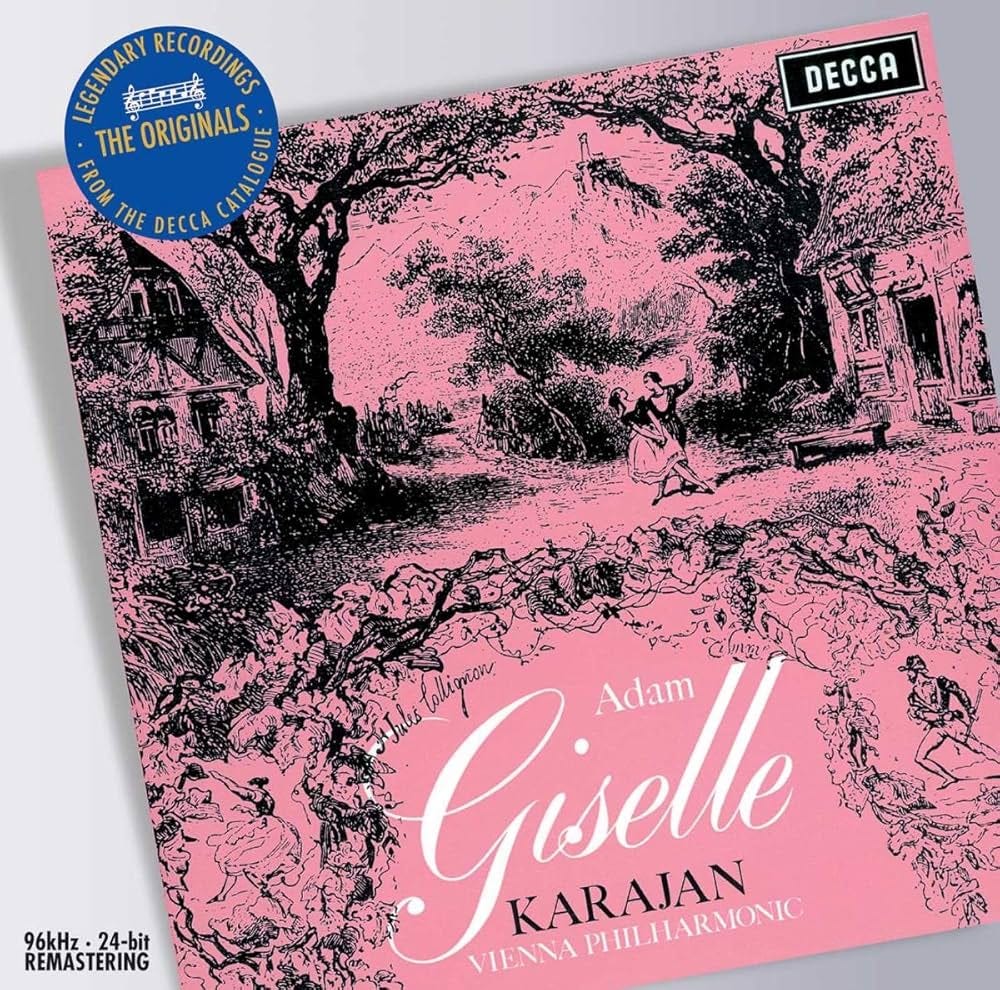
Karajan’s 1961 recording of Adolphe Adam’s ballet Giselle with the Vienna Philharmonic on Decca is the standard by which all other recordings of this work are judged. The music sparkles from first to last, and if you aren’t familiar with this delightful music, you really must have a listen.
Beethoven
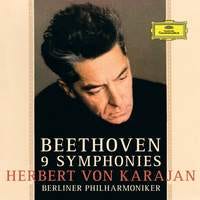
There is no perfect set of the complete Beethoven Symphonies 1-9, but one of the very finest is Karajan’s second commercial set made by Deutsche Grammophon with the Berlin Philharmonic, recorded in 1961-62. For me as a complete set it outshines his other sets. Why? The warm, atmospheric, and full stereo sound from the Jesus-Cristus-Kirche in Berlin helps, but there is a “rightness” about these performances that is inescapable. The consistency throughout is impressive, and the high level of playing by the BPO. I would include this among the best Beethoven symphony cycles ever recorded.
![Janowitz/Ludwig/Wunderlich/ Berliner Philharmoniker/von Karajan - Beethoven: Missa Solemnis, Op. 123[CD/Blu-ray] - Amazon.com Music](https://substackcdn.com/image/fetch/$s_!ZqGH!,f_auto,q_auto:good,fl_progressive:steep/https%3A%2F%2Fsubstack-post-media.s3.amazonaws.com%2Fpublic%2Fimages%2F8b89ba87-abd1-4be9-9939-14ba66b0c798_1000x1000.jpeg "Janowitz/Ludwig/Wunderlich/ Berliner Philharmoniker/von Karajan - Beethoven: Missa Solemnis, Op. 123[CD/Blu-ray] - Amazon.com Music")
The Missa Solemnis is among the most difficult pieces to pull off well, but Karajan’s 1966 recording on Deutsche Grammophon does just that and then some. Recorded in the warm and generous acoustic of Berlin’s Jesus-Christus-Kirche, this recording has that intangible quality of greatness which is sometimes hard to describe. It soars when needed, but with a breathtaking intensity, and the solo and choral singing are nearly beyond reproach. Some of the climaxes are a bit rounded off, and occasionally there is some muddiness in the upper registers, but this is a small price to pay for the overall depth and warmth of the recording. Here Karajan pushes for a big performance and he gets it. Janowitz, Ludwig, Wunderlich, and Berry make one of the finest teams of soloists on record, and the Berlin Philharmonic and Wiener Singverein are terrific.
![DVD Beethoven: Symphonies No. 7, 8 & 9 "Choral" (Limited Edition) [DVD] Unknown - Picture 1 of 1](https://substackcdn.com/image/fetch/$s_!nwC5!,f_auto,q_auto:good,fl_progressive:steep/https%3A%2F%2Fsubstack-post-media.s3.amazonaws.com%2Fpublic%2Fimages%2F47311b99-fa65-402f-bfcf-a7a15b228d2d_282x400.webp "DVD Beethoven: Symphonies No. 7, 8 & 9 \"Choral\" (Limited Edition) [DVD] Unknown - Picture 1 of 1")
For me, Karajan’s best recording of Beethoven’s Symphony no. 9 “Choral” was made for film/video release in 1968 and features the Berlin Philharmonic and the Chorus of the Deutsche Oper Berlin. The soloists are Gundula Janowitz, Christa Ludwig, Jess Thomas, and Walter Berry. The filming is actually quite awful, with terrible editing and camera work. But the performance itself is among the best Beethoven Ninths I’ve heard. So I urge you to listen to the audio portion, and I was able to find it on YouTube. It is a thrilling performance.
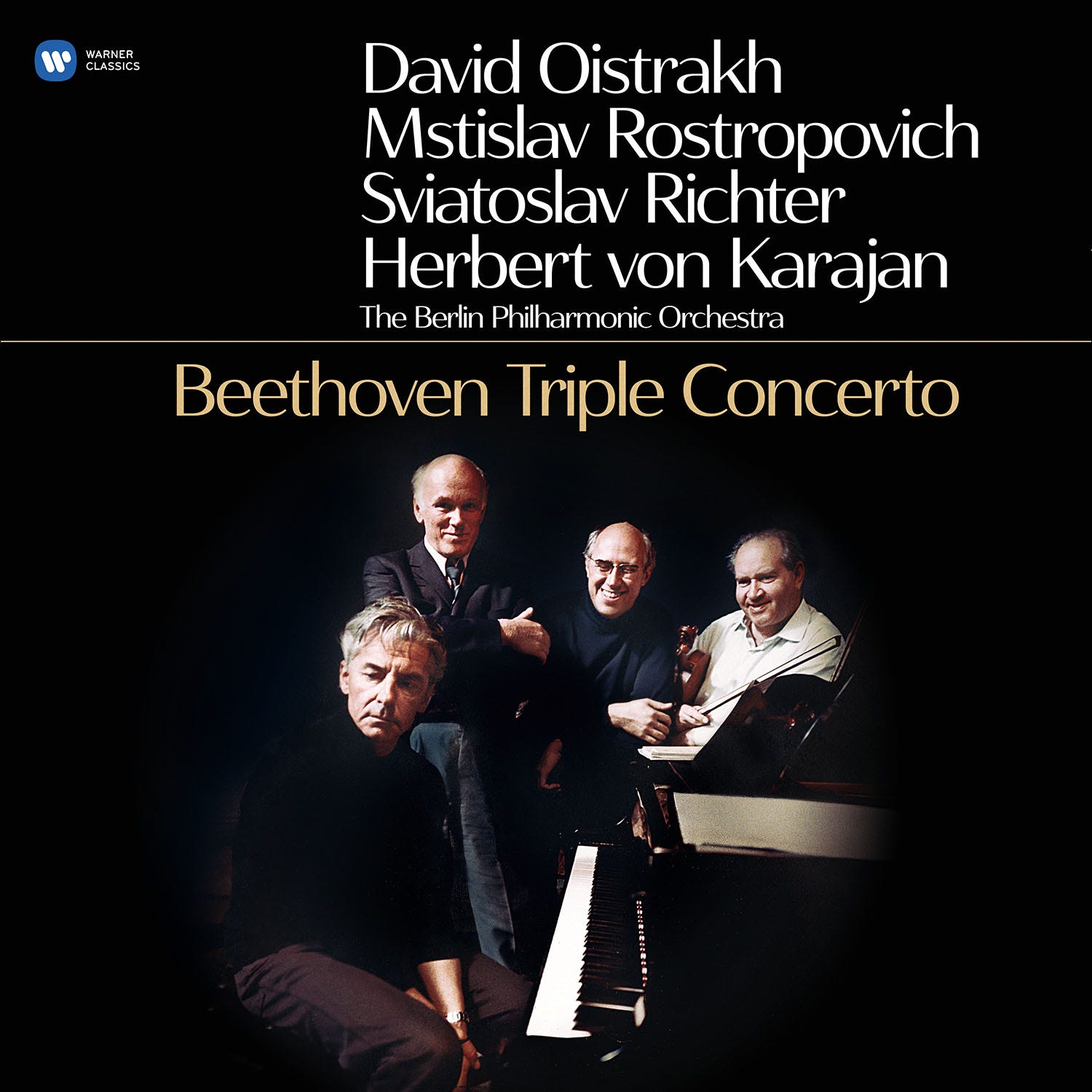
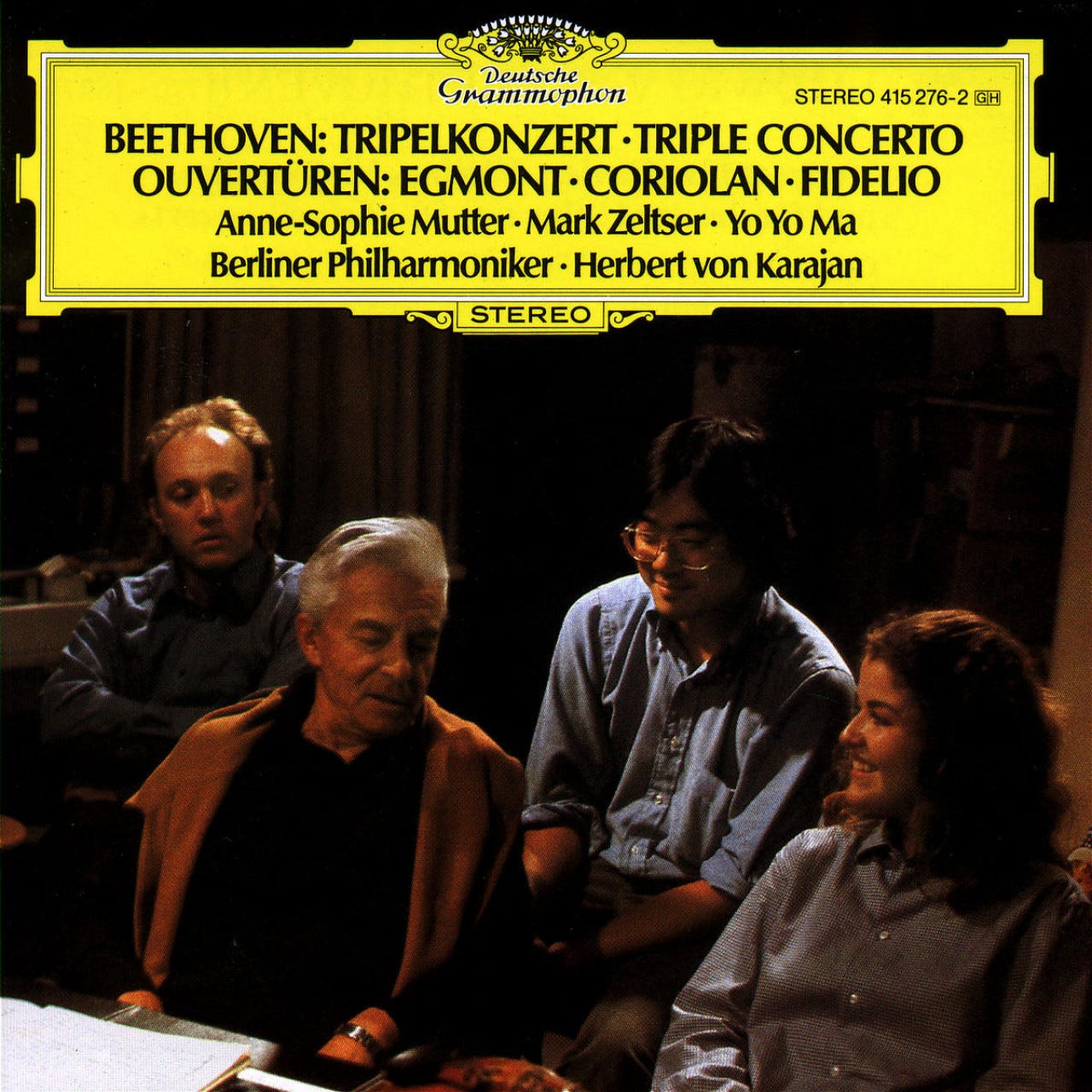
Beethoven’s Triple Concerto doesn’t always get the love it deserves, but Karajan recorded two excellent versions, the first for EMI (Warner) in 1969 and the second for Deutsche Grammophon in 1979, both with the Berlin Philharmonic. In 1969 the starry cast of soloists included Sviatoslav Richter (piano), David Oistrakh (violin), and Mstislav Rostropovich (cello). Even though the earlier recording has more background hiss, it also has more warmth and presence. Karajan’s pacing is a bit more urgent in this earlier one too, something which I appreciate. Of course all the soloists are legendary, but importantly they work as a team well throughout. The later recording on DG is excellent too, even if not quite as dramatic and intense. The soloists are Anne-Sophie Mutter, Yo-Yo Ma, and Mark Zeltser. It does have the advantage of clearer sound, although it feels a bit distanced. Karajan also seems to give more thought to phrasing and dynamics here, but honestly both performances are winners.
Bizet
![Amazon.com: Carmen [Highlights]: CDs & Vinyl](https://substackcdn.com/image/fetch/$s_!eNWB!,f_auto,q_auto:good,fl_progressive:steep/https%3A%2F%2Fsubstack-post-media.s3.amazonaws.com%2Fpublic%2Fimages%2Fe8754502-eb23-4774-8cb1-914019479633_1000x1000.jpeg "Amazon.com: Carmen [Highlights]: CDs & Vinyl")
While Bizet’s opera Carmen is not a personal favorite of mine, the great soprano Leontyne Price is indeed a favorite, and her performance on Karajan’s 1963 recording of the opera with the Vienna Philharmonic and Vienna State Opera Chorus is simply stunning. Her smoky, darker soprano is a perfect fit for the role, and Karajan’s conducting here is ideal in my view. The rest of the cast is hardly less impressive, and includes Franco Corelli, Robert Merrill, and Mirella Freni.
Brahms
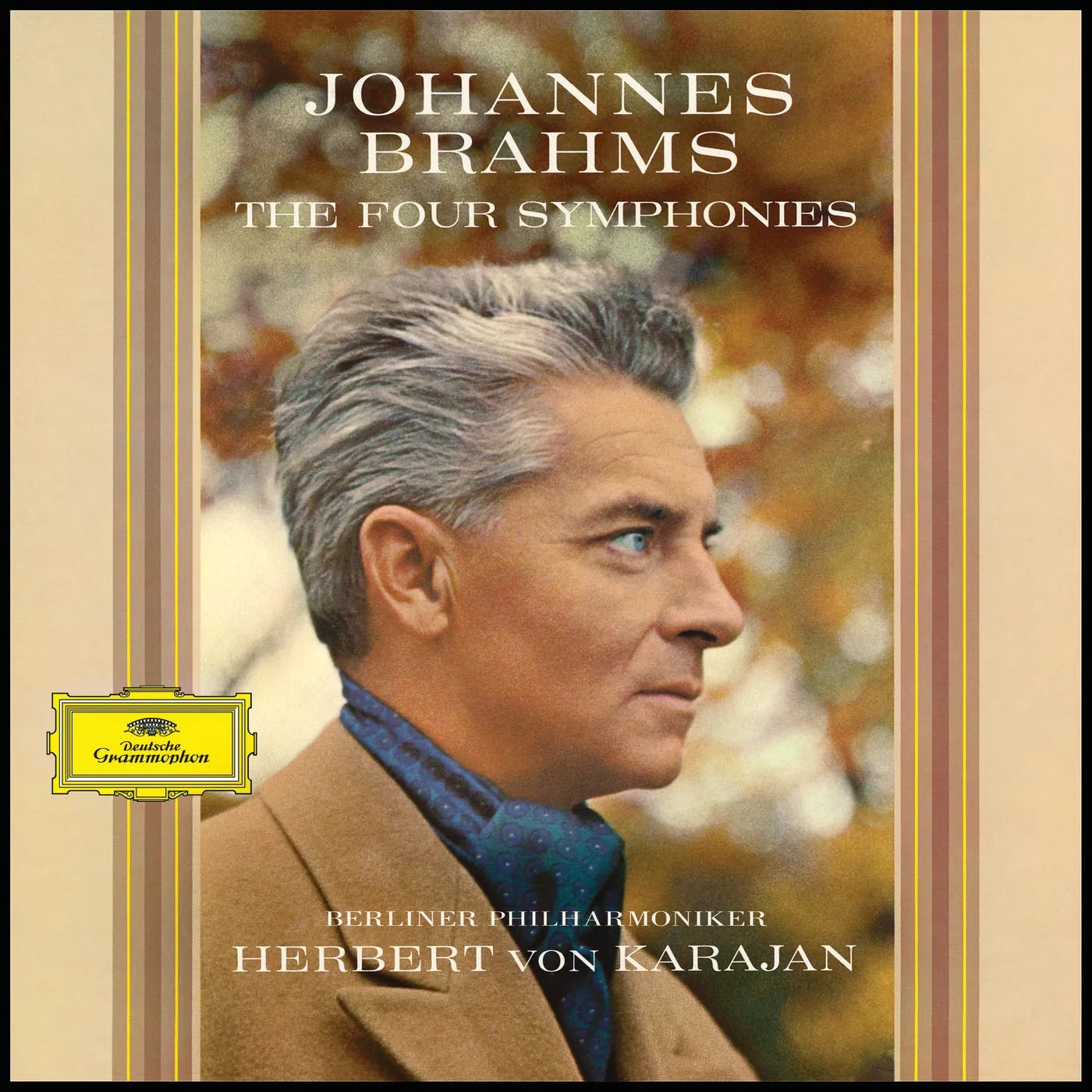
There is general agreement from critics, and I agree, that Karajan’s first complete set of Brahms’ Symphonies 1-4 with the Berlin Philharmonic is his finest, and it is very good indeed. Recorded in 1963-64 for Deutsche Grammophon, these performances (similar to Beethoven from the same time period) are taut and more dramatically intense than his later efforts (although his cycle from the 1970s is certainly not bad). I would even argue that the sound is better in this earlier set in that it is detailed, warm, and spacious. I am particularly fond of the Symphony no. 1 from this set, but they are all good.
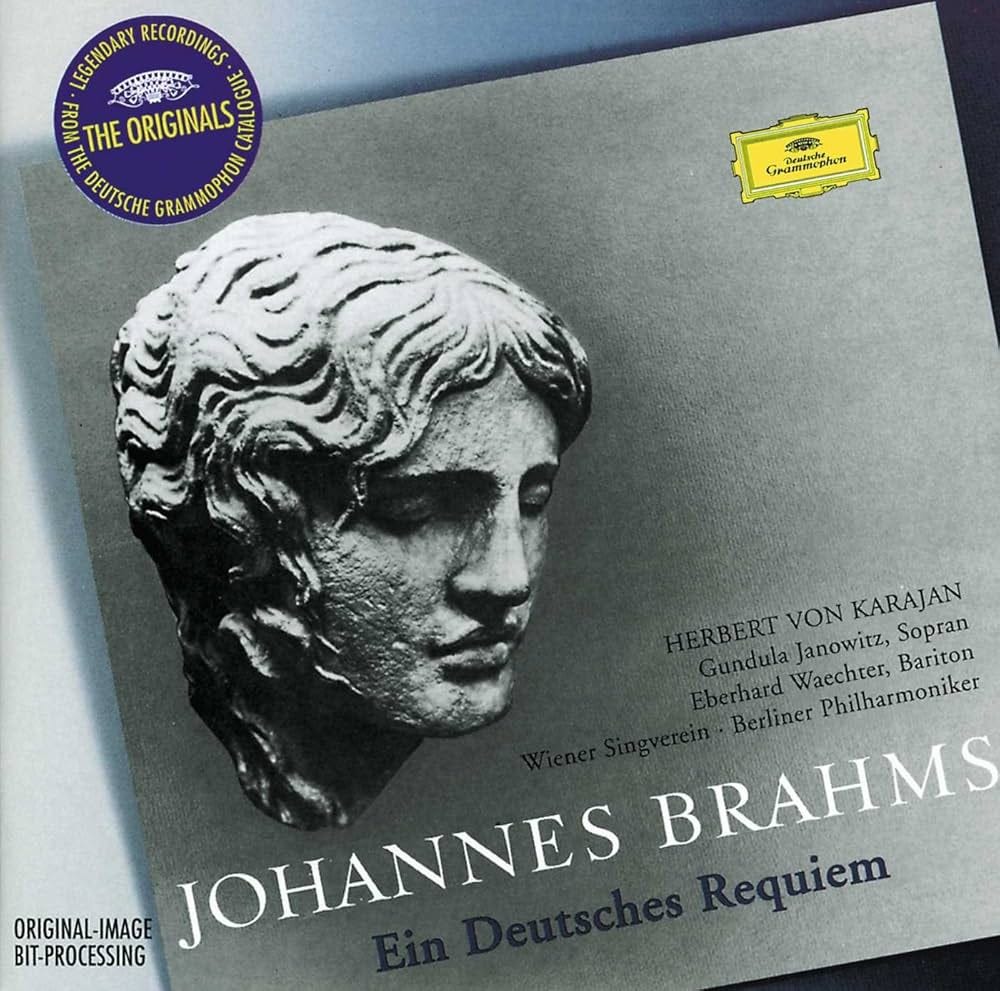
Even with Karajan slowing things down more than I would like, his 1964 recording of Ein Deutsches Requiem (A German Requiem) on Deutsche Grammophon is very good and deserves recommendation as well. Soprano Gundula Janowitz is at her peak and sings marvelously, as does Eberhard Wachter. The sound is nicely balanced and resonant, similar to the symphonies (above) from the same time. The Berlin Philharmonic and the Wiener Singverein are both simply superb. There is both drama and reverence here, and I can hear tons of detail. This is a better performance than both of his EMI recordings, as well as his later digital recording on DG.
Bruckner
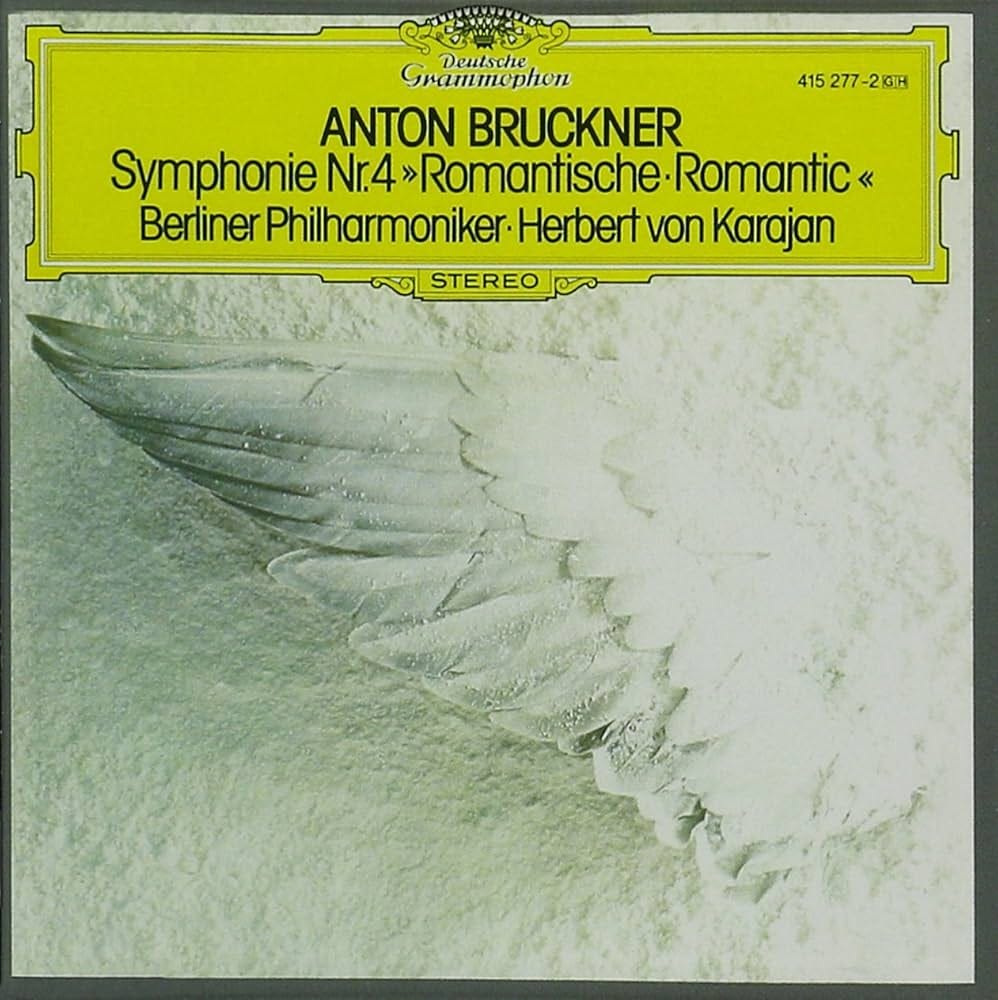
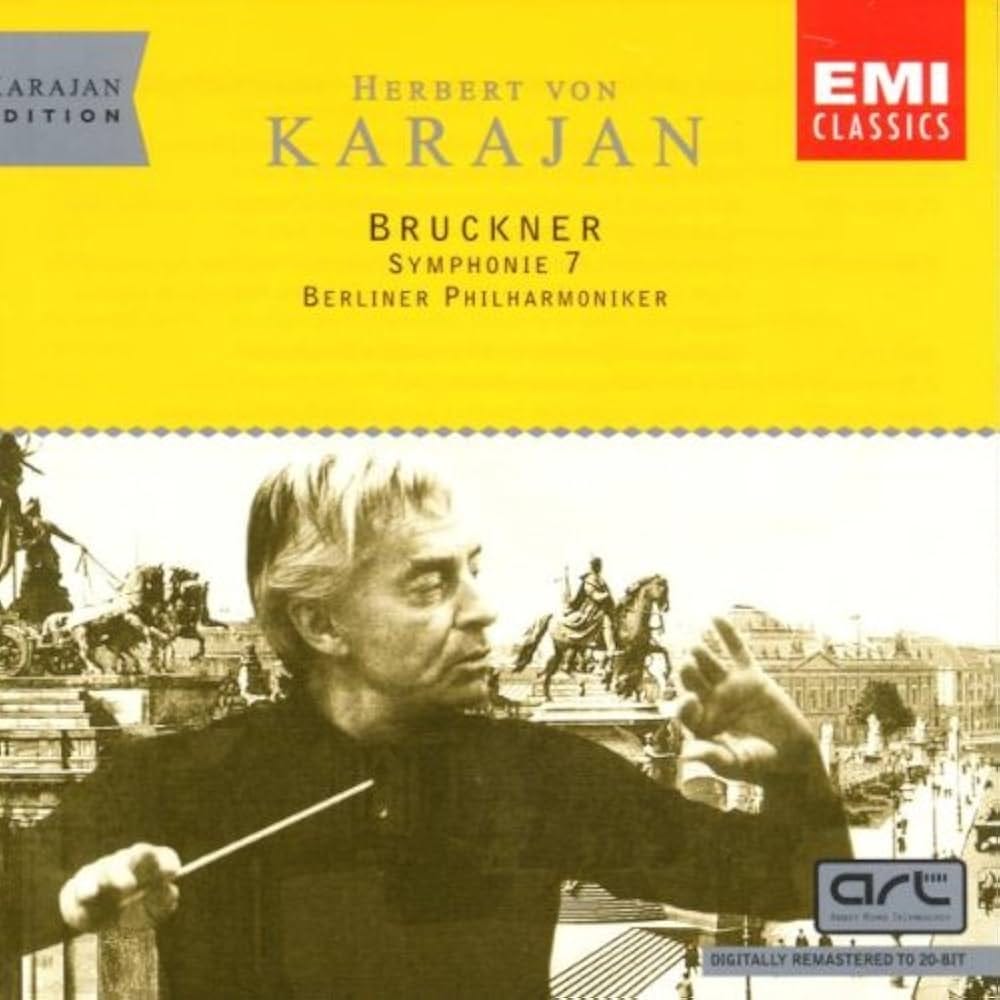
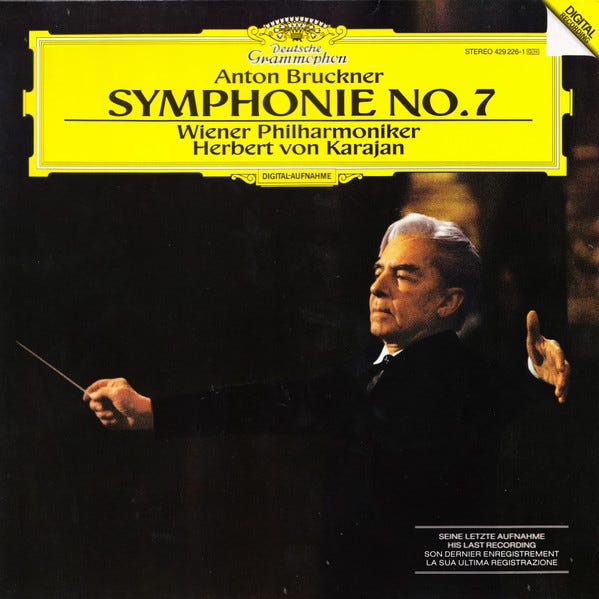
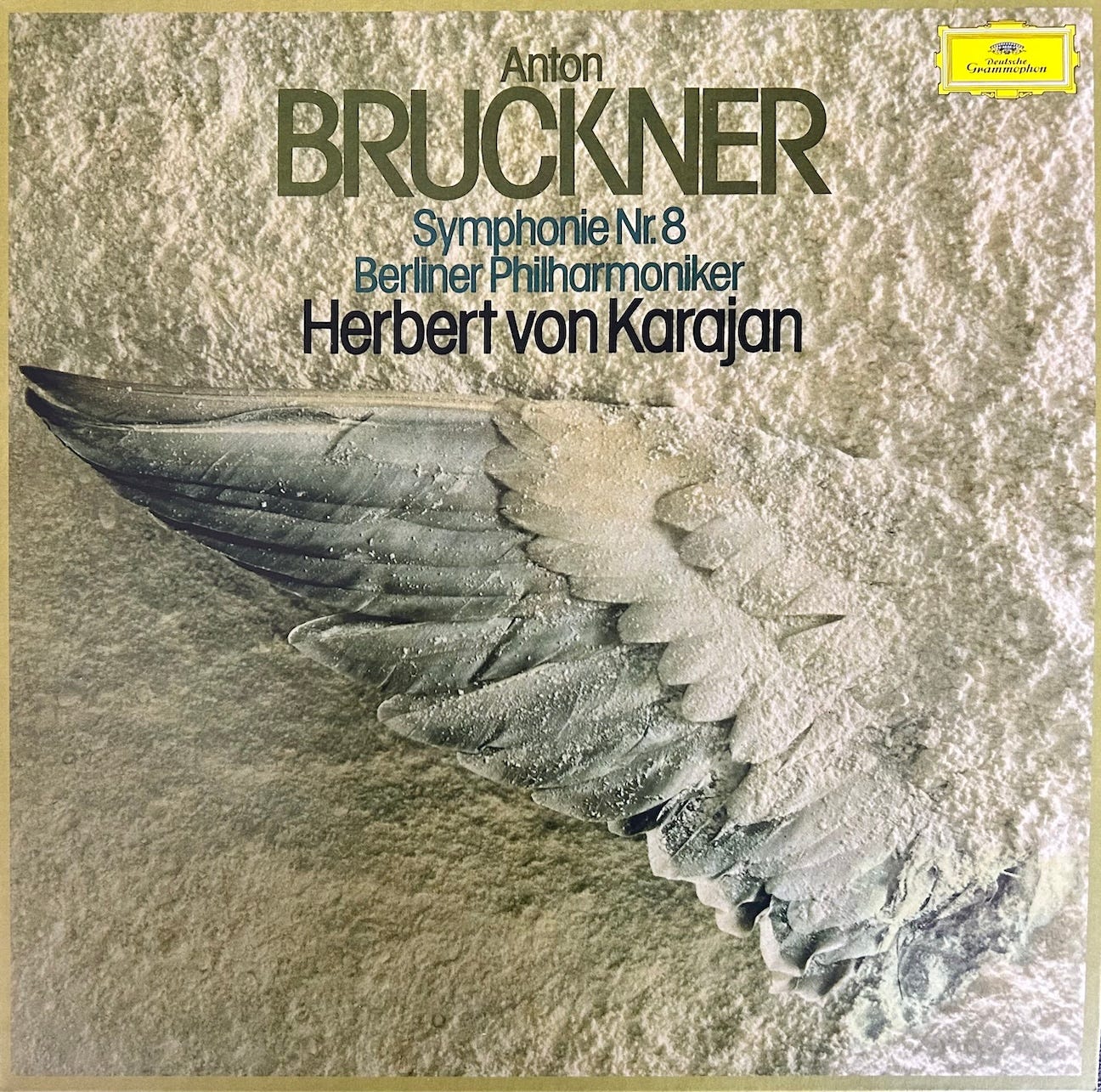
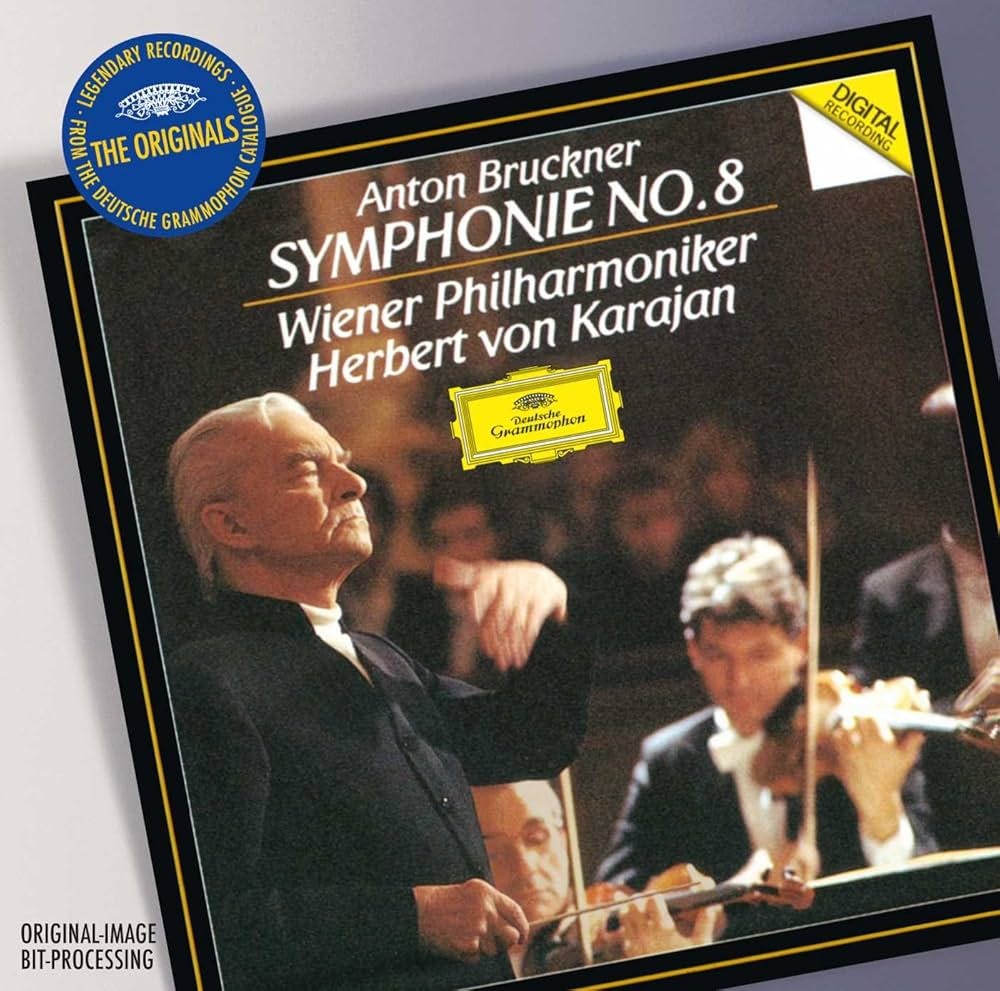
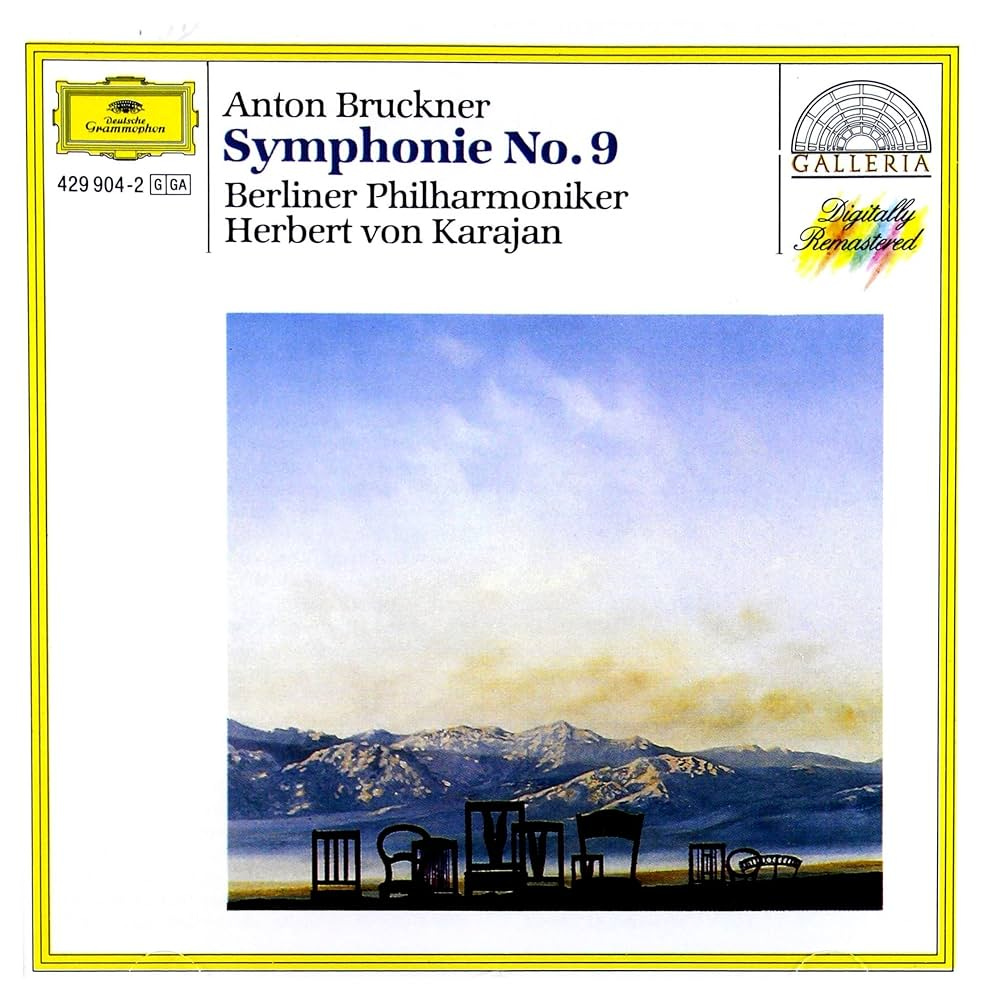
Karajan’s recordings of the Bruckner Symphonies are rather special, and it is clear he had a particular feeling for this music. Focusing on Bruckner’s more well-known symphonies, Karajan made at least two (and sometimes three) commercial recordings of Symphonies 4, 7, 8, and 9. I recommend all of Karajan’s Bruckner, but particular highlights for me include his 1976 recording of Symphony no. 4 with the Berlin Philharmonic on Deutsche Grammophon, his 1971 recording of Symphony no. 7 with the Berlin Philharmonic on EMI and of course his final recording from 1989 which was with the Vienna Philharmonic on Deutsche Grammophon, his 1975 recording of Symphony no. 8 with the Berlin Philharmonic on Deutsche Grammophon as well as his late 1989 recording with the Vienna Philharmonic on Deutsche Grammophon, and his 1966 recording of Symphony no. 9 with the Berlin Philharmonic on Deutsche Grammophon (which outshines his later 1975 recording).
Debussy
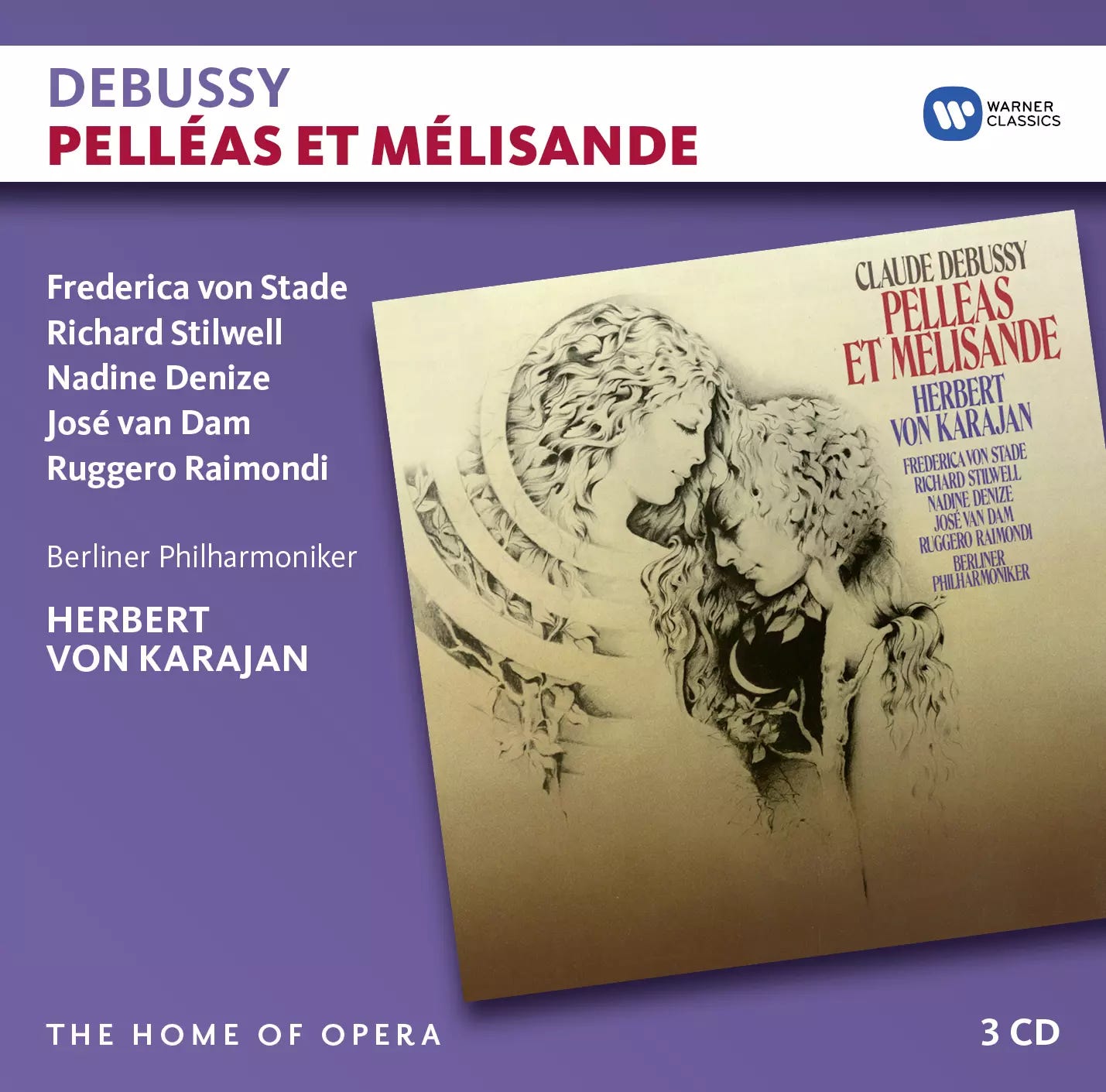
Although I am not terribly familiar with this opera, Karajan’s 1978 EMI recording of Debussy’s Pelléas et Mélisande is considered by many to be one of Karajan’s finest opera recordings. Karajan leads the Berlin Philharmonic and Chor der Deutschen Oper Berlin in a sumptuous and powerful performance. The soloists are a luxury cast including Richard Stilwell, Federica von Stade, José van Dam, and Ruggero Raimondi. The recorded sound is simply outstanding, full of depth and perspective, along with plenty of detail. This is one of Karajan’s finest moments in that his conducting recognizes the nuances and sensitivity in the score, and he is able to vary dynamics and tempos appropriately, and he never swamps the singers and dialogue. The BPO sounds amazing here too. The singing of van Dam in particular is noteworthy, probably the best Golaud on record. Stilwell is excellent as well, and the rest of the cast is remarkable both in their vocal acting and their French enunciation.
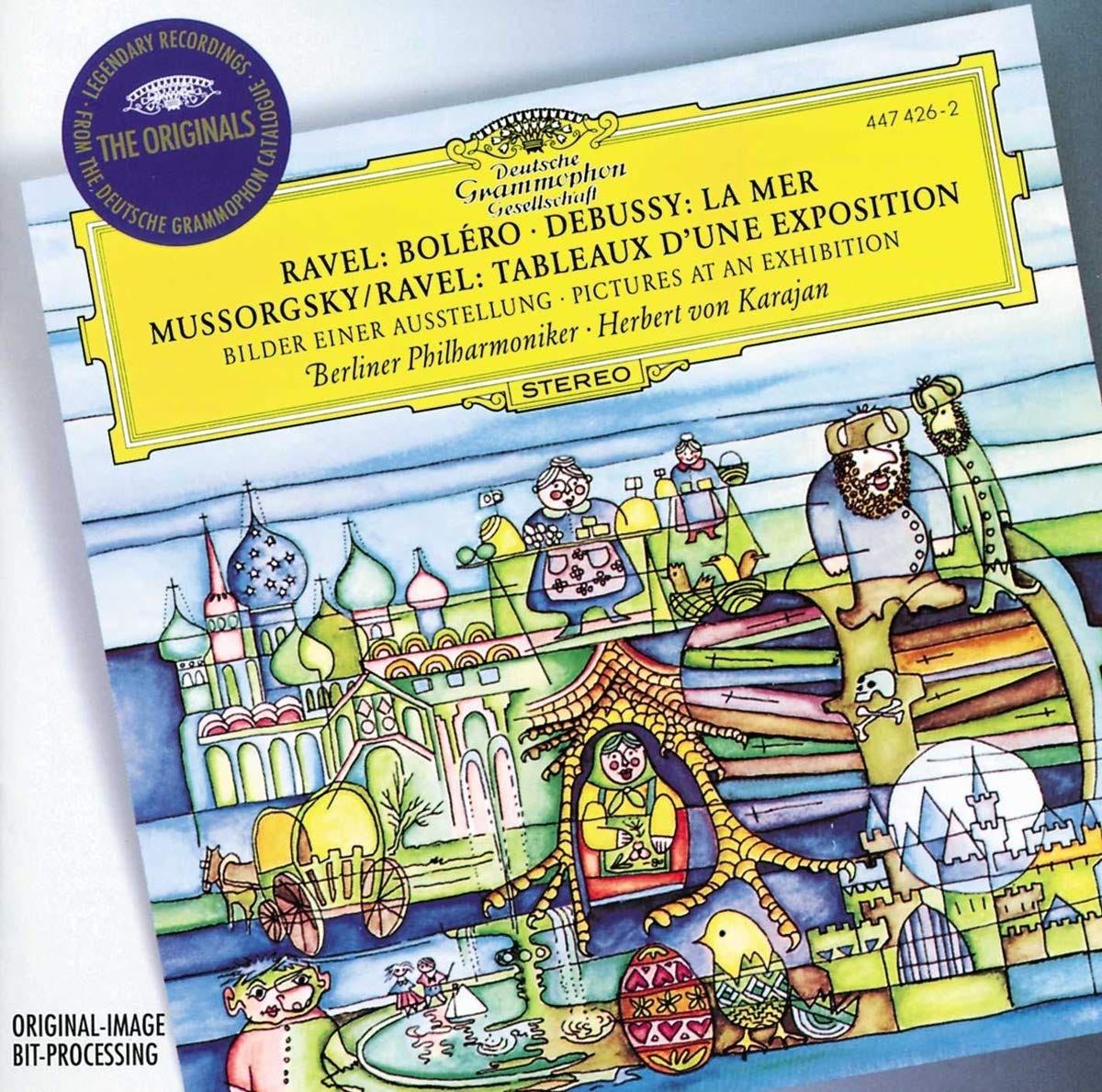
I also want to recommend Karajan’s 1964 recording of Debussy’s La Mer, a recording I wrongly neglected in my earlier survey of La Mer. On this recording, the Berlin Philharmonic was recorded by Deutsche Grammophon at the Jesus-Christus-Kirche in Berlin. While not a particularly subtle recording of this great work, Karajan elicits a lot of orchestral color and personality. The performance is in more stark relief than many others, but this is actually a good thing in terms of bringing out more of the details in the score which are sometimes smudged. While this work is paired nowadays with the flashier Ravel and Mussorgsky, it is La Mer which truly stands out.
Donizetti
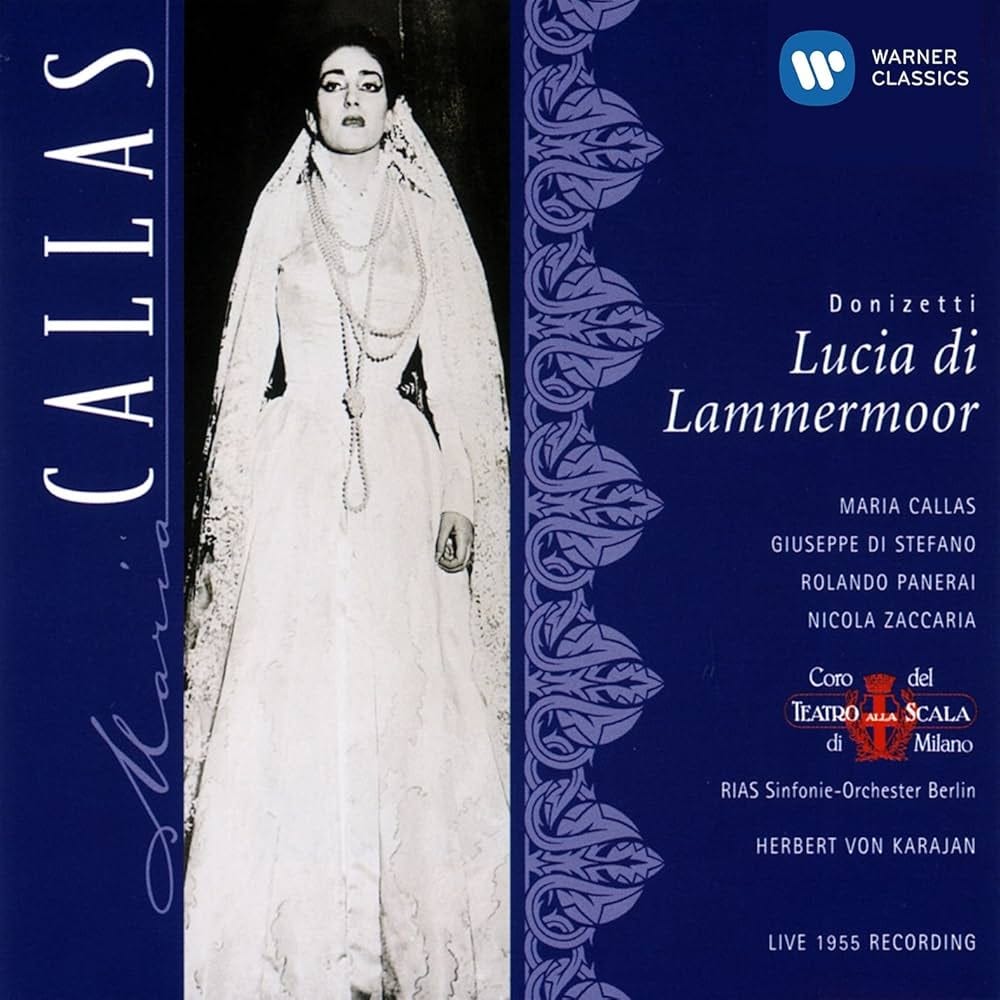
Even though it’s in mono sound, this 1955 recording of Donizetti’s Lucia di Lammermoor featuring Maria Callas is something special, if for no other reason than hearing Callas at her peak in this role. Originally issued on EMI, and now on other various labels as well, Karajan leads the RIAS Orchestra and the Teatro alla Scala Chorus. But the rest of the cast is equally superb and this set is also desirable for the presence of Rolando Panerai as Enrico and Giuseppe di Stefano as Edgardo. Giuseppe Zampieri is also effective as Arturo. But the main attractions here are Callas’ thrilling voice and Karajan’s dramatic conducting. The mono sound is more than acceptable in my opinion.
Dvořák
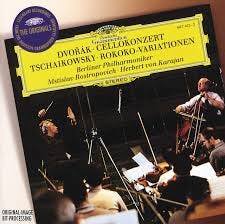
Karajan’s 1971 recording of Dvořák’s Cello Concerto with cellist Mstislav Rostropovich and the Berlin Philharmonic on Deutsche Grammophon remains the benchmark recording of this terrific work. It is a glowing and endearingly lyrical performance, with everyone on the top of their game. The acoustic is warm and resonant. As a bonus there is also my choice for the best recording of the Rococo Variations by Tchaikovsky, a delightful piece.
Haydn
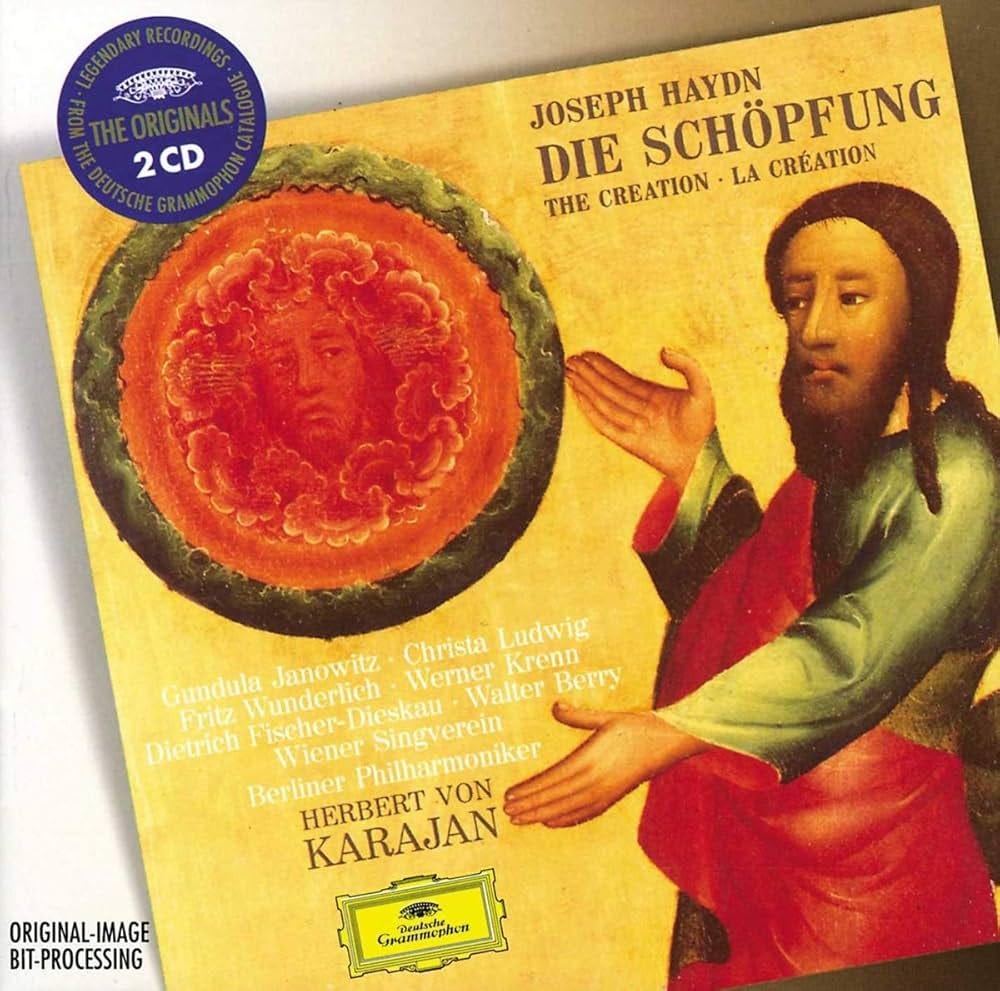
Personally, I find some of Karajan’s Haydn recordings heavy handed and while the recordings are always played well, for me he never had the touch with Haydn that, say, Bernstein, Jochum, or Colin Davis had. Nevertheless, his 1966 recording of Haydn’s The Creation for Deutsche Grammophon is one of the great recordings of that masterpiece. This is a traditional, big boned interpretation of The Creation sung in German by the Berlin Philharmonic Orchestra accompanied by the Vienna Singverein chorus. Recorded mostly in 1966, but not released until 1969, this is a larger-than-life performance with a full orchestra and chorus using modern instruments. What really raises this recording above others is the starry team of soloists: Gundula Janowitz, Fritz Wunderlich, Dietrich Fischer-Dieskau, Walter Berry, and Christa Ludwig all in their prime. In this recording, Karajan executes a grand vision that is entirely appropriate for the subject of the creation. Here he directs a performance of joy, sensitivity, and beauty that stands above the fray.
Honegger
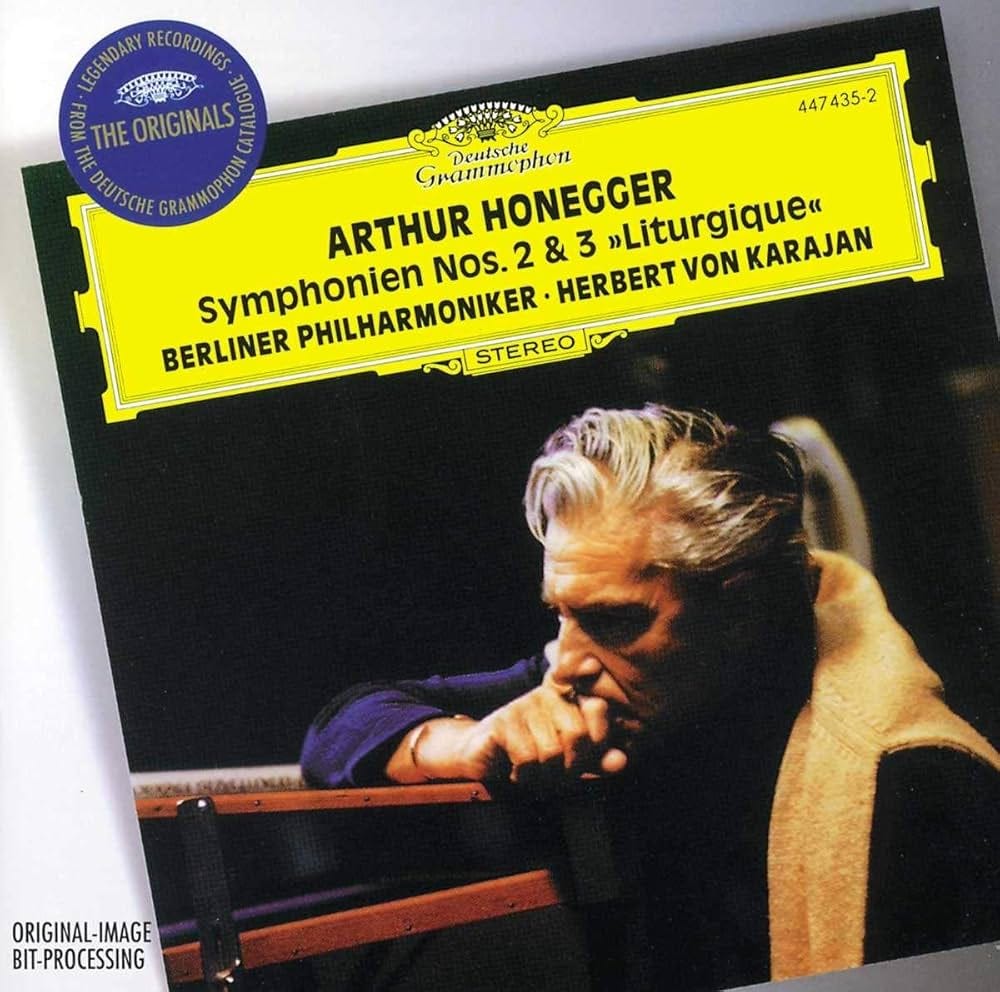
Karajan’s 1969 album of Arthur Honegger’s Symphonies 2 & 3 with the Berlin Philharmonic is among one of his greatest recordings. Recorded by Deutsche Grammophon, this recording is the best place to start with Honegger’s 20th Century modernist voice and when Karajan was really invested in a piece of music, he could sell it like nobody else. That is what we have here, as Honegger wrote these pieces during and in the wake of World War II. None of the too smooth or too suave Karajan here, but rather an enthusiastic advocacy for music that is a reflection of the time in which Karajan lived. While this is not necessarily an “easy” listen, it is absolutely indispensable Karajan.
Mahler
Karajan came to appreciate the music of Gustav Mahler relatively late in his career, and even then he was quite particular about which symphonies he would play or record. On the reason he didn’t play Mahler earlier, Karajan said “I steered clear of Mahler: well considered, because I had not the palette of timbres which I needed to strike the specific Mahler-Sound”. For me, two of his Mahler recordings are solid recommendations. Karajan’s excellent recording of Symphony no. 6 comes from 1978 with the Berlin Philharmonic on the Deutsche Grammophon label. The Sixth is an extraordinarily difficult symphony to play, but on this recording Karajan is able to capture all of the depth and emotion required by Mahler, but he still maintains his iron grip of control on the proceedings. Do not expect the abandon we hear on Bernstein’s recordings, but Karajan’s vision is valid and substantial. The BPO sounds marvelous here too, and this is as good of an analog recording as you are likely to find. The Ruckert Lieder with Christa Ludwig is a wonderful bonus, as she sings Mahler gloriously.
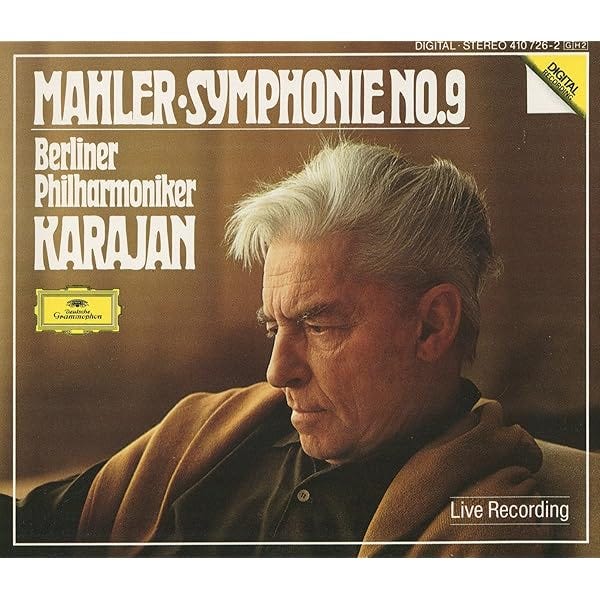
The other Mahler recording from Karajan is the essential 1982 recording of Symphony no. 9 with the Berlin Philharmonic on the Deutsche Grammophon label. Karajan had recorded the Ninth in 1979 in the studio using analogue sound for Deutsche Grammophon, and that recording remains very competitive. But this live digital recording, made just a few years later, has even more personality and vitality and indeed this second recording for Karajan won the Gramophone Award. The fact that Karajan even allowed the release of any live recording meant that he must have been completely satisfied with the results. Karajan is less of an interventionist in Mahler than say Bernstein or Horenstein, preferring to not go as far to the extremes. On this recording I feel he gets everything right. Emotional climaxes are appropriately thrilling, the tragedy is brought out in spades without spilling over into excess, and the Berliners are absolutely beautiful throughout. The ebb and flow are mastered completely, and Karajan projects the emotional core of the music without adding any extra tricks. We can easily sense Karajan’s control over the proceedings, but the performance feels less micro-managed than is typical for him from the studio, and this is a good thing. The intensity and spontaneity are caught superbly, but Karajan is still faithful to the score, and brings a new standard of precision and accuracy. The sound is very good, thankfully without the digital glare of the original release.
Mendelssohn
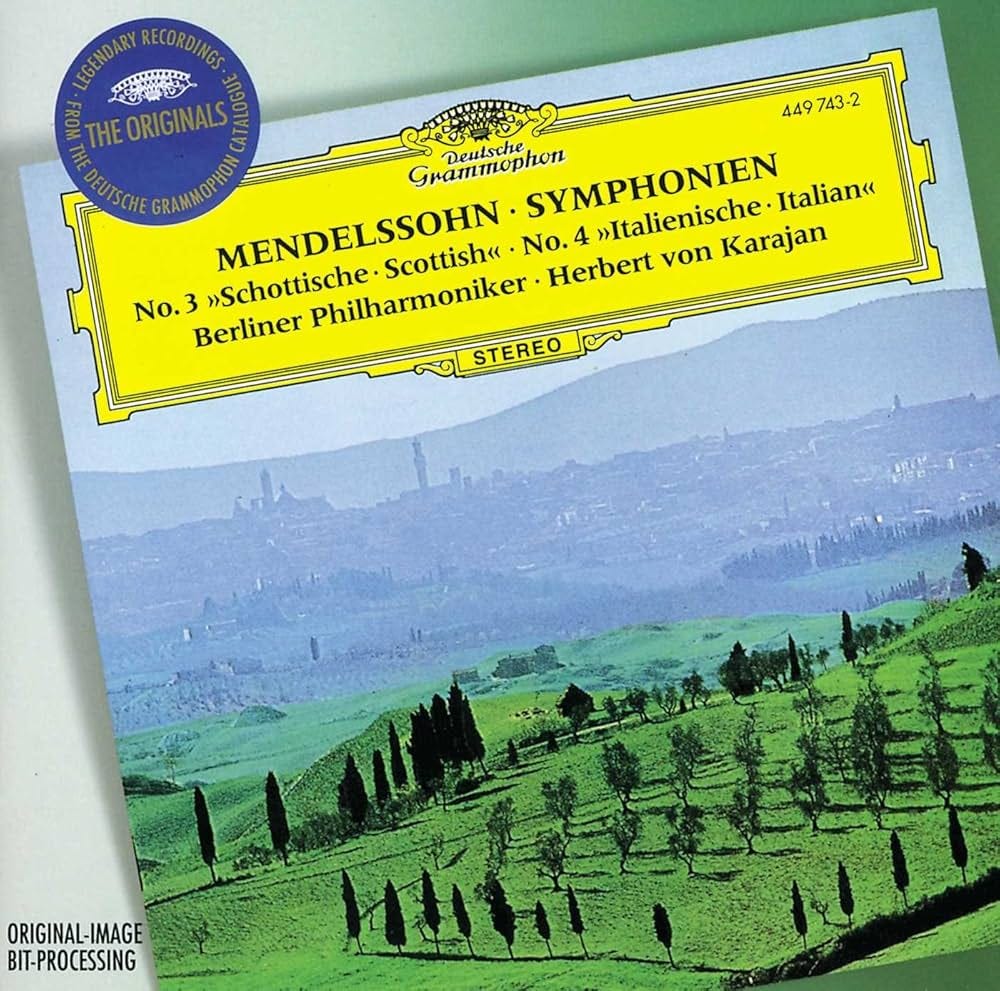
Many years ago when I fell in love with Felix Mendelssohn’s Symphony no. 3 “Scottish”, I looked for a good recording which would faithfully represent how I thought the symphony should sound (at least in my own mind). I purchased Karajan’s disc with Symphonies 3 & 4 from 1971, performed by the Berlin Philharmonic on the Deutsche Grammophon label. If you like your Mendelssohn in the grand manner, this is a very good choice. There is plenty of weight and precision, and as a whole the reading has tremendous sweep and impact. The Adagio in the Scottish is perhaps slower than normal, and threatens to grind to a halt, but is beautiful in its own way. The acoustic for the recordings is a little bit too reverberant for my liking, but the BPO strings and brass blaze through two inspired performances.
Mozart
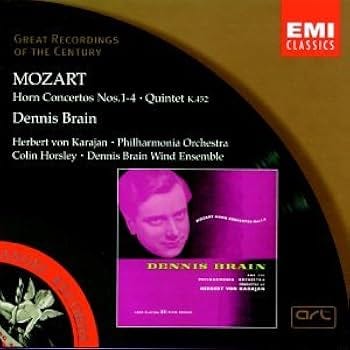
In some ways I feel the same about Karajan’s Mozart as I do about his Haydn, especially when it comes to the symphonies. Karajan would not be among my top choices. However, when it comes to Mozart’s operas my feelings are different. First, it is imperative to mention Karajan’s legendary recording of Mozart’s Horn Concertos 1-4 with the amazing first chair Philharmonia Orchestra horn player Dennis Brain and the Philharmonia Orchestra, recorded in 1953-54 and issued on EMI. While there are other very good recordings of these delightful works, none reach the mastery and fluency of Brain’s accounts. His playing is beautiful and technically immaculate. The sound is in mono, so you will need to make allowances for that. Tragically, Brain was killed in an automobile accident in 1957 at the age of 36 driving back to London from the Edinburgh Festival.
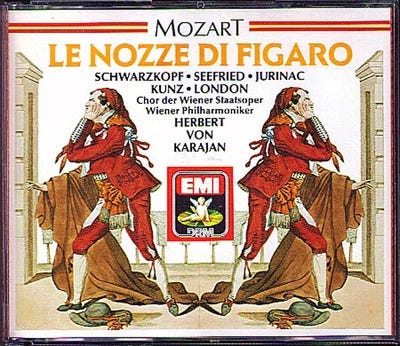
For me, Karajan’s most convincing Mozart came from earlier in his career. For example, his mono recording of Le Nozze di Figaro from 1950 with the Vienna Philharmonic and Vienna State Opera Chorus on EMI is recommendable despite the somewhat thin but perfectly listenable mono sound. The outstanding cast includes Erich Kunz, Irmgard Seefried, Elisabeth Schwarzkopf, George London, Sena Jurinac, Marjan Rus, and Erich Majkut. The one drawback is that recitatives were cut, so if you are looking for a complete recording of this opera, this might not be the best choice. But Karajan leads a thrilling and exhilarating performance which scores big points on musical grounds.
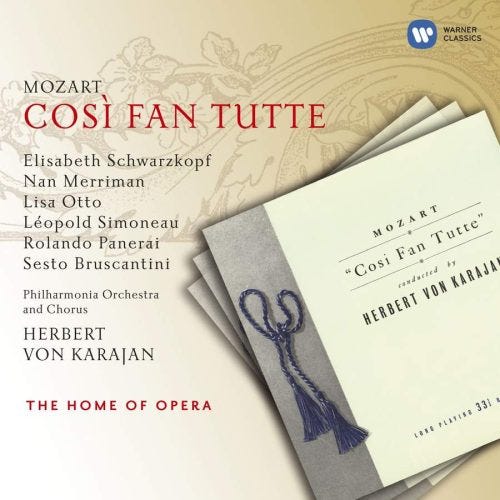
Similarly, Karajan’s 1954 recording of Così fan tutte is superb, and features the Philharmonia Orchestra and Chorus on EMI. The cast this time includes Elisabeth Schwarzkopf, Nan Merriman, Lisa Otto, Léopold Simoneau, Rolando Panerai, and Sesto Bruscantini. Once again we find the more sprightly and more spirited Karajan, and this is a really vibrant performance. While he doesn’t rush, he is more pointed and intense than on later Mozart recordings. There is tension, but Karajan can also relax and draw out lovely melodies and lyricism. You will notice on this, and the Figaro set, that the singers employ more of the old fashioned style which featured a quicker vibrato. I rather like it, though it fell out of style. In any case, all of the soloists show great sensitivity and lightness in their voice, entirely appropriate for Mozart. Some of the recitatives are cut again, which may be a deal breaker for some (not for me). The mono sound is marginally better than the Figaro listed above.
Prokofiev
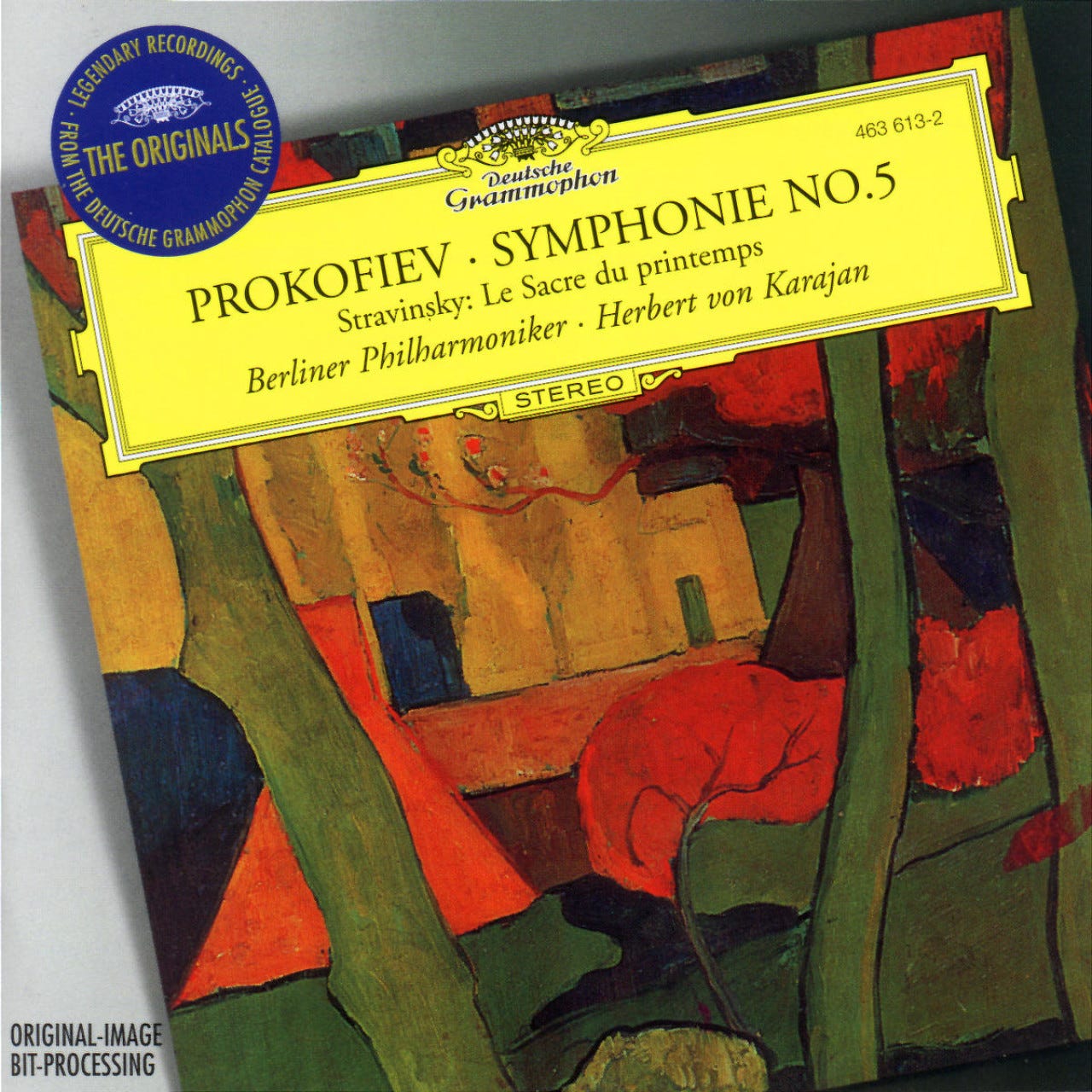
Karajan’s 1968 recording of Prokofiev’s Symphony no. 5 with the Berlin Philharmonic on Deutsche Grammophon remains one of the top choices for this work. Prokofiev described the symphony as “a celebration of the human spirit” and was written in 1944 after the war began going the way of the Allies. Prokofiev uses a lot of brass, but there is also a lyrical heart to the work consistent with the composer’s style at the time. Karajan is particularly adept at maintaining control of the overall structure, and convincing the listener that this is the only way it should be played. While Bernstein wrings more intensity out of the score, Karajan achieves more balance and more beauty. Not that it lacks in intensity, indeed there is a good amount of fervor throughout. The sound is excellent.
Puccini
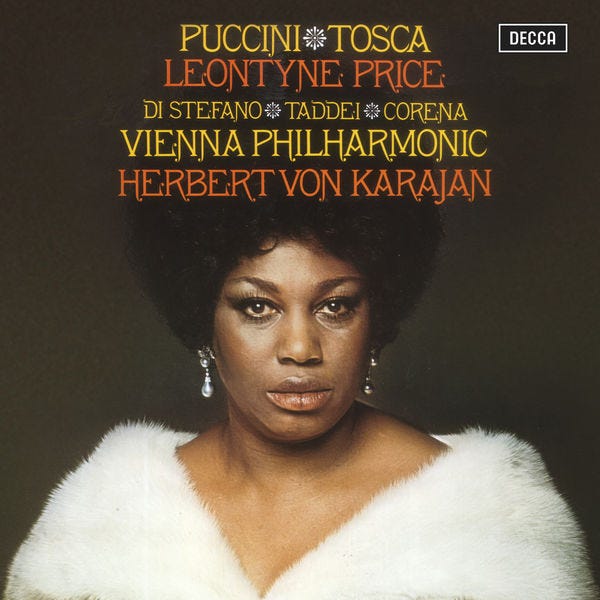
Puccini’s Tosca is one of my favorite operas ever, and Karajan’s 1963 recording with the legendary Leontyne Price in the title role is second only to the famous Maria Callas recording from 1953. Karajan leads the Vienna Philharmonic and the Vienna State Opera Chorus in this classic recording on Decca which has rich and sumptuous sound. Price is simply stupendous, singing a role she was born to sing (in my opinion) in her prime. Tenor Giuseppe di Stefano is not as smooth and effective as ten years earlier with Callas, and he has moments where he has to gather his resources to hit the notes, and he shouts a bit. But his vocal acting as Cavaradossi is still superb. Giuseppe Taddei is certainly no match for Tito Gobbi on the Callas set, but he delivers a perfectly fine, perfectly malevolent Scarpia. Karajan’s direction is dramatic, sensual, dynamically flexible, and responsive to every mood here. His gift for exploiting the great sound of the VPO is evident. Recommended.
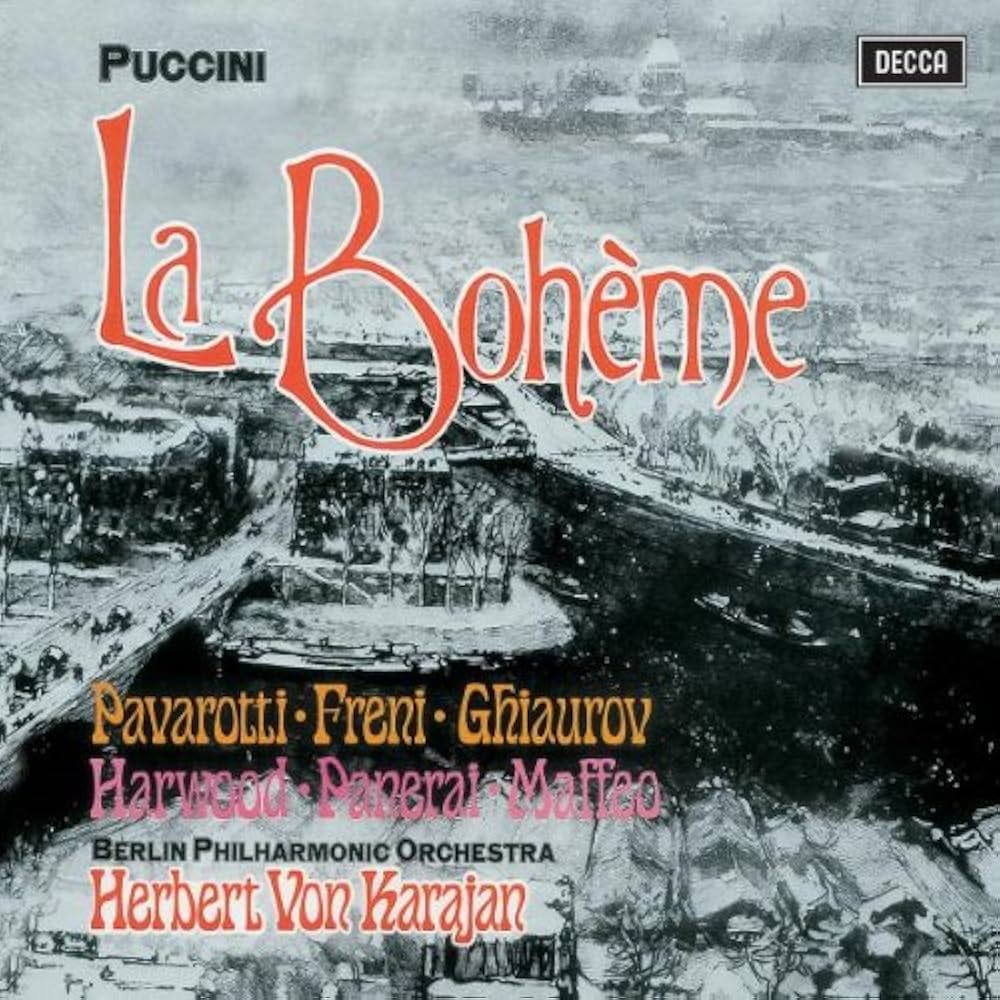
There is no doubting the greatness of Karajan’s 1972 recording of Puccini’s classic La Boheme on the Decca label. Along with the excellent sound, and the fullness of the Berlin Philharmonic, there is the duo of tenor Luciano Pavarotti and soprano Mirella Freni complemented by the rest of the cast including Elizabeth Harwood, Rolando Panerai, Gianni Maffeo, and Nicolai Ghiaurov. With the exception of the excellent Beecham set, this is probably the finest Boheme on record. Pavarotti is in superior form, his golden ringing tone absolutely thrilling. Freni is very good, and although I am not a particular fan of her voice, there is no question this is one of the finest Mimis on record. Harwood as Musetta is just perfect for the role too. Even in this all too familiar opera, Karajan injects the right amount of drama, joy, and energy. He was one of the best at guiding and supporting his singers as well. All in all, this is one of Karajan’s finest moments.
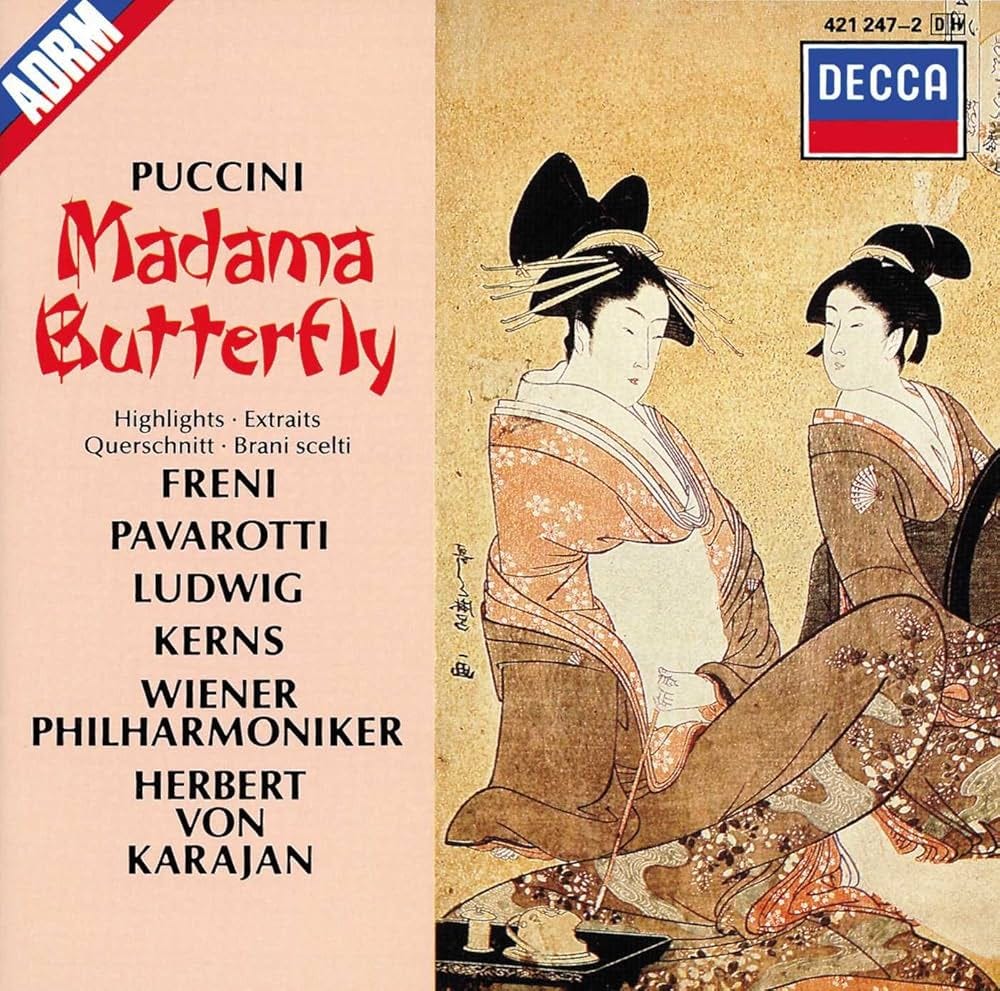
Similarly Karajan’s Madama Butterfly from 1974 is also a triumph. This time he is joined by the Vienna Philharmonic and Vienna State Opera Chorus, once again on Decca. Pavarotti and Freni are here again, both still in excellent voice, and they are joined by Christa Ludwig, Robert Kerns, and Michel Sénéchal. Some may find Karajan on the slow side, and it’s true this is one of the slower Butterflys on record, but what he also captures better than almost anyone is the power and beauty of this score. Pavarotti and Freni are the real highlights here though, and while I personally prefer Tosca and La Boheme to this opera, this is certainly one of the finest versions ever recorded of Madama Butterfly.
Schoenberg
There are two recorded versions of Schoenberg’s Verklarte Nacht (Transfigured Night) led by Karajan which are both recommended. The first comes from 1973 on Deutsche Grammophon and features the Berlin Philharmonic playing the full orchestral version. This is a piece tailor made to the smooth and powerful BPO of the era, and Karajan leads it with authority and insight. The climaxes are simply gorgeous, the BPO strings sounding as good as ever, and the music soars and softens by turns and is captured wonderfully here. The chromaticism which permeates this work envelops the listener in a most satisfying way. There is a slight amount of background hiss, and just a small amount of restraint shown by Karajan.
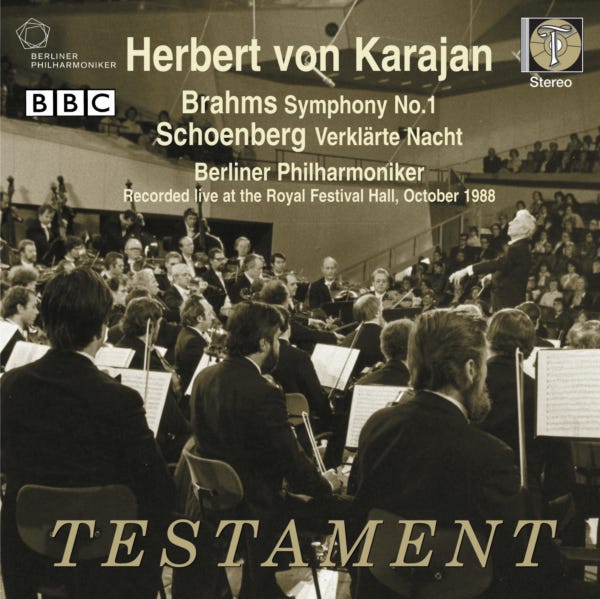
In 1988, late in his career, Karajan made a live recording at the Royal Festival Hall in London with the Berlin Philharmonic of the string orchestra version, issued on the Testament label. This is a more unbuttoned affair, and listening to it I can hardly believe the frail and ill Karajan can lead such a stimulating and exciting account. This recording shows that he had not lost his touch after all. The BPO is in blazing form, and the extra electricity of a live event is palpable. The sound is actually quite good for a live event. If you like this work, you don’t want to miss this one.
Shostakovich
While Karajan is not a conductor I always associate with Shostakovich, but he seems to have had a special relationship with Symphony no. 10, and it was apparently the only Shostakovich symphony Karajan would conduct (and apparently, he conducted it no less than 17 times). Two of his recordings of this work are among the best available. The first comes from 1967 with the Berlin Philharmonic on Deutsche Grammophon. This recording shows the dichotomy we sometimes find with Karajan in that at times his approach with the classics and romantics could become too smooth, too surface level, and perhaps less probing. Then there are performances like this, which find him going deeper, leading in a more incisive way, and less interested in the beauty of the sound. Don’t get me wrong, the BPO sounds great. But he finds the rhythmic and intensity that Shostakovich really requires.
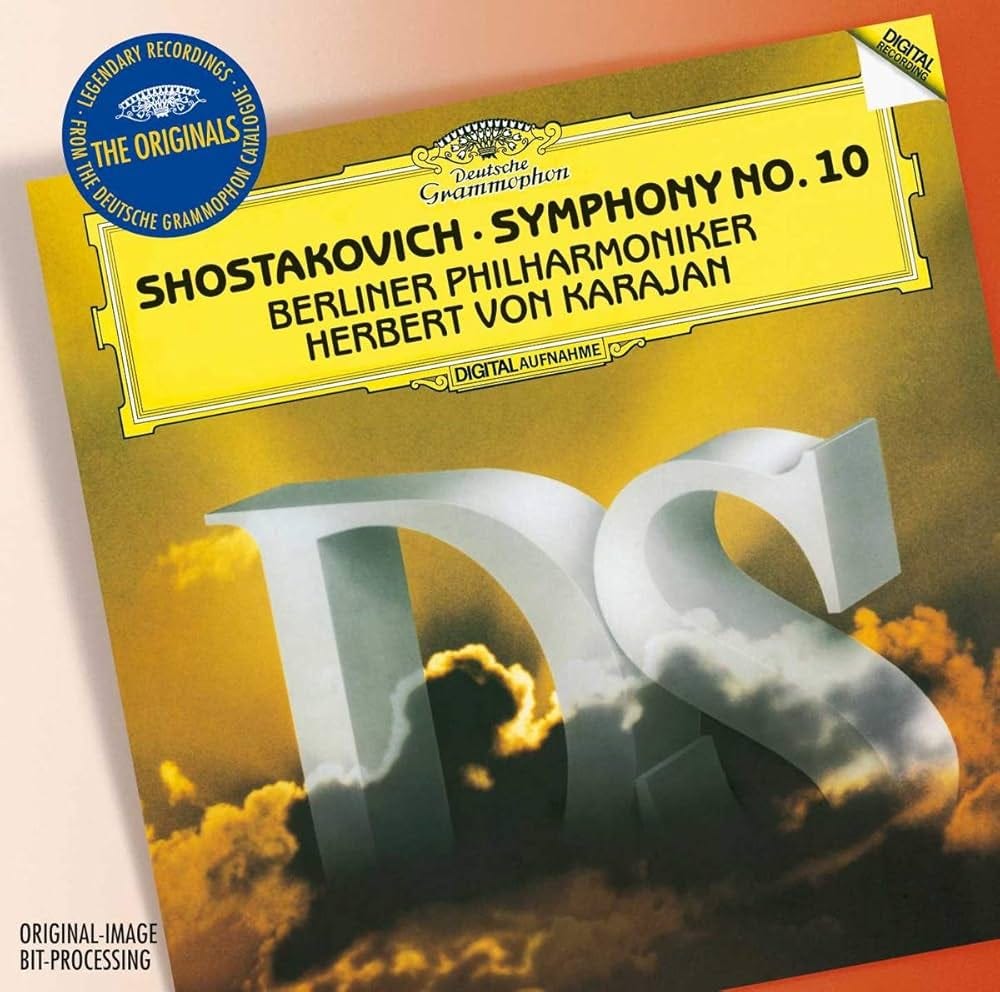
The same can be said of his digital remake of Symphony no. 10 from 1982, also with the Berlin Philharmonic, and also on Deutsche Grammophon. If anything, this recording shows that Karajan’s thoughts on this landmark 20th century symphony had not changed much since the earlier one, but there is now the benefit of the digital sound (with less hiss, and the early digital glare remastered out). Karajan seems to have an intuitive understanding of Shostakovich’s sarcastic and mocking musical language, and he maximizes its impact. The BPO is terrific, with everyone bringing their A game and with Karajan leading a controlled, but meaningful, performance.
Sibelius
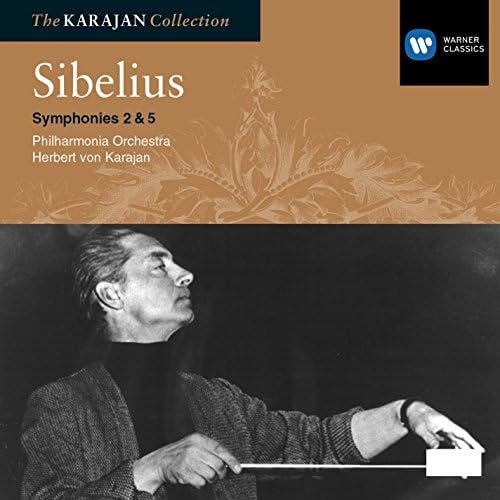
Karajan was an outstanding Sibelius conductor, and his (almost) complete set of the symphonies on DG with the Berlin Philharmonic is very good. But his 1960 recordings of Symphonies 2 & 5 with the Philharmonia Orchestra on EMI (Warner), for me, are his finest Sibelius recordings. Karajan is given better sound here than he had earlier with the Philharmonia, and he already shows a mature and probing understanding of the Sibelius idiom. Symphony no. 5 in particular is given a wonderful performance, ideally paced and inflected, the finale coming across as epic and magisterial. Symphony no. 2 similarly finds the emotional heart of the work, as well as its nordic character, and the playing of the Philharmonia is beautiful. While we don’t hear the strict control that Karajan would adopt later with the BPO, that is actually a good thing because the performances have more personality and spontaneity than his later recordings. These are two Sibelius performances I often go back to for these two symphonies.
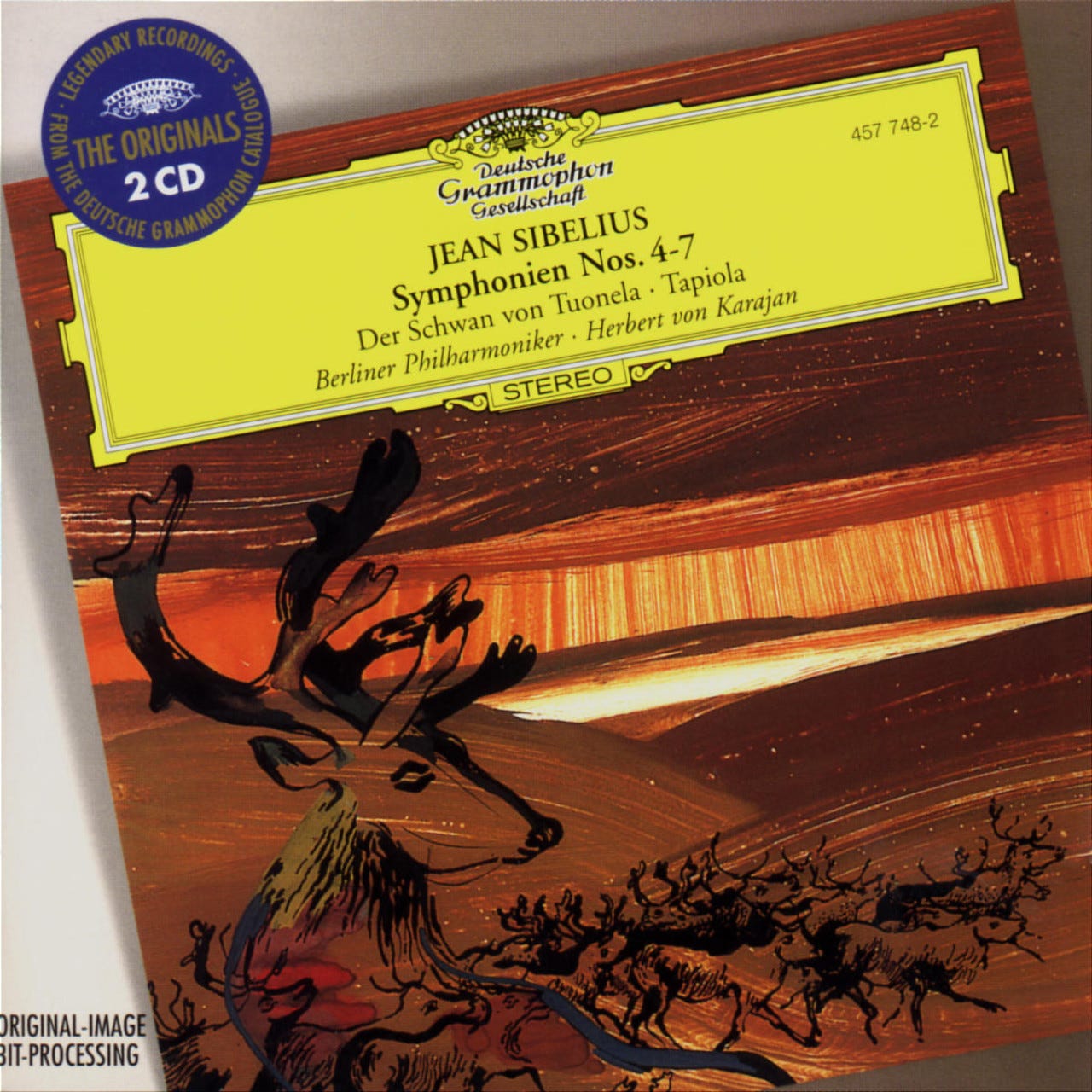
For Symphonies 4, 5, 6, and 7 his Deutsche Grammophon recordings made between 1964 and 1967 with the Berlin Philharmonic are classics and fully recommendable. All of these performances would be excellent choices if you are just coming to the Sibelius symphonies. The sound is very good on all of them, and Karajan is less mannered and less upholstered than his later EMI Sibelius recordings. These feel like authoritative and powerful readings, and not overly sentimental which works rather well with much of Sibelius. There are some better renditions of specific symphonies, but on the whole, this is a highly desirable collection.
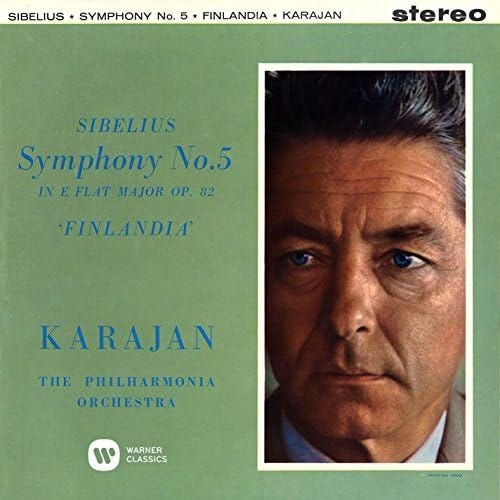
Karajan recorded Finlandia several times. His 1959 recording with the Philharmonia Orchestra for EMI (Warner) has a roughhewn quality to it that I enjoy, finding the younger Karajan in a feisty mood. The brass here are growling, biting, and menacing, just the way they should be in my view in a work that was fueled by resentment at the Russians. Just wait until you hear the entrance of the brass fanfare at 3’17”...wow. The Philharmonia of this time period was among the finest orchestras in the world, and the sound here is much better than many of Karajan’s recordings with that orchestra. Karajan’s Sibelius Symphonies 2 & 5 from the same time with the Philharmonia are also recommended (see above).
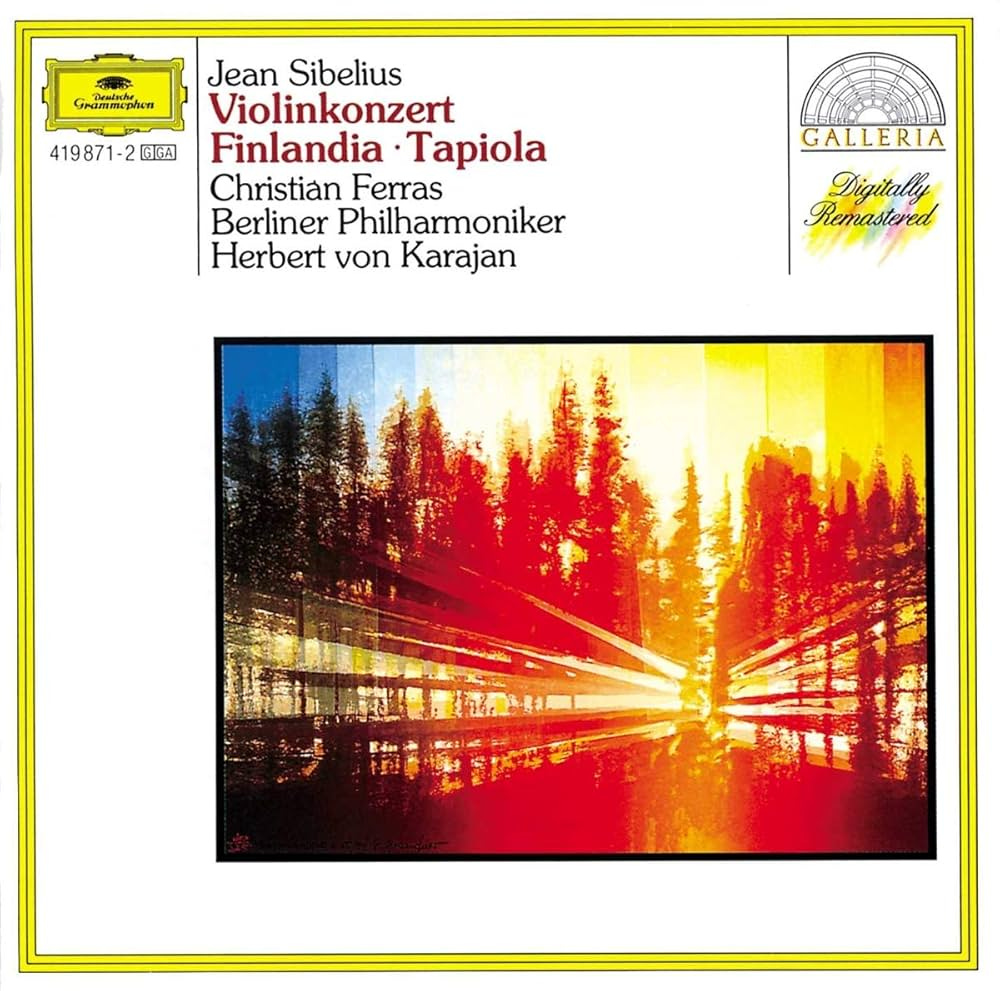
Karajan also recorded Finlandia in 1964 with the Berlin Philharmonic for Deutsche Grammophon. This is a smoother sounding affair, but Karajan’s basic vision for the piece is the same. The first half of the piece is quite measured and profound (perhaps a bit overly so), with the brass blaring out wonderfully at the opening. When things pick up in the middle, it really takes wing. The stereo sound is excellent for the time.
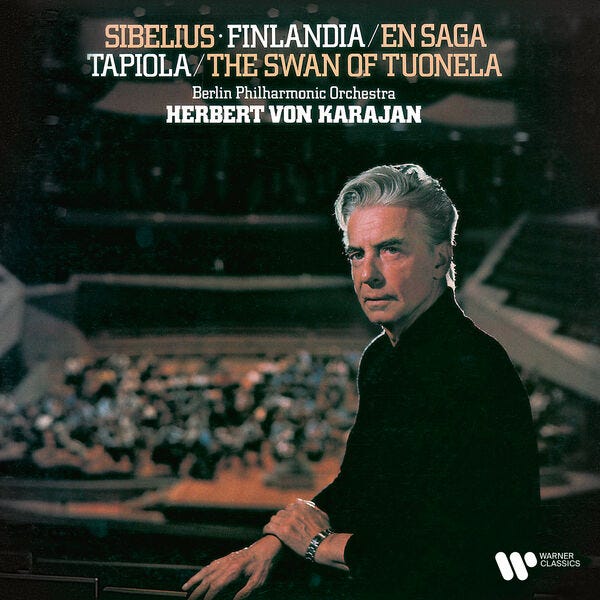
Finally, we have his 1977 traversal of Finlandia, again with the Berlin Philharmonic, but this time for EMI (Warner). The opening brass are positively scary, menacing, and foreboding. If this doesn’t wake you up, you are dead to the world. It even sounds brash and purposeful to me, but I like that it gets your attention. Karajan’s vision of the work is largely the same as the two previous recordings on the list, the pacing of the first part is on the slower side. But this also adds to the tension and drama when played such as it is here. Thereafter, Karajan stirs the BPO into a veritable frenzy, and again while he may miss some of the subtlety, once things get moving, he creates a lot of excitement. I should mention the hymn is beautifully played.
Johann Strauss II and Family
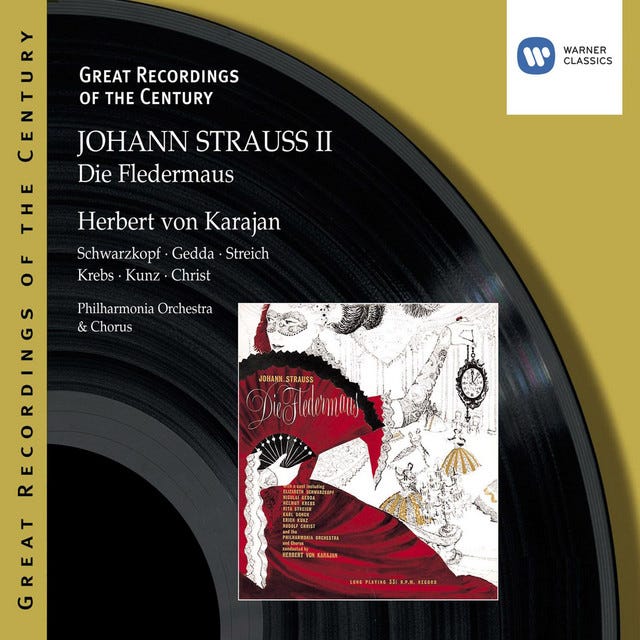
It is easy to imagine that by virtue of being Austrian that the music of Johann Strauss II and family would be in his blood. And so it was, because Karajan had a natural touch for the “Waltz King” and contemporaries, and even though we sometimes have a dourer image of him, when he did lighten up, he was an especially fine Strauss conductor. The first example is his 1955 mono recording of Die Fledermaus on EMI with the Philharmonia Orchestra and Chorus along with soloists Nicolai Gedda, Elisabeth Schwarzkopf, Helmut Krebs, Erich Majkut, Erich Kunz, Rita Streich, and Rudolf Christ. Like his Mozart opera recordings, I prefer the earlier Karajan where he created more excitement and forward impetus. Even though in mono, the sound is perfectly fine and doesn’t detract from the set. Just listen to the Overture and you will have a good sense of the joy that bursts forth here. Gedda and Schwarzkopf avoid some of the vocal habits that would creep in later, and both sing wonderfully. Streich and Kunz are reliable as always, the others are solid as well. The Philharmonia rivals even the Vienna Philharmonic here, and the entire performance is enjoyable.
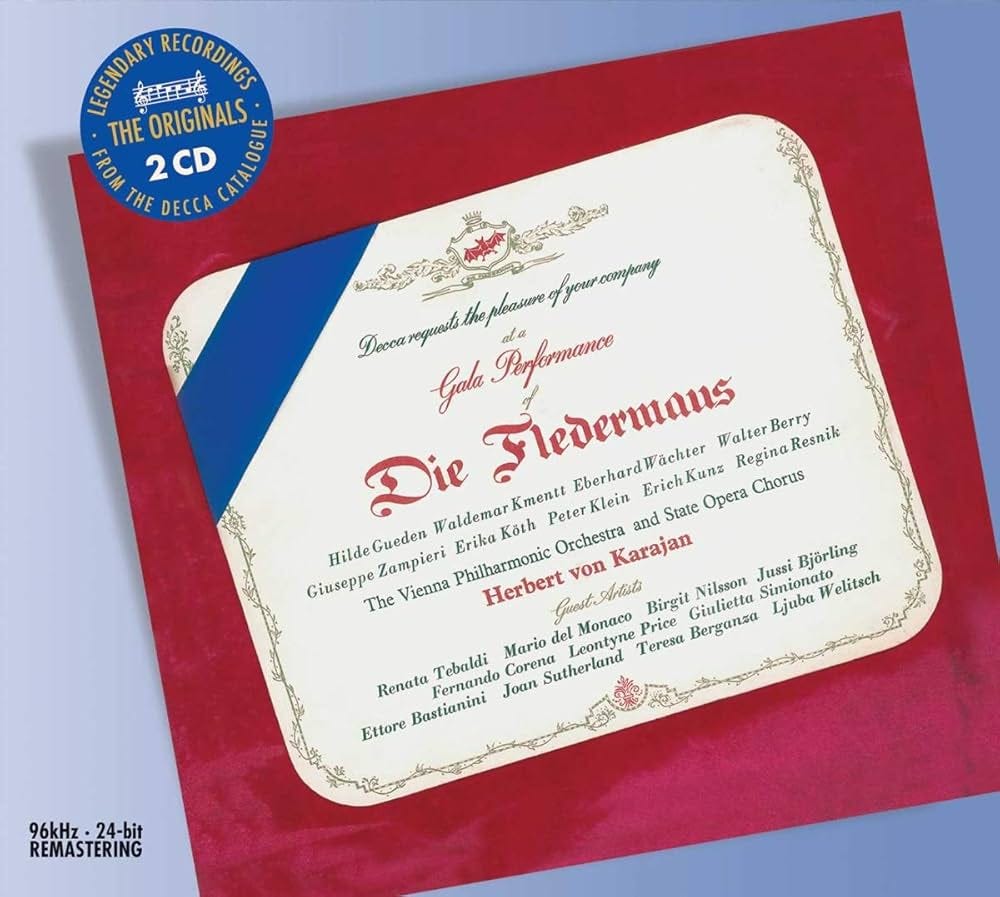
Equally impressive but in a somewhat different way is Karajan’s 1960 Die Fledermaus on Decca with the Vienna Philharmonic and Vienna State Opera Chorus. The soloists are Waldemar Kmentt, Hilde Gueden, Giuseppe Zampieri, Peter Klein, Walter Berry, Erika Köth, Regina Resnik, Eberhard Wächter, Erich Kunz, and Hedwig Schubert. The classic Decca sound cannot be beat, and puts this recording in a class of its own. But the performance is also top notch. Gueden’s Rosalinde is one of the best on record, perfectly characterized. Vienna regulars Kmentt, Berry, Zampieri, and Wächter all deliver their predictably fine performances. Resnik is an excellent Orlofsky, and Kunz makes a splendid and comical Frosch. On the Decca release we hear the “Gala” celebration too, which includes such great voices as Renata Tebaldi, Fernando Corena, Birgit Nilsson, Mario del Monaco, Teresa Berganza, Joan Sutherland, Jussi Björling, Leontyne Price, Giulietta Simionato, Ettore Bastianini and Ljuba Welitsch all performing numbers, a considerable bonus which makes this a unique experience. This is definitely recommended.
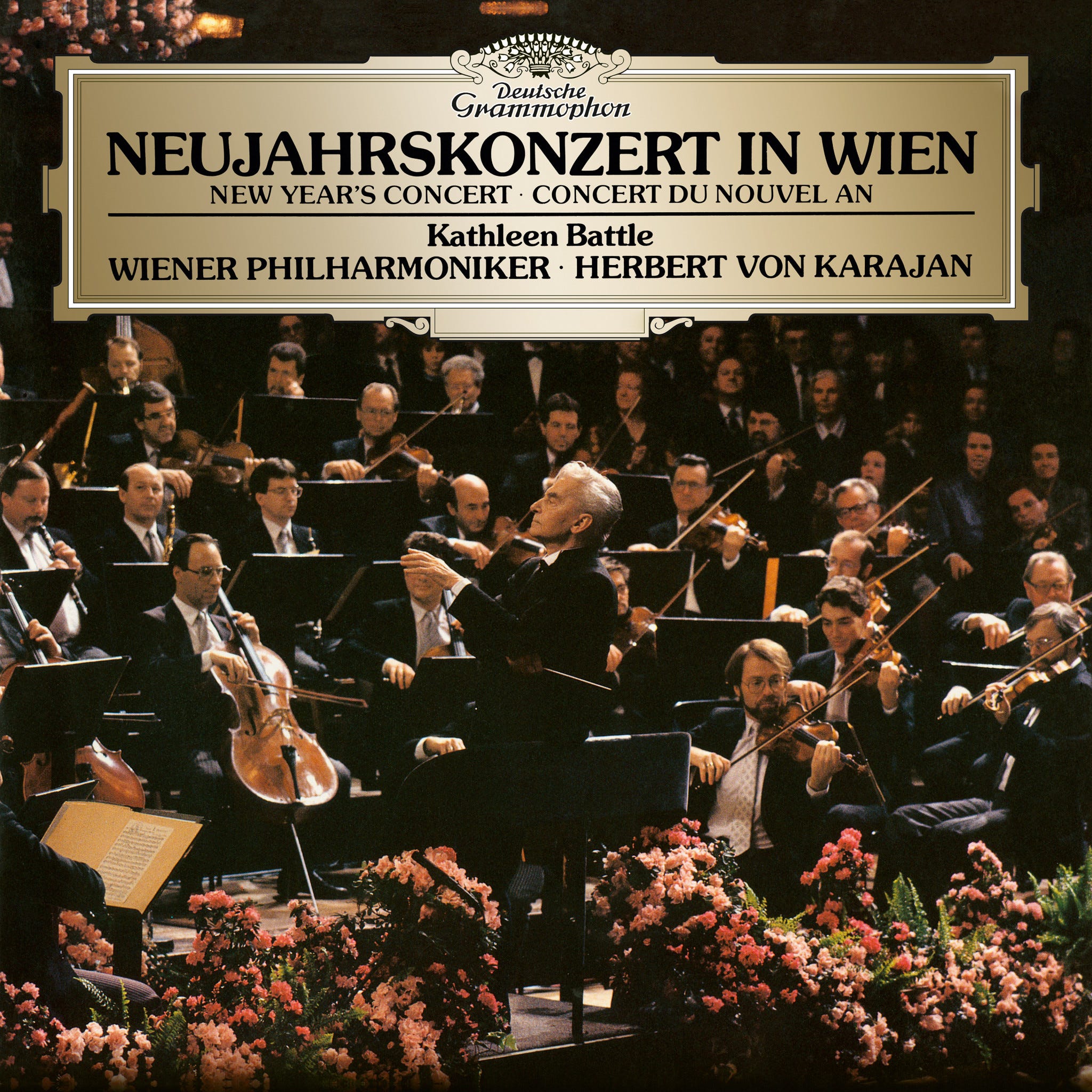
Karajan’s sole appearance in the Vienna Philharmonic’s annual New Year’s Concert series took place in 1987 in a concert recorded by Deutsche Grammophon and which has become one of the most cherished concerts ever in that series. The Blue Danube waltz has rarely sounded so refined and luxurious, but the whole concert is played with joy, authority, and elan. My other favorites from the concert include the Die Fledermaus: Overture, Music of the Spheres Waltz, Delirien Waltz, Voices of Spring (with Kathleen Battle), and of course the concluding Radetzky March. Something else this concert shows is Karajan’s sensitive phrasing and dynamic control, something that becomes clearer when you listen to other New Year’s from Vienna recordings. This one really stands out. The sound from DG is also warmer and more resonant than others in the series. Karajan’s other Johann Strauss recordings with the Berlin Philharmonic on Deutsche Grammophon are also well worth hearing, and in some cases, those are even better performances than on this one.
Richard Strauss
![STRAUSS Der Rosenkavalier [1956] (3 CD) KARAJAN Schwarzkopf LUDWIG Stich-Randall 724355624222| eBay](https://substackcdn.com/image/fetch/$s_!OX7-!,f_auto,q_auto:good,fl_progressive:steep/https%3A%2F%2Fsubstack-post-media.s3.amazonaws.com%2Fpublic%2Fimages%2Fb722ecd5-8514-439b-9ccd-c0005b665382_450x412.jpeg "STRAUSS Der Rosenkavalier [1956] (3 CD) KARAJAN Schwarzkopf LUDWIG Stich-Randall 724355624222| eBay")
Karajan was certainly one of the greatest Richard Strauss conductors in history, and he seemed to have an intuitive feel for this music, even if Strauss himself thought Karajan approached his music a bit too analytically. Among Strauss’ operas, Karajan first made his mark with his legendary 1956 EMI recording of Der Rosenkavalier featuring the Philharmonia Orchestra and Chorus joined by the Choruses of Loughton High School for Girls and Bancroft’s School. The main soloists are Elisabeth Schwarzkopf, Christa Ludwig, Teresa Stich-Randall, Otto Edelmann, Eberhard Wächter, Paul Kuen, Kersten Meyer, and Nicolai Gedda. Ludwig is especially successful here, as is Stich-Randall, both singing with distinction. Gedda does a fine job, as long as you don’t mind his somewhat nasally projection. Schwarzkopf is often seen as the biggest asset in this recording, and she is excellent of course, although I don’t think she is the finest Marschallin on record. In my view Karajan is the real star here, leading a reading which is refined, lustrous, and detailed. His is a more classical view of the work, perhaps not surprising coming from a time period where he conducted a lot of Mozart.
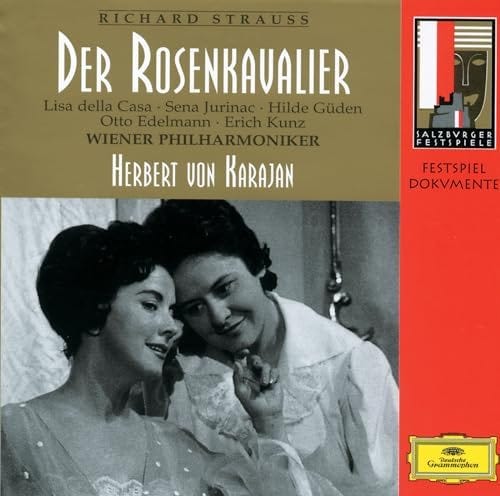
But an even better Der Rosenkavalier comes via a 1960 live recording with the Vienna Philharmonic and Vienna State Opera Chorus which has been issued on Deutsche Grammophon, but also the Gala label. For me the cast is even better than the one above and there is an extra spark of electricity from it being a live performance. The soloists are Lisa Della Casa, Sena Jurinac, Hilde Güden, Otto Edelmann, Erich Kunz, Renato Ercolani, Hilde Rössl-Majdan and Giuseppe Zampieri. I prefer Della Casa’s tone to Schwarzkopf (though I know others may disagree), and both Jurinac and Güden are simply superb throughout. Edelmann does a better job here than four years earlier, and I have always liked Kunz and Zampieri and they are true to form here. Karajan’s direction is every bit as good, perhaps a bit more relaxed and romantic, not a bad thing at all. Of course, having the VPO play for you in Strauss is luxury casting. The mono sound is quite acceptable, and the performance is very memorable.
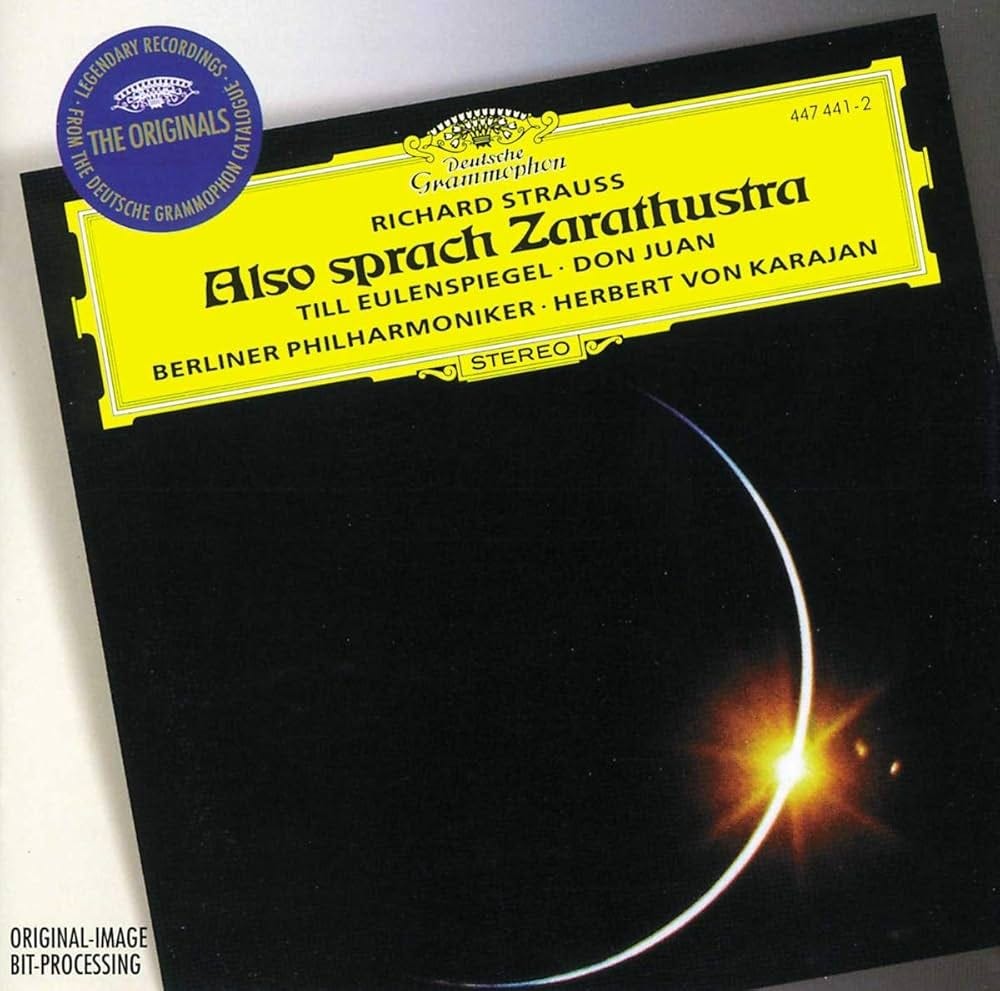
Karajan was among the finest conductors of Richard Strauss’ tone poems, and I would like to highlight a few recordings in particular. His 1973 recordings of Also Sprach Zarathustra, Don Juan, and Till Eulenspiegel with the Berlin Philharmonic on Deutsche Grammophon is among the best Strauss albums ever made in my humble opinion. The sound is spectacular for its time, and the performances by the BPO are virtually flawless. But there is no shortage of voltage or drama, and I really like how Karajan brings out the lyricism as well as the power in these scores. Textures are smooth but not at the expense of detail. This is one of the best Zarathustras ever recorded and was used for 2001: A Space Odyssey. The Don Juan has bite and great mood contrasts, and Eulenspiegel is witty and colorful. The album is a tour de force.
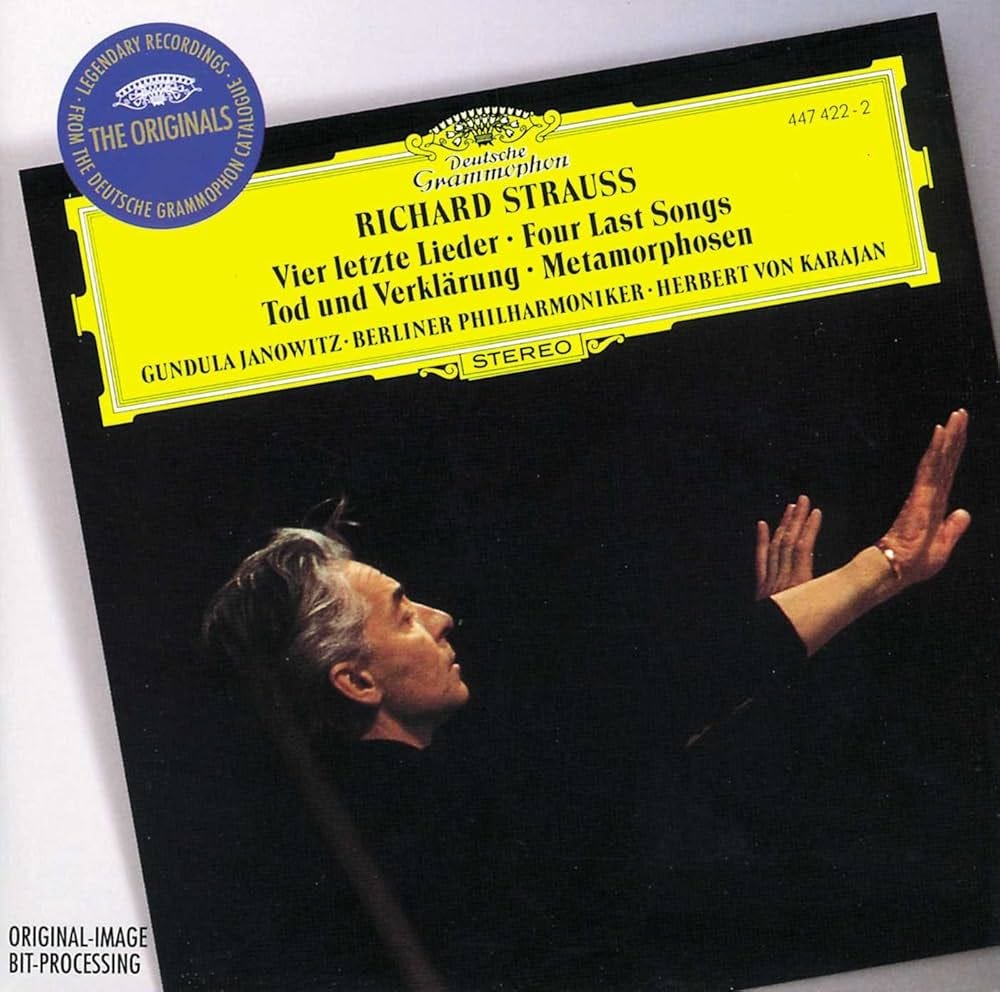
Karajan’s 1971 recording of Strauss’ Four Last Songs with Gundula Janowitz and the Berlin Philharmonic on Deutsche Grammophon is certainly among the best versions available. Janowitz had one of the best voices of her generation, and she collaborated frequently with Karajan. The singing and playing here is of the utmost sensitivity, and the heartbreaking songs are unforgettable. I also like Jessye Norman’s version, but this one is better on orchestral grounds and Karajan simply knows what he is doing.
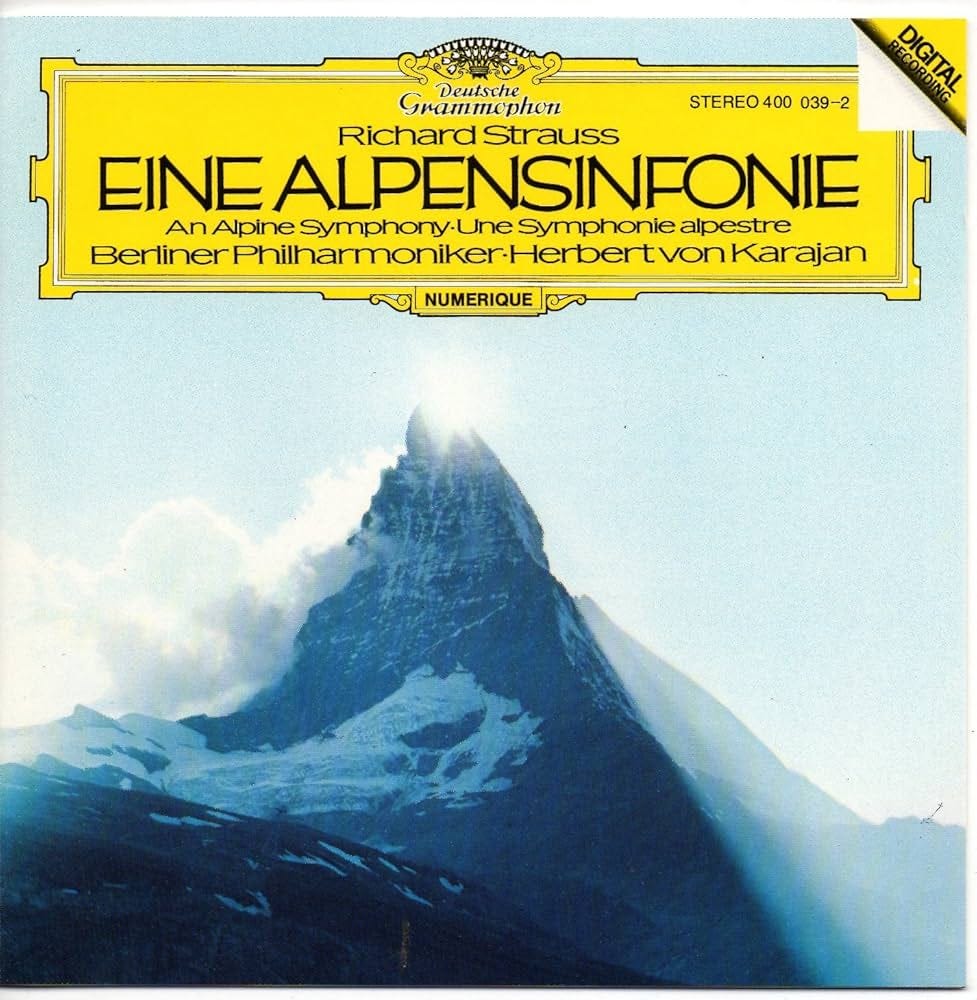
Karajan’s 1981 recording of Eine Alpensinfonie (An Alpine Symphony) is the finest in the catalog in my opinion and is an essential recording for any classical music collector. The original release was one of the first digital albums pressed for compact disc. The issue with that original issue was the strong digital glare which was thankfully rectified in later remasterings. This is easily one of Karajan’s finest albums, and it shows a complete mastery of Strauss’ idiom, and the Berlin Philharmonic plays fabulously and the sound is magnificent.
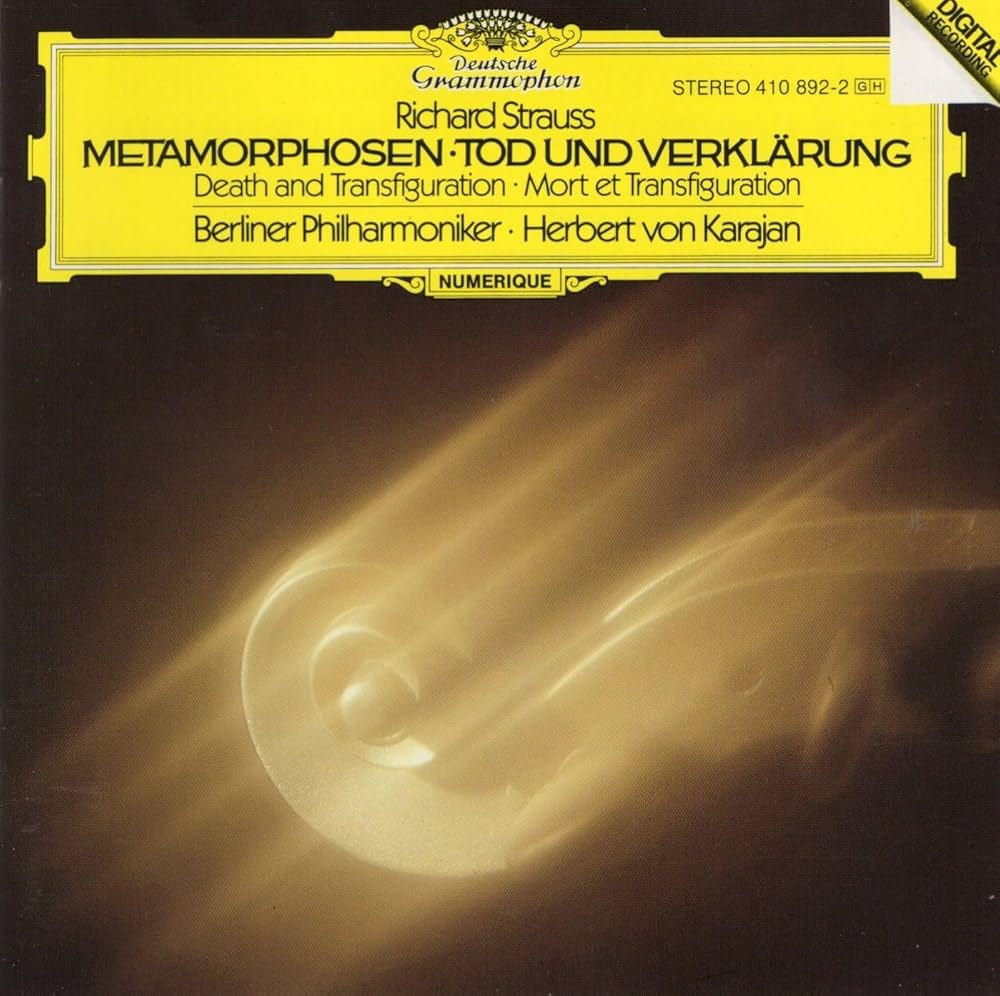
In 1983, Karajan made another winning Strauss album, this time with Death and Transfiguration and Metamorphosen played by the Berlin Philharmonic. Karajan’s 1971 recording of these works was very good, but these later versions are even better. The beauty of this recording is breathtaking, and Karajan gets under the skin of these emotional scores in a way nobody else has in my opinion. Strauss was an essentially tonal composer, but Karajan is also intent on bringing out the more dissonant and strained moments. He doesn’t rush through these pieces, but lets the narrative flow without too much intervention. The great thing about Strauss is that it is okay to be somewhat indulgent, and although the sound engineering here doesn’t really mimic a concert hall realistically, the benefit is we hear the lushness and details all the more clearly. The sound is warm and atmospheric. By the way, brace yourself for the timpani at 5’30” into Death and Transfiguration.
Tchaikovsky
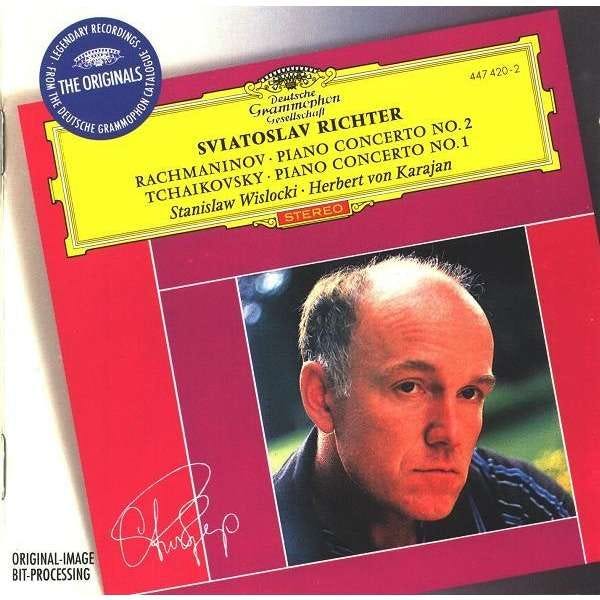
I very much like Karajan’s Tchaikovsky, and here let’s start with a recording which one of our readers put back on my radar, and that is the excellent 1962 recording of Tchaikovsky’s Piano Concerto no. 1 with the great Sviatoslav Richter and the Vienna Symphony Orchestra on Deutsche Grammophon. This concerto has been played to death of course, but here Richter gets as close as anyone to really making it all cohere in a way that reveals why it is such a great piece. The sound from the Musikverein in Vienna is a tiny bit over-reverberant, but overall Karajan does a good job of staying with Richter and never overshadowing him, not an easy task in a piece which has no lack of bombast. The performance has tremendous sweep and personality, and Richter is simply stunning in his shading, touch, and power.
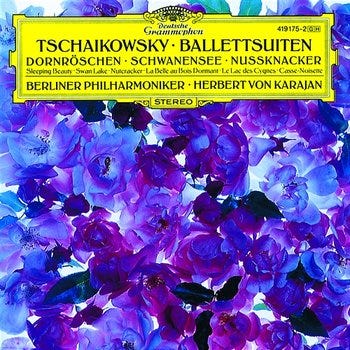
I also like the early 1970s Karajan recordings of Tchaikovsky’s Ballet Suites featuring the Berlin Philharmonic on Deutsche Grammophon. They play the ballet suites from The Nutcracker, Sleeping Beauty, and Swan Lake. Karajan must have liked this music, because he also recorded the suites earlier in Vienna for Decca. But these performances have marginally better sound, more personality, and beautiful playing from the BPO. Is this the last word on the suites? Certainly not, there are many other very fine recordings. But this is still recommended.
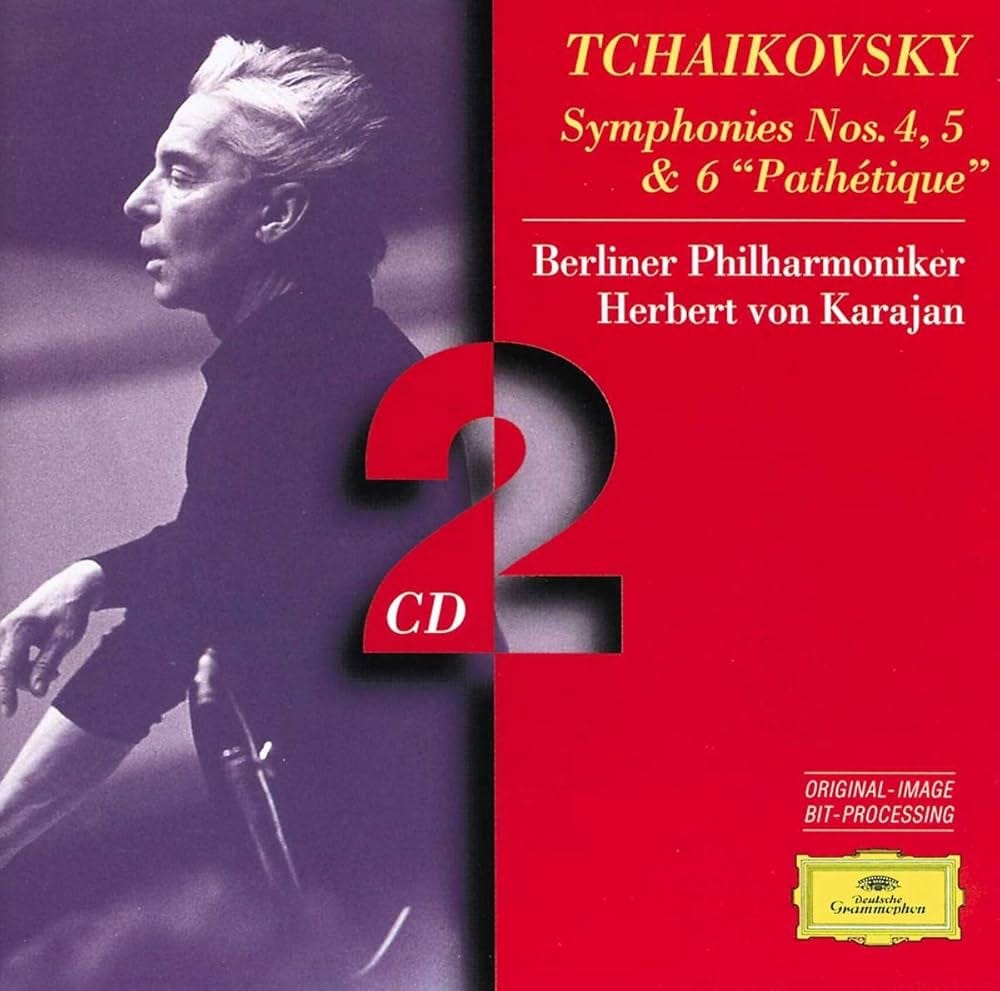
Karajan recorded the Tchaikovsky symphonies several times, but my favorite recordings are his 1975-76 recordings of Symphonies 4, 5, 6 with the Berlin Philharmonic on Deutsche Grammophon. These are big boned, dramatic readings with the full power and virtuosity of the BPO. I particularly like the Fourth, where the first movement climaxes must be played in such a particular way to have the intended impact. Brass and strings must interplay with perfect timing. Karajan does it exactly right, and it gives me goosebumps every time. The Fifth, perhaps the least cohesive of the last three symphonies, is given a compelling reading which takes no prisoners. The Sixth is epic in its feeling and catharsis, a fully caffeinated version which also reveals the heartbreak in spades. I really like this set and return to it often.
Verdi
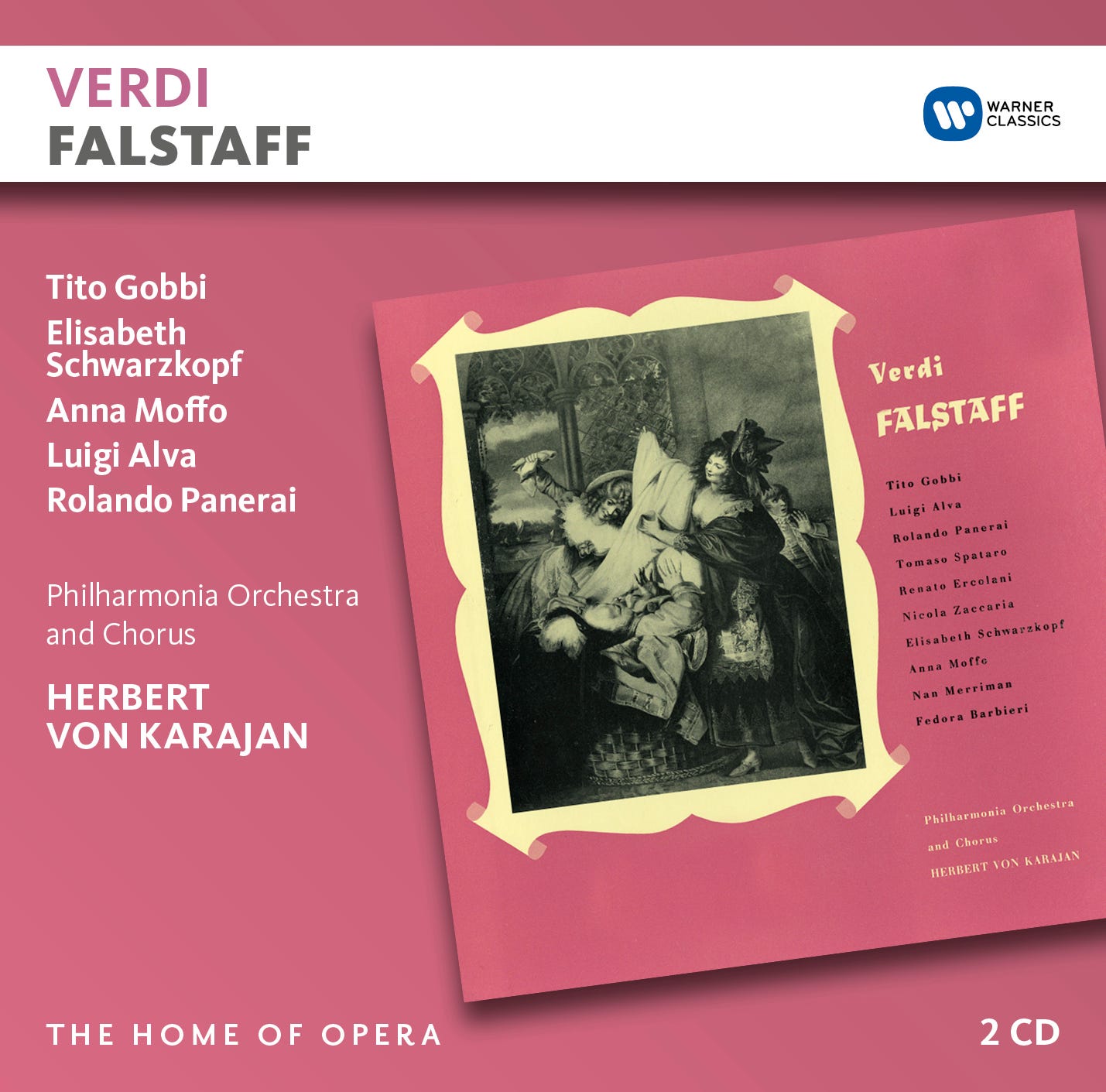
The Verdi opera Falstaff was a favorite of Karajan, and his 1956 EMI recording of the opera with the Philharmonia Orchestra and Chorus is one of the finest opera recordings ever made in my opinion. The cast includes Tito Gobbi, Luigi Alva, Rolando Panerai, Tomaso Spataro, Renato Ercolani, Nicola Zaccaria, Elisabeth Schwarzkopf, Anna Moffo, Nan Merriman, and Fedora Barbieri. Having the great Tito Gobbi as Falstaff is the primary asset here, but the rest of the cast is excellent as well. Gobbi is completely masterful in this role, and his distinctive voice can handle all the mood shifts and colors required. The Philharmonia was an outstanding orchestra at the time, and Karajan directs with precision and feeling. The sound is good.
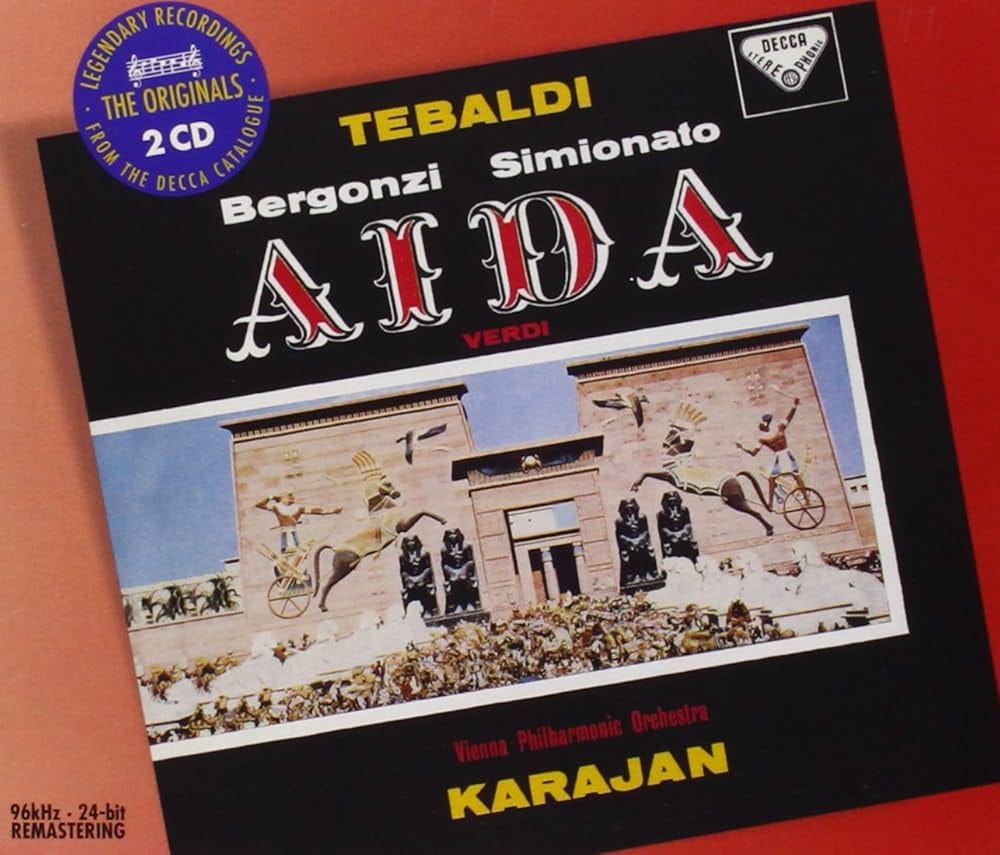
A few years later in 1959 Karajan recorded Aida with the Vienna Philharmonic and Singerverein der Gesellschaft der Musikfreunde Wien on Decca in a performance that features the great Renata Tebaldi in the title role. The Decca sound is exceptionally good for the time, and the Vienna orchestra is captured marvelously. The rest of the cast includes Carlo Bergonzi, Giulietta Simionato, Cornell MacNeil, Arnold Van Mill, Fernando Corena, Eugenia Ratti, and Piero De Palma. Bergonzi in particular comes across very well, and he pairs well with Tebaldi. The beauty of Tebaldi’s voice and her ability to float the high notes more than make up for any dramatic deficits she may have had. MacNeil has a powerful voice, and uses it fully to his advantage. Simionato delivers with intensity and excellent dramatic ability. The recorded sound occasionally suffers from some overload, but the balances and perspective are very good overall.
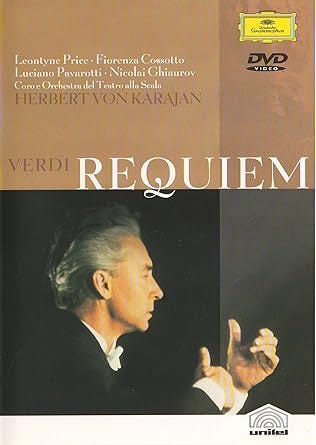
Karajan’s film recording of Verdi’s Requiem from 1967 with the Orchestra and Chorus of La Scala in Milan on Deutsche Grammophon includes the soloists Leontyne Price, Fiorenza Cossotto, Luciano Pavarotti, and Nicolai Ghiaurov. This is my favorite version of this piece, though I regret it never really transferred to an acceptable audio only recording except as knock off recordings. Price and Pavarotti are sensational in my opinion, and Cossotto and Ghiaurov are both among the best at their parts. Karajan leads a powerful performance which may be more operatic than some prefer, but it is certainly dramatic. The choral forces of La Scala are not the most precise ensemble here, but once you get swept up in the piece it hardly matters. I can’t recommend this highly enough.
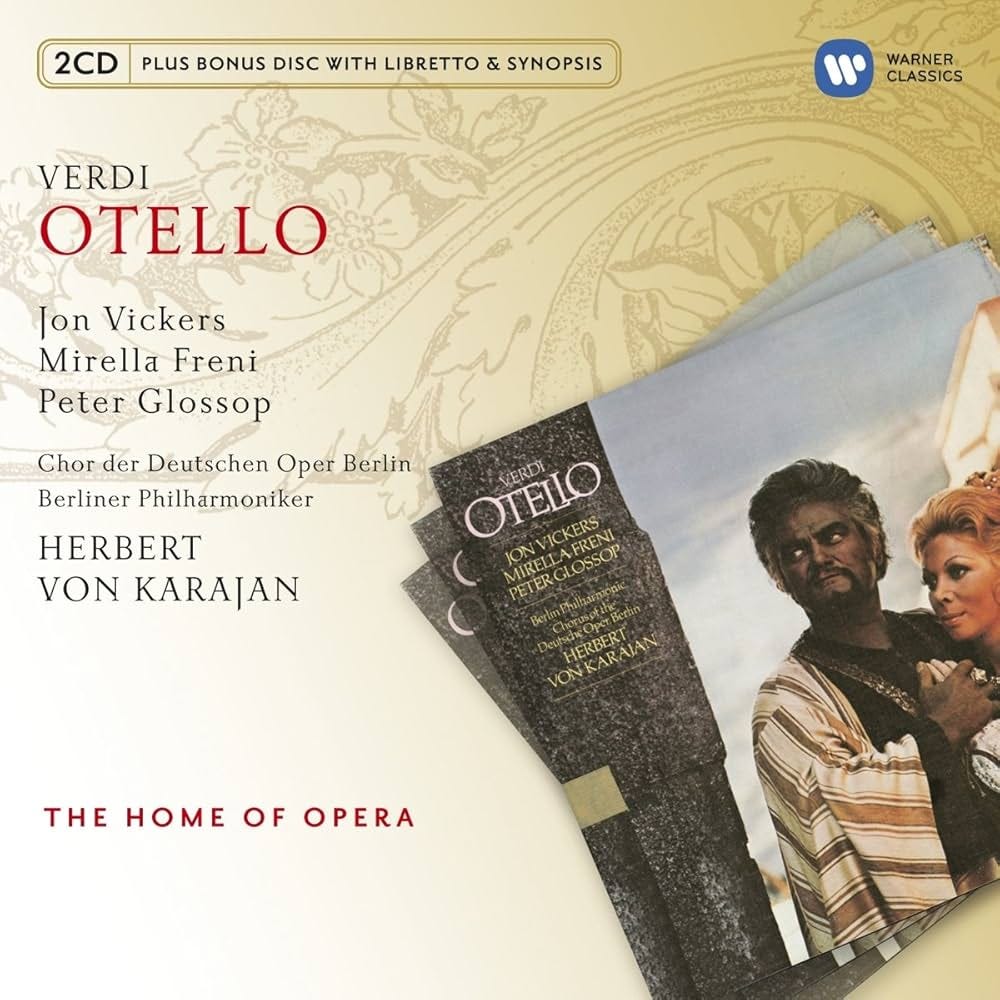
Finally, there is Karajan’s 1971 Salzburg Festival recording of Verdi’s Otello with the Vienna Philharmonic and Vienna State Opera Chorus and Salzburger Festspiel Kammerchor. The three primary cast members are Jon Vickers, Mirella Freni, and Peter Glossop are all very good in their roles, and of course the role of Otello was rather ideal for Vickers. He is exceptionally good here. The sound is what you might expect from a live opera performance in that balances are difficult to maintain when the action is moving. Freni is involving as Desdemona, and Glossop has the measure of Iago complete with intensity, bite, and an edge to his voice. The VPO is a great asset too, and they play with a bright and clear luster. Karajan shows again that he was a tremendous opera conductor.
Wagner
Wagner’s four operas in the Ring Cycle were recorded by Karajan between 1966 and 1969 for Deutsche Grammophon. Karajan leads the Berlin Philharmonic in recordings which were made at the Jesus-Christus-Kirche in Berlin. Karajan created the Salzburg Easter Festival in 1967 expressly for the purpose of creating a Ring Cycle with himself as conductor and director. Deutsche Grammophon subsidized the recordings sessions which took place before the actual stage productions, thus reducing the cost of stage rehearsals because they used the recordings instead of a live orchestra. The recordings were made between 1966 and 1969, and Karajan directed the stage productions in Salzburg of all four operas in the four successive years between 1967 and 1970. While the performances are excellent, the set lives in the shadow of Solti’s famous Ring Cycle on Decca completed a few years earlier. The Solti set has better and more immediate sound, including some spectacular effects, while the Karajan set is more naturally projected like a concert hall. This leads to the bass sound being recessed and off stage effects feeling quite distant. In addition, some of the finest Wagner singers of the day were contractually prohibited from working on the project because they had already done the Solti set. But the singing of Jon Vickers, Gundula Janowitz, and Regine Crespin raises this set to greatness, as does the contributions from Lili Chookasian, Christa Ludwig and Katharina Ligendza. Dietrich Fischer-Dieskau as Wotan is underweight but dramatically sensitive. The playing of the BPO is consistently at a high level throughout, and Karajan shows an extraordinary feeling for phrasing. Many that attended the stage production commented that the visual production was even better, but unfortunately the operas were not filmed at Salzburg. But the real strength here is the joining of the text and music into a coherent whole.
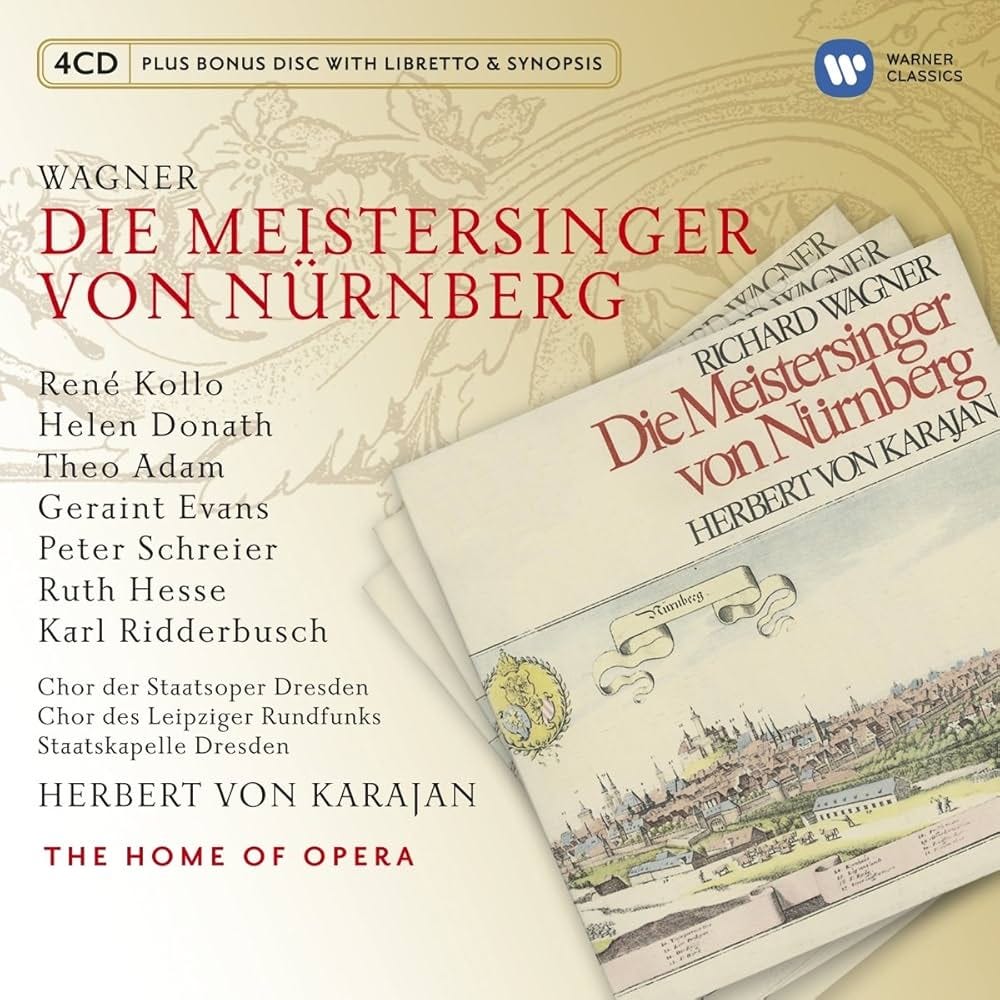
Karajan’s recording of Wagner’s Die Meistersinger from 1970 on EMI is another classic recording. Karajan leads the Staatskapelle Dresden and Dresdner Operchor and Leipziger Rundfunkchor. The main cast of singers includes Theo Adam, Karl Ridderbusch, Geraint Evans, Zoltán Kéléman, René Kollo, Peter Schreier, Helen Donath, Ruth Hesse, and Kurt Moll. The sound is terrific, rich and well-balanced. Karajan’s direction is true to form dynamic and detailed. Theo Adam was a staple of East German productions of the day, and even though he was not the best voice available, his characterization on the whole is satisfying. Kollo is fine, if not distinguished and Ridderbusch is firm and golden of tone. Donath has a perfect tone for the role, and Kéléman is excellent as well. Of course I love Kurt Moll’s bass voice as the Night Watchman. Schreier and Evans are acquired tastes to be sure, but they don’t let the side down at all.
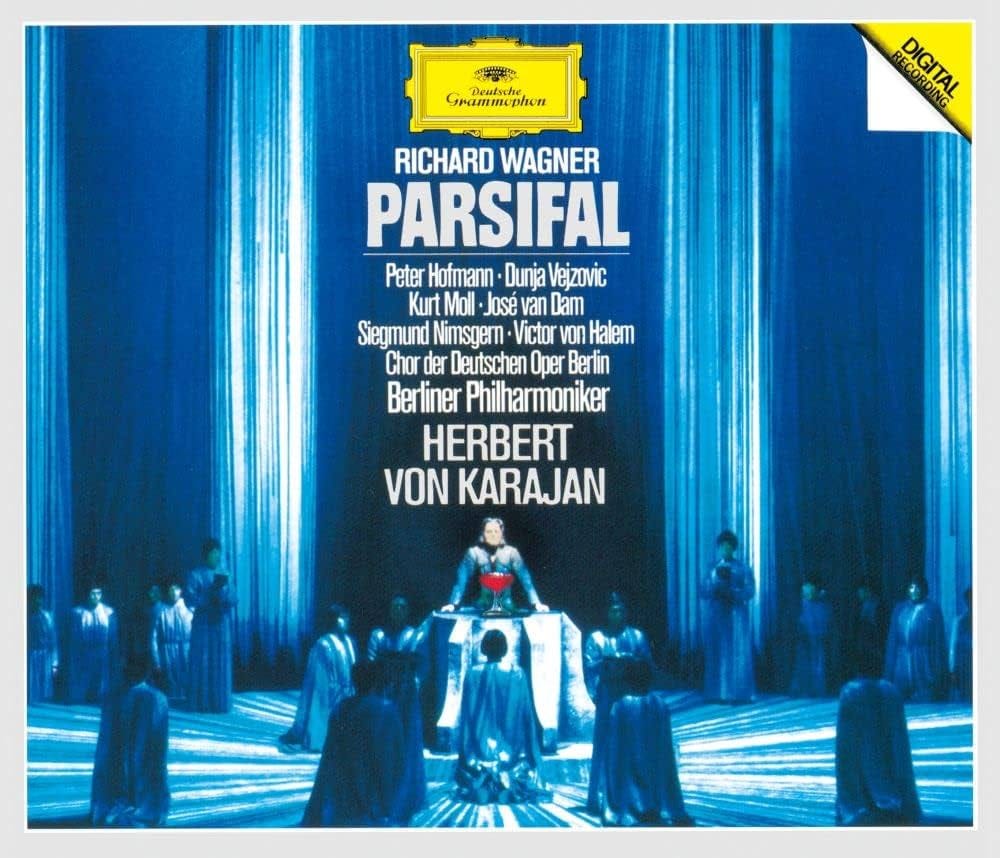
Karajan’s acclaimed Parsifal from 1980 on Deutsche Grammophon, with Karajan leading the Berliner Philharmonic and the Deutsche Oper Chorus Berlin, is easily one of his best Wagner recordings. The cast includes: José van Dam as Amfortas, Victor von Halem as Titurel, Kurt Moll as Gurnemanz, Peter Hofmann as Parsifal, Siegmund Nimsgern as Klingsor, and Dunja Vejzovic as Kundry. First, the recorded sound here is among the best of any Parsifal, so kudos to DG for that. While Karajan is on the slower side, that by no means takes away from the impact. Indeed, Karajan is masterful in bringing out key moments in a way that feels definitive. There is intensity and a spiritual atmosphere which really cannot be rivaled by anyone else save possibly Knappertsbusch. Let’s be honest, Karajan and the BPO were virtually at their peak here, and this recording is rich and rewarding.
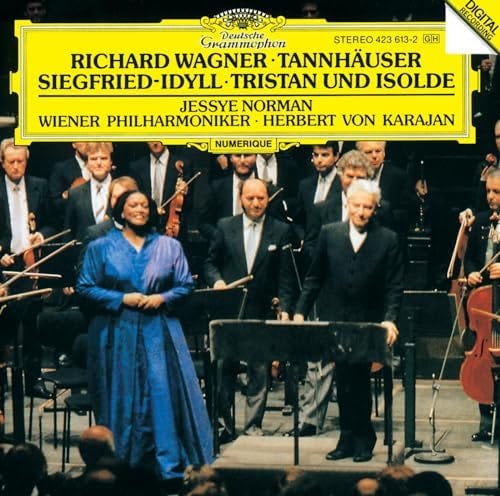
Another late career Karajan recording which I have always liked is the 1988 Wagner concert featuring Jessye Norman and the Vienna Philharmonic on Deutsche Grammophon. Norman sings the Liebestod from Tristan und Isolde, something she was simply born to sing. Everytime I listen to it I get goosebumps. The album also includes very fine versions of the Tannhäuser Overture and the orchestral Siegfried-Idyll, one of Wagner’s loveliest creations. The sound is good even with the live recording, and while some of Karajan’s tempos are a bit on the slow side by this time, the overall sweep and impact are well intact.
Webern / Schoenberg / Berg
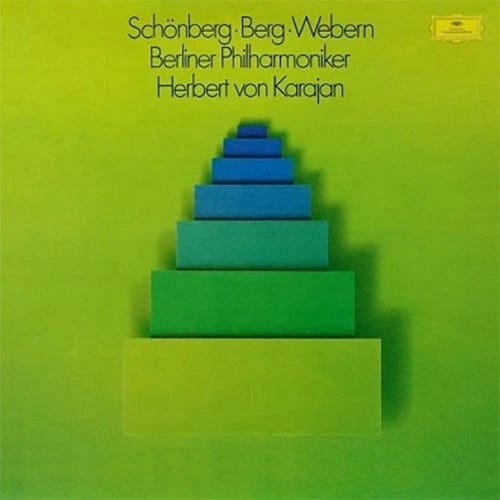
The 1974 recording Karajan made of the music of Webern, Schoenberg, and Berg with the Berlin Philharmonic on Deutsche Grammophon remains one of the best albums showcasing these composers. These are “serialist” / 12-tone composers of the 20th century (the so-called “Second Vienna School”), and while this kind of music is not everyone’s cup of tea, when performed as well as they are here, the music might make some converts. I especially like Webern’s Passacaglia here, and Karajan amps up the voltage making this sound like the shocking work it should be while still maintaining the lush BPO sound linking this music back to its romantic roots. The sound is atmospheric, not always with ideal clarity, but if you want to sample what the Second Vienna School is all about, this album is the ideal way to do that.
Other Karajan Recordings You May Like
Brahms: A German Requiem - VPO (Naxos 1947)
Mozart: Die Zauberflöte - VPO (EMI 1950)
Puccini: Madama Butterfly - La Scala (EMI 1955)
Strauss, R. Tone Poems - VPO (Decca 1959)
Famous Ballet Music - BPO (DG 1961)
Verdi: Otello - VPO (Decca 1961)
Holst: The Planets - VPO (Decca 1961)
Ravel: Bolero / Mussorgsky: Pictures - BPO (DG 1964)
Mascagni: Cavalleria Rusticana - La Scala (DG 1965)
Tchaikovsky: Ballet Suites - VPO (Decca 1965)
Beethoven: Overtures - BPO (DG 1965)
Leoncavallo: Pagliacci - La Scala (DG 1966)
Rimsky-Korsakov: Scheherazade - BPO (DG 1967)
Mozart: Don Giovanni - VPO (Orfeo 1970)
Mussorgsky: Boris Godunov - VPO (Decca 1970)
Strauss, R.: Death & Transfiguration / Metamorphosen - BPO (DG 1971)
Schumann: Symphonies 1-4 - BPO (DG 1971)
Grieg: Peer Gynt Suites - BPO (DG 1972)
Mahler: Symphony no. 5 - BPO (DG 1973)
Beethoven: Missa Solemnis - BPO (EMI 1974)
Mozart: Le Nozze di Figaro - VPO (Opera d’Oro 1974)
Mozart: Requiem - BPO (DG 1975)
Beethoven: Symphonies 1-9 - BPO (DG 1977)
Brahms: A German Requiem - VPO (DG 1985)
Dvořák: Symphony no. 9 “From the New World” - VPO (DG 1985)
Verdi: Un ballo in maschera - VPO (DG 1989)
Okay folks that is certainly enough Karajan for a lifetime. This is likely my longest post ever, so I do apologize for the length but not the content!
Join me next time in this series for #36 on the Top 75 Conductors series when we profile Rudolf Kempe. See you then!
______________
Notes:
“Gottbegnadetenliste”, BArch R 55/20252a, p. 10, Reich Ministry of Public Enlightenment and Propaganda, 1944 – via German Federal Archives.
Gramophone (21 July 2015). “Karajan’s Sibelius”. Gramophone.co.uk. Archived from the original on 30 September 2019. Retrieved 30 September 2019.
Gregor, Neil (2025). The Symphony Concert in Nazi Germany. Chicago: The University of Chicago Press. pp. 261–4. ISBN 9780226839103.
“Herbert von Karajan-Karajan Family”. Karajan Family. Archived from the original on 26 February 2012. Retrieved 14 March 2012.
“Herbert von Karajan’s Symphonic Obsessions” Archived 27 February 2020 at the Wayback Machine by Tom Huizenga, NPR, 4 April 2008.
“Herbert Von Karajan – Orchestras”. Karajan.co.uk. Archived from the original on 5 October 2019. Retrieved 30 September 2019.
Holland, Bernard (22 October 1982). “How Von Karajan Sees His Conducting Success”. The New York Times. Archived from the original on 26 September 2019. Retrieved 26 September 2019.
“Karajan-Büste entfernt: “In der NS-Zeit kein unbeschriebenes Blatt”“. neue musikzeitung (in German). 29 November 2023. Retrieved 29 November 2023.
Lapajne, Branka (4 April 2008). “The Shared Slovenian Ancestors of Herbert von Karajan and Hugo Wolf”. Archived from the original on 16 December 2014. Retrieved 5 May 2008.
Moore, Ralph. https://musicwebinternational.com/ralph-moores-surveys/. 2023.
Moore, Ralph. Schoenberg’s Verklärte Nacht. https://www.musicweb-international.com/classrev/2021/May/Schoenberg-Verklarte-survey.htm.
Osborne, Richard. (4 April 2008). “Herbert von Karajan’s Top 5 Recordings”. National Public Radio. Archived from the original on 12 May 2021. Retrieved 12 May 2021.
Osborne, Richard (2000). Herbert von Karajan: A Life in Music. Boston: Northeastern University Press. ISBN 1-55553-425-2.
Robinson, Paul. Karajan’s Ring Gets The High End Audio Treatment. September 2017. Found online at https://www.ludwig-van.com/toronto/2017/09/24/record-keeping-karajans-ring-gets-the-high-end-audio-treatment/.
Rockwell, John. (22 June 1986). “General Music Director of Europe”. The New York Times. Archived from the original on 3 December 2007. Retrieved 15 April 2007.
Rockwell, John. (17 July 1989). “Herbert von Karajan Is Dead; Musical Perfectionist was 81”. The New York Times. pp. A1. Archived from the original on 9 October 2017. Retrieved 20 December 2017.
Saunders, Frances Stonor (1999). The Cultural Cold War: The CIA and the World of Arts and Letters. New York City: The New Press. ISBN 978-1-59558-914-9. Archived from the original on 21 March 2020. Retrieved 27 March 2020.
Schmemann, Serge (25 April 1989). “Karajan Leaves Berlin Philharmonic”. The New York Times. Archived from the original on 3 October 2016. Retrieved 29 September 2016.
Snowman, Daniel (2010). The Gilded Stage: A Social History of Opera. Atlantic Books. p. 454. ISBN 978-1-84887-436-7.
Steinhage, Martin (1986). Chronik 1947 (in German). Dortmund, Germany: Harenberg Verlag. p. 178. ISBN 3-88379-077-X.
“The era of Herbert von Karajan”. Berliner-philharmoniker.de. Archived from the original on 2 October 2016. Retrieved 29 September 2016.
“The Two Sides of Herbert von Karajan”. Archived from the original on 10 April 2022. Retrieved 10 April 2022.
Tooze, Adam (2008). The Wages of Destruction (pb ed.). Penguin Books. p. 635. ISBN 978-0-14-311320-1.
Translated from Kammholz, Karsten (26 January 2008). “Der Mann, der zweimal in die NSDAP eintrat” [The Man Who Joined the NSDAP Twice]. Die Welt (in German). Archived from the original on 28 March 2016. Retrieved 27 March 2020.
Vaughan, Roger (1985). Herbert von Karajan : A Biographical Portrait (1st ed.). New York: W. W. Norton. ISBN 0-393-02224-2. OCLC 11814326.
von Karajan, Herbert (1989). Osborne, Richard (ed.). Conversations with von Karajan (1st US ed.). New York: Harper & Row. ISBN 0-06-039107-3. OCLC 21042949.
Wagner concert Archived 3 August 2020 at the Wayback Machine at the Palais de Chaillot, Paris, 6 June 1941 (the woman in the footage is Winifred Wagner).
https://en.wikipedia.org/wiki/Herbert_von_Karajan?scrlybrkr=40ad99ec#
Great selection. For my money one great Karajan recording is missing: Nielsen Symphony n. 4 “Inextinguishable” with Berliner in a DGG 1981 CD.