Building a Collection #96: Brahms' Piano Concerto no. 1
With recommended recordings

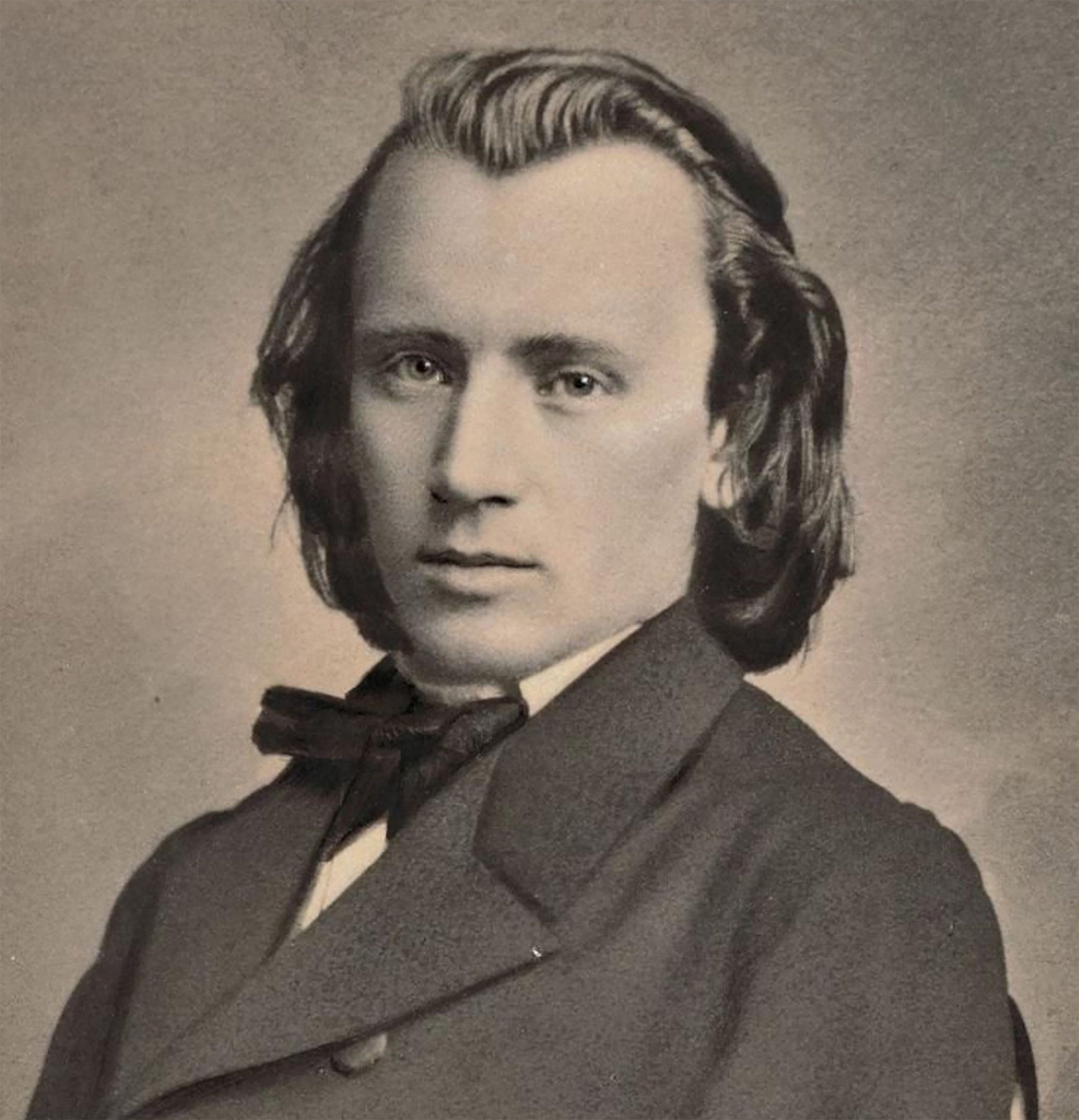
Building a Collection #96
Piano Concerto no. 1 in D minor, Op. 15
Johannes Brahms
_____________
“The powers from which all truly great composers like Mozart, Schubert, Bach and Beethoven drew their inspirations is the same power that enabled Jesus to do his miracles.”
-Johannes Brahms
At #96 in our survey is the colossal Piano Concerto no. 1 by Johannes Brahms, one of Brahms’ first big successes, and a work that is almost symphonic in terms of the significant importance of the orchestral part. A mere 25 year-old at the time of its completion, the concerto played a major role in making Brahms a household name. In the concerto we can hear echoes of Beethoven, but also the unique voice of Brahms in the form of his substantial textures, great lyricism, sweeping melodies, inventive counterpoint, and his beautiful themes. While the entire concerto is captivating, the central Adagio in D major in my view is among my favorite movements in all of music.
Johannes Brahms
Johannes Brahms (b. 1833 – d. 1897) was a German composer of the Romantic era and is generally regarded to be one of the greatest composers ever. Even though Brahms was from the Romantic era, he was very much connected to the Classical forms as seen in the works of Haydn, Mozart, and especially Beethoven. In that sense, Brahms represented a “conservative” approach to musical tradition at a time when form and convention were changing due to Wagner and others. Brahms wrote symphonies and other orchestral works, chamber music, concertos, keyboard works, vocal, and choral music.
Brahms was from a musical family in Hamburg and showed a great deal of promise even at a young age. He began as a pianist and would often perform around Hamburg in eating and drinking establishments. By adulthood, Brahms had become friends with well-known musicians of the time. He befriended the violinist Joseph Joachim, a relationship that would be personally and artistically important throughout his life. But perhaps most important was his friendship with the famous composer Robert Schumann. Schumann, twenty-two years older than Brahms, became his most fervent advocate. Brahms likewise had tremendous esteem for Schumann. Brahms practically became a member of Schumann’s family, and after Schumann’s death at the too young age of 46, Brahms continued to be close friends with his widow, the pianist and composer Clara Schumann. Brahms never married, although he apparently had several romantic relationships throughout his life. There is speculation about whether Brahms and Clara were more than friends, and there is evidence that Brahms was probably in love with her.
Many of Brahms’ compositions have become universally known, and many are perennial favorites that are frequently programmed by orchestras around the world. As part of the “Big 3” of Bach, Beethoven, and Brahms, he occupies a central place in the history of classical music. My personal favorites by Brahms include his Symphony no. 1, Symphony no. 4, Ein Deutsches Requiem, Piano Concerto no. 1, Violin Concerto, Haydn Variations, and his Piano Trio no. 1.
Piano Concerto no. 1
When Brahms was 20 years old in 1853, he met Robert and Clara Schumann, something that would play a primary role in his development as a composer, and they would also become good friends. Indeed, it is apparent that this encounter inspired Brahms to get to work on what would eventually become his Piano Concerto no. 1. After Robert Schumann attempted suicide in 1854, Brahms poured himself like never before into composing an emotional and musical response to the events. While initially Brahms conceived of a piano sonata for two pianos, as he worked on it he became convinced it could become something larger, perhaps even a symphony. It seems evident that Brahms also felt some pressure to produce something that would confirm his role as the “heir to Beethoven” as Schumann had predicted.
But by 1855, Brahms had become dissatisfied with the structure and in his thoughts and dreams began to imagine the piece as a piano concerto, with piano being Brahm’s favorite instrument. While he had some clarity around the piano part, he had far less clarity about the orchestral part and since he had not composed a major orchestral work yet at this point, he was not confident that the orchestral accompaniment would do justice to the piano part. Brahms wisely turned to a few of his close friends for advice along the way, first to close friend and confidant Julius Otto Grimm, an expert on orchestration. But also Brahms exchanged more than 20 letters with good friend and violinist Joseph Joachim, full of ideas back and forth about the concerto. Thus Brahms felt he finally received the guidance he needed to proceed with the orchestration. While the first movement is largely in the original form it was composed, the second and third movements came later and Brahms also revised them a few times.
In terms of proportion, Brahms’ Piano Concerto no. 1 rivals the largest piano concertos, including being even longer than Beethoven’s Emperor Concerto. It likely took Brahms around five years to compose, not counting some later revisions. It is one of the most “symphonic” concertos in the entire repertoire as I mentioned, meaning that the orchestral part is every bit as important as the piano part to the overall structure. The concerto is in three movements as follows:
Maestoso
Adagio
Rondo: Allegro non troppo
The first movement alone is about 20 minutes in length with extensive development within it. It was important for Brahms to place his concerto in a traditional classical concerto structure, but what he does within that structure was uniquely Brahms. There are moments of quiet and tenderness, dialog between soloist and orchestra, as well as larger tutti sections more similar to a symphony. The extended opening of the concerto before the piano even enters is a massive introduction full of angst and tension. Drama is emphasized, and there is an emotional element immediately evident. There is a sense of tragedy as well, with the consolation coming in later with gentle lyrical sections and a reflective piano part which is deceptively difficult for the soloist.
The second movement Adagio is focused even more on consolation, with Brahms weaving heart-rending but ultimately hopeful themes full of wistfulness, mourning, yearning, but also healing and solace. I have a personal connection to this movement almost unlike any other piece of music, as I attended a live concert with pianist Hélène Grimaud and the Boston Symphony Orchestra playing this concerto within a few days of losing a loved one. Upon hearing this movement, I was transported to a place of peace and comfort where I could certainly sense the presence of my loved one. It was extraordinary, and I am taken back to that experience every time I hear this movement. Grimaud played it with the utmost sensitivity and it is such a lovely piece of music.
The finale is a Rondo with more rhythmic drive and it contains several themes but always with the soloist fairly well integrated into the orchestra. While the piano opens the movement in brilliant fashion, there is almost a chamber music sort of interchange between pianist and orchestra. While the solo part here may not be the high wire act of the Rachmaninoff concertos, the pianist must maintain the musical line in balance with the pacing of the orchestra, use accents and dynamics effectively to enhance the melodies, and know how to blend well into the larger whole. The way the pianist projects their sound, and indeed the acoustic of the space, are both important to how the part comes across. The ability to use tonal color is also key, as well as knowing when to push forward and when to pull back. The final two minutes of the concerto, the coda, builds to an inexorable climax before the piano has its own run. Then the orchestra comes back in as we turn to the final thrilling conclusion. Many musicologists have noted the Rondo’s similarity to the finale of Beethoven’s Piano Concerto no. 3.
The concerto had a most inauspicious beginning in performance, with the first two performances in Hanover and Leipzig being decidedly unsuccessful and with critics carping that the concerto “cannot give pleasure” and it was filled with the “shrillest dissonances”. Brahms was disheartened, and confided in a friend that “My Concerto has experienced a brilliant and decisive - failure.”
But that was far from the end of the story. Soon the concerto began to have success, beginning with its third performance taking place in Hamburg. The reviews were much more positive, and being encouraged, Brahms made some additional revisions to improve it. When Brahms shared the score with Clara Schumann, she declared it provided “hours of joy”. In 1865, a performance in Karlsruhe proved to be a turning point where the concerto was widely praised by critics and audiences alike. Further acclaim would wait until the famous conductor Hans von Bulow strongly advocated the work beginning in 1882. While at the time the concerto was unlike anything audiences had heard, looking back now there is no doubting the concerto’s role in shaping the landscape of the romantic era in music. The concerto is classic Brahms in the sense that upon repeated hearings the work begins to make more and more sense and Brahms’ genius becomes more clear. This has been true for me with a great deal of Brahms’ music, but I have now arrived at a place where I truly appreciate and enjoy what he accomplished.
Recommended Recordings
I am resistant to labeling any of the recommended recordings “essential”, although I reserve the right to change my mind at some point. There are many, many outstanding recordings of this concerto and once you make your way through the recommended list below, you should also check out the honorable mention recordings because many of them are also excellent. As always, my own preferences color my choices, but I do make an effort to be fair to different styles and approaches. I also try to make allowances for the age of the recordings, and the sound quality, at least to a point. There are certainly times when the listener simply can’t get past the poor sound regardless of the quality of the performance itself. But that gets into some topics that deserve their own essays.
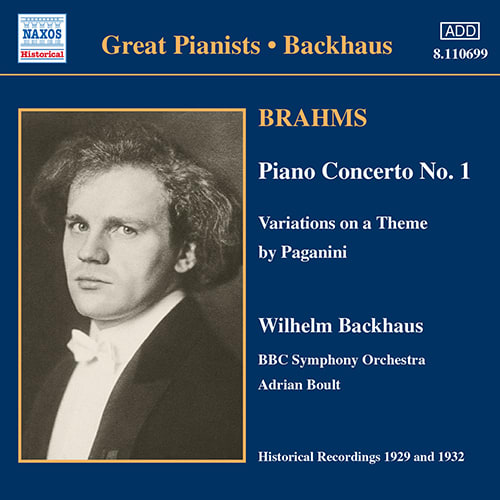
The first recommendation is an historical recording from 1932 with the German pianist Wilhelm Backhaus accompanied by the BBC Symphony Orchestra under Sir Adrian Boult (HMV/Biddulph/Naxos). You will need to make accommodation for the dated sound, although it is better than average for its time. This is a classic historical account highlighted by brisk tempos and the distinguished playing of Backhaus in what I believe is his best recording of this work. While Boult’s direction is perhaps not as direct and gripping as Szell or Reiner, he is a fine accompanist. Backhaus plays with elan and great skill and while he is not as flexible in his phrasing as Fleisher, this is a reading of authority and excitement.
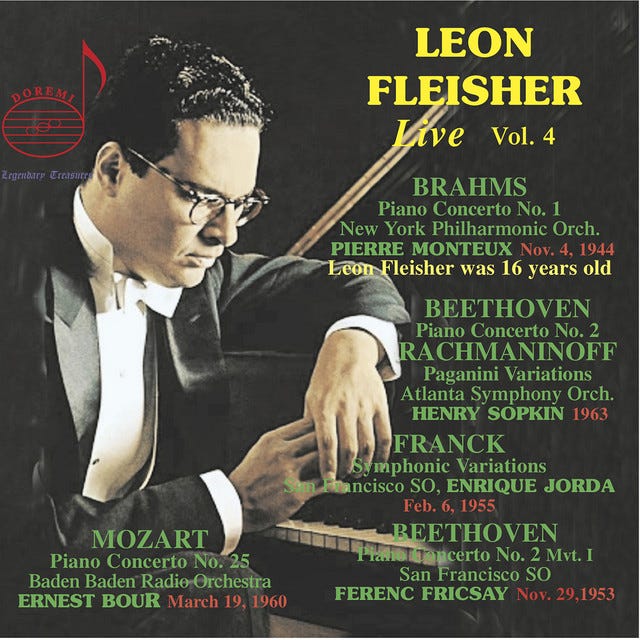
The great American pianist Leon Fleisher was only 16 years old when he recorded a fabulous account of the concerto in 1944 with Pierre Monteux and the New York Philharmonic (Doremi label). The live recording from Carnegie Hall includes the radio host commentary, and the sound is very good for its time, even if it is a bit dry with some thinness in the strings. Fleisher would become quite associated with the Brahms piano concertos throughout his career, and even in this early performance we get more than mere glimpses of Fleisher’s intuitive understanding of Brahms’ piano writing. Monteux directs a vital account which has the flavor and spice of a live recording where the tempos are not allowed to drag. When Fleisher enters you can sense an urgency in his playing, and even with the faster than usual tempo, his playing is impressive and the interplay between him and the orchestra is superb.
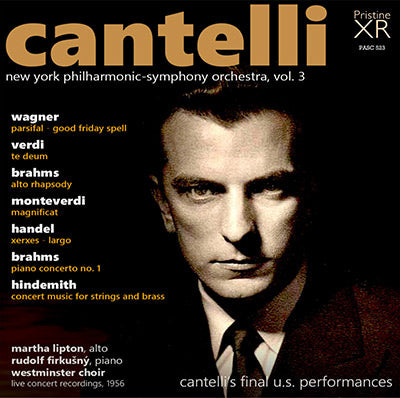
If you are patient with the imperfect sound from Carnegie Hall, the 1956 recording of the concerto with Czech American pianist Rudolf Firkušný with Guido Cantelli leading the New York Philharmonic is a superb performance. Cantelli takes a fundamentally dramatic approach to the concerto’s first movement, which I very much enjoy. The piano is recessed a bit in the sound, which is problematic, but Firkušný shares Cantelli’s view and keeps up with incendiary playing full of passion. That’s not to say the lyricism is missing, just listen to the heartfelt Adagio which is full of pathos even while taken faster than usual. Cantelli was a Toscanini protege after all, and it is rather evident in the directness of the performance. I listened to the Andromeda label version, but if you want this performance you should go for the Pristine label version.
Encountering Leon Fleisher once again, there is the 1958 studio recording of the concerto on Sony where Fleisher is accompanied by George Szell and the Cleveland Orchestra taken from Severance Hall in Cleveland. This is a giant of an account which many listeners consider essential. Once again we are met by Fleisher’s urgency, but also by his deep understanding of the music. There is the story of Fleisher’s own Steinway piano being delayed by a snowstorm in New York City, and thus he used a different piano to record the first movement and then his own piano for the second and third movements. Szell conducts with typical fire and energy in a dramatic reading, but is also completely at the service of the soloist and never steals the show. Fleisher’s pianism is characterized by a smoothness and a legato which is disarming in its lyrical beauty. My goodness, he produces a lovely sound. There is intimacy and tenderness, but also power and grandeur. The sound is full and spacious with the piano and orchestra in a nice balance. You can even hear Fleisher’s delicate finger work, just listen at 9’29” in the first movement. This is easily one of the most recommended recordings of this masterpiece.
American pianist Julius Katchen was a superb Brahms pianist, especially known for his solo piano Brahms performances. But his 1959 recording of this concerto with the London Symphony Orchestra under Pierre Monteux is excellent. Recorded at the Walthamstow Assembly Hall in London by Decca, this is a big boned performance with plenty of warmth as well as drama. While Katchen is not as ardent as Fleisher, he brings a great deal of passion and majesty to this music. Monteux was nearing the end of his career, but if you look at the many times he conducted this work with different soloists, he must have had this music in his veins and it shows. The LSO sounds terrific, and we have the classic Decca sound from this period which was outstanding.
The partnership between Carlo Maria Giulini and pianist Claudio Arrau was magical in their early 1960s album featuring Brahms’ Piano Concertos 1 & 2 and the Philharmonia Orchestra on EMI (now Warner). The unity of vision between the two artists is immediately clear, as the more lyrical and almost symphonic elements are emphasized. For me, this was Arrau’s best period as an artist as the first concerto was recorded in 1960. While not quite reaching the heights of Gilels, Serkin, or Fleisher in my mind, this is still an excellent recording and fully recommended. As usual with Giulini, the more reflective and spiritual aspects of the score are at the fore, and this fits well with Brahms’ intentions in my opinion.
The London Symphony Orchestra also features in the excellent 1962 Decca recording with Sir Clifford Curzon and George Szell, another recording with classic sound from Kingsway Hall in London. Szell’s direction is taut and full , with a bit more warmth from the LSO than he typically received in Cleveland, but with slightly less precision. Curzon delivers a relatively traditional, but fully probing and balanced reading. The piano sound is a little jangly, and the orchestra is a tad recessed. But the partnership of these artists brings great satisfaction, and while it does not quite reach the heights of Fleisher and Szell, it is still among the finest versions of this concerto.
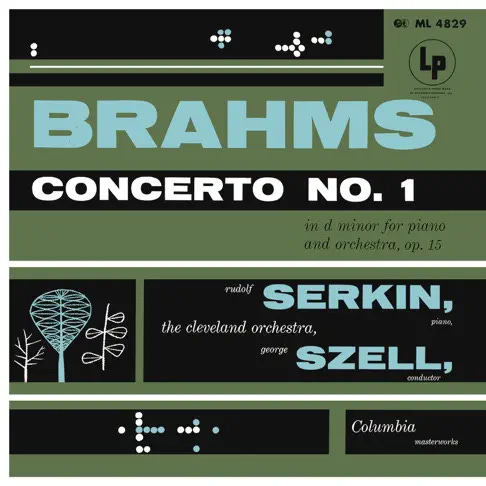
George Szell delivers once again in 1967, this time with the legendary pianist Rudolf Serkin and the Cleveland Orchestra on Columbia (Sony). While Szell and the Clevelanders almost sound too strident at certain moments on this recording, it is certainly one of the most dramatic accounts ever made. Both Szell and Serkin were at the top of their game, and the sound is clear and immediate. Rhythms are taut and sprung, Serkin’s playing is lucid, articulate, and full of character, and he is also able to bring some magically lyrical playing to each movement. While not as smooth as Fleisher, Serkin is perhaps the more exciting of the two. But this is splitting hairs, and both are wonderful versions. The orchestral contribution is nothing short of sensational. In short, this is a strongly recommended recording.
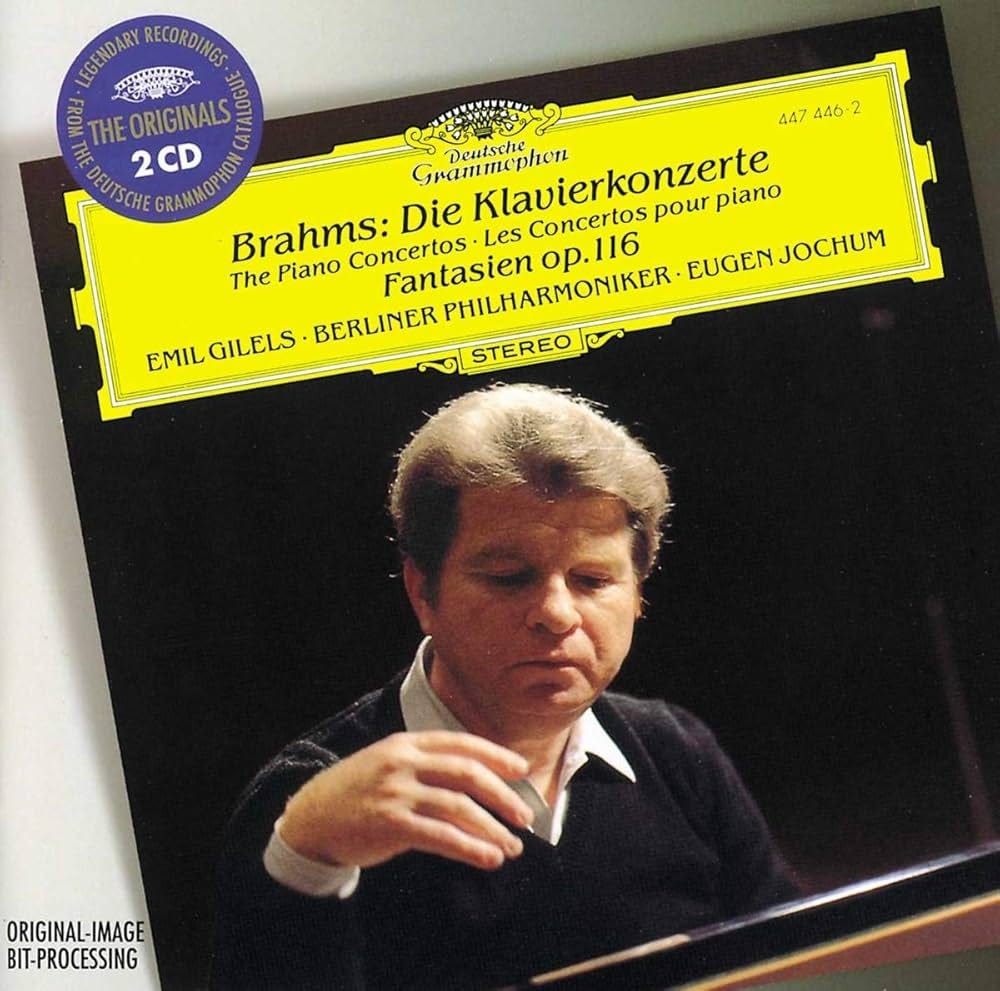
Another classic account, and one which some critics would consider essential, is the 1972 recording by Ukrainian pianist Emil Gilels and the Berlin Philharmonic Orchestra under the baton of Eugen Jochum on Deutsche Grammophon. Interestingly, Gilels had never even played the first concerto prior to the recording sessions, and that it was Jochum conducting rather than the Karajan since the BPO was his orchestra at the time. While Gilels misses some of the flexibility of Fleisher and Arrau, he brings plenty of power and passion. Jochum’s direction is similar, emphasizing the large sweep and grandeur of the orchestral part. His pacing is somewhat more deliberate than many of the finest performances, but because you have the BPO playing for you, the tension is well maintained. The sound from the Jesus-Christus-Kirche in Berlin is warm and detailed.
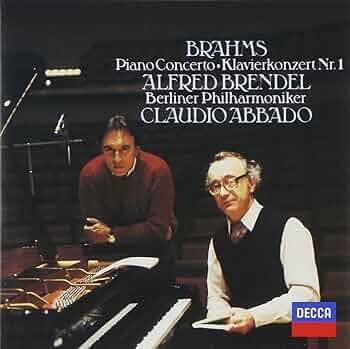
The 1986 partnership between pianist Alfred Brendel and Claudio Abbado leading the Berlin Philharmonic Orchestra (once again recorded in the wonderful acoustic of the Jesus-Christus-Kirche in Berlin) is thoroughly convincing. I have generally associated Brendel with Mozart and Beethoven, but he proves to be a deeply searching and reliable guide to soloist’s part here. Brendel succeeds in bringing all the details to life, including the trills in the first movement, and his Adagio is meltingly beautiful and tender. While this is middle of the road interpretation with no big surprises, everything is so well done that it must be recommended. The sound is well balanced, warm, and resonant. Pacing is traditional, but it feels right and while Brendel leans more toward a classical approach in the outer movements, his phrasing is actually quite pliable and appealing in the softer sections. Recommended.
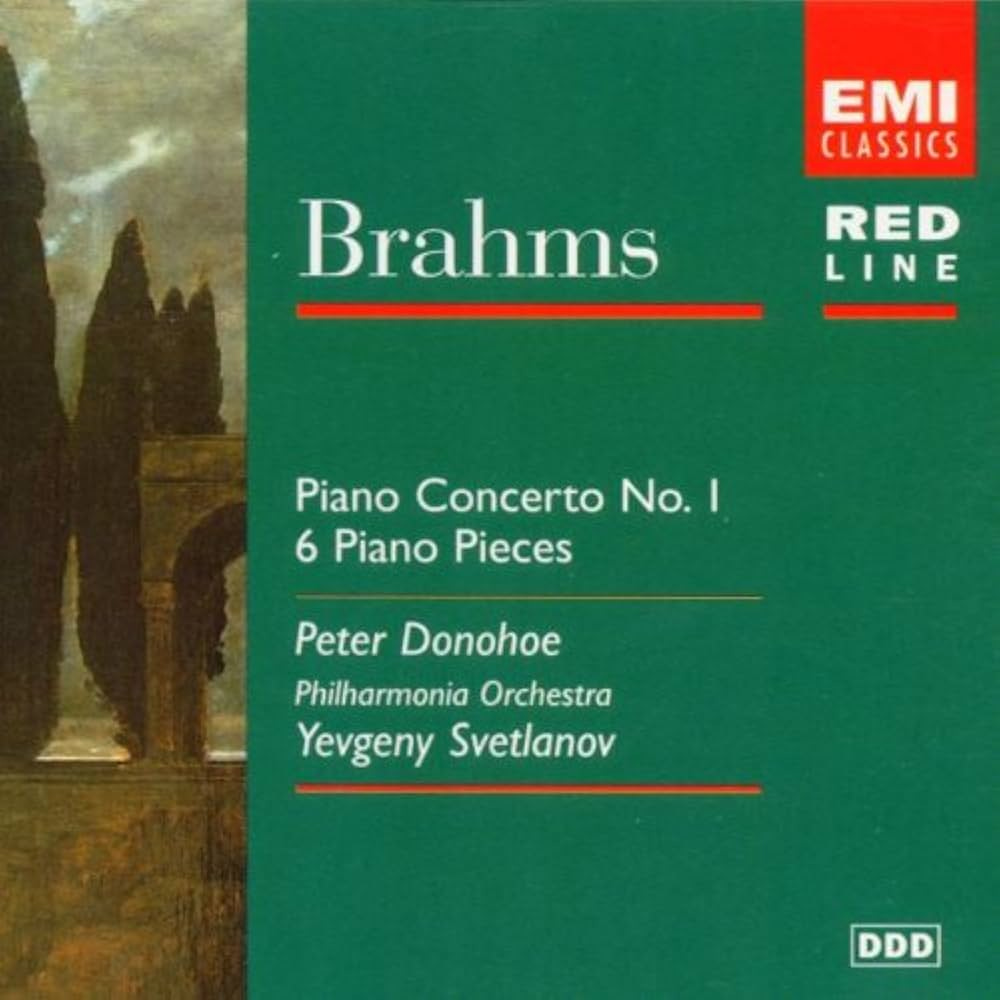
One very pleasant find in this survey for me was the 1990 account by English pianist Peter Donohoe with the Philharmonia Orchestra under Russian conductor Yevgeny Svetlanov on EMI (now Warner). This is an exciting performance, with Donohoe bringing energy and clarity along with a keen sense for dynamics. The Philarmonia plays superbly for Svetlanov, and even though he developed a reputation for high voltage interventionist performances, here the direction is in the mainstream with a good dose of momentum and pulse. Some reviews I’ve seen claim this performance doesn’t quite stand side by side with Gilels, Fleisher, Curzon etc. I say that is rubbish. This is especially enjoyable.
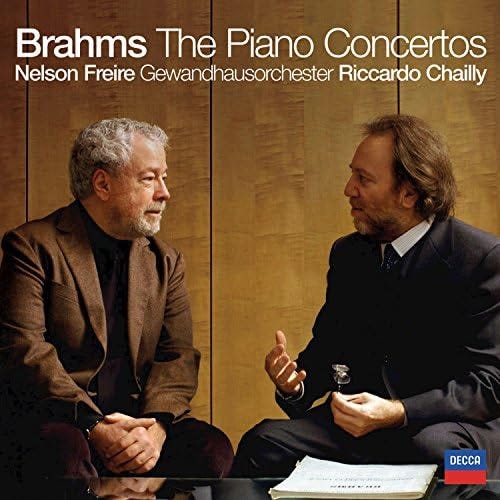
The 2006 recording featuring Nelson Freire and Riccardo Chailly leading the Gewandhausorchester Leipzig on Decca grabs you immediately with a big, thunderous opening. We immediately hear superb orchestral balance and resonance in the excellent Decca sound. Chailly never lets the tension sag, and while tempos are in the mainstream, the underlying pulse in the first movement is consistently maintained. There is no wallowing in emotion throughout, although there is no lack of feeling. Freire was an especially wonderful Brahms interpreter, and while his playing has a certain vigor about it, I am struck more by his introspection and effective phrasing which feels just right. The Adagio may be somewhat controversial for some, as it is taken at a somewhat faster clip than usual, but for me it works marvelously. The synchronization between Freire and Chailly is palpable, and going back to listen to it again confirmed for me that this was one of the finest recordings of this epic concerto.
The 2016 recording featuring Korean pianist Sunwook Kim and the Hallé Orchestra with Sir Mark Elder conducting on the Hallé’s own label has become one of my favorite versions of this work. There seems to be a strong sense of collaboration and vision between Kim and Elder, and I enjoy the way the dramatic elements are highlighted. It is a magisterial reading, but similar to Chailly, Elder keeps the underlying pulse moving along thus giving the impression of a vigorous and energetic performance. The first movement is filled with terror and brooding, and Kim relishes the trills in the score toward the beginning. This reminds me of Backhaus in terms of how assertive Kim is in the opening. The Adagio is certainly more relaxed and noticeably slower than average, but again Kim finds the emotional core of the movement and Elder simply gives Kim space to draw out the emotion. The finale is urgent, moving at a good clip and allowing for the rhythmic elements to be more central. Kim’s playing in this final movement is robust and inspired, he is simply terrific. The sound from Hallé St. Peter’s in Manchester is excellent. In summary, this is one of my favorite versions.
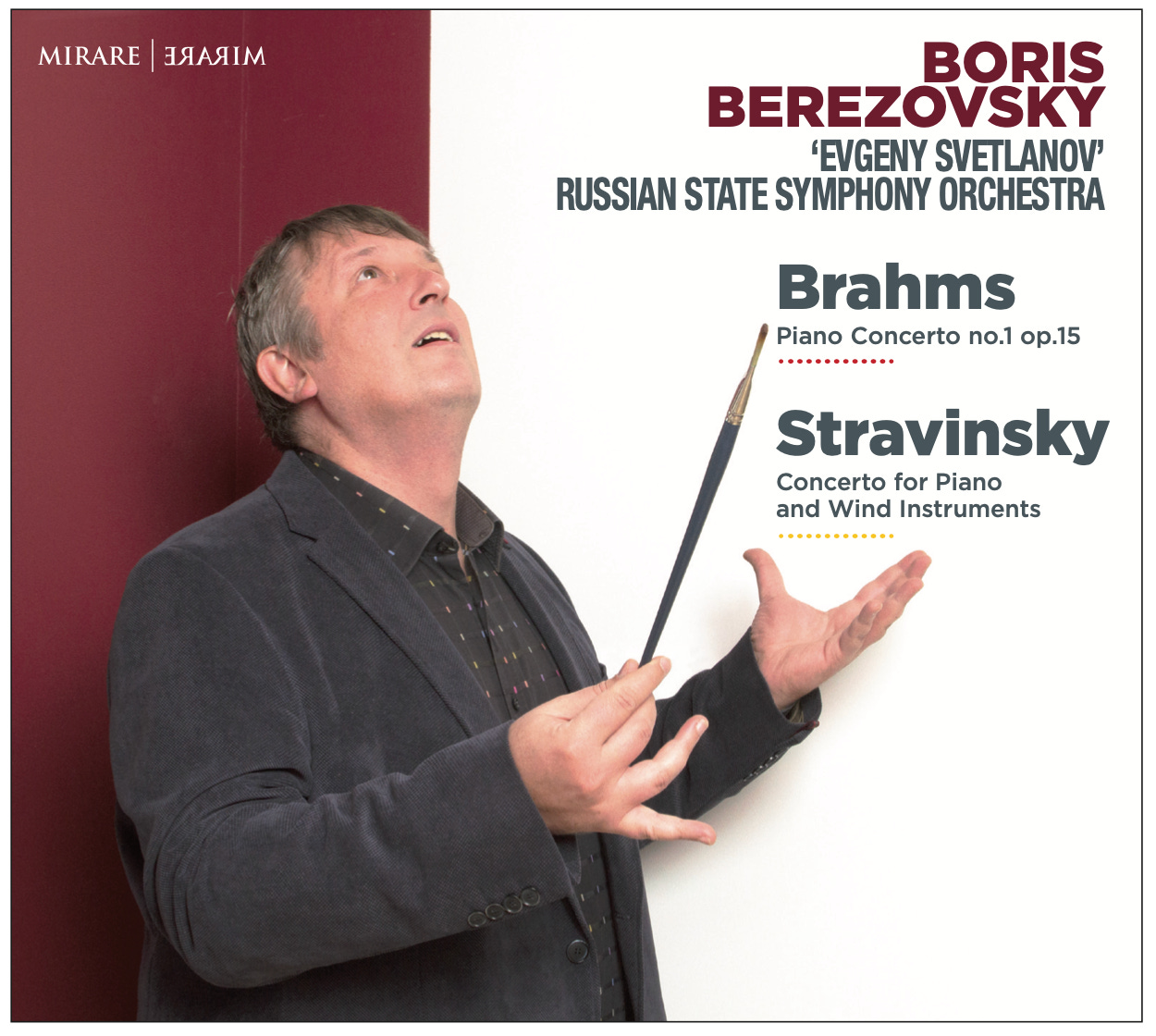
Another relative surprise for me was Boris Berezovsky on piano and conducting from the keyboard the State Academic Symphony Orchestra of Russia “Evgeny Svetlanov”. This 2017 release on the Mirare label is lean and mean in an almost raw and undefined way, and I really enjoyed it. Berezovsky has always been a formidable artist with great technical skills, and while at times he could come across as rather cold and staid, that is certainly not the case here. This is a white hot performance from him, and the way he plays with such fluidity reminds me of Leon Fleisher’s great recordings. Recorded at the Tchaikovsky Concert Hall in Moscow, the sound is quite immediate both from the piano and the orchestra, perhaps even a bit overly so. But I love the visceral feel to this recording, and how Berezovsky puts his own individual stamp on it. In general the tempos are on the quicker side, and the textures are cleaner and clearer than with many of the more traditional readings. Highly recommended.
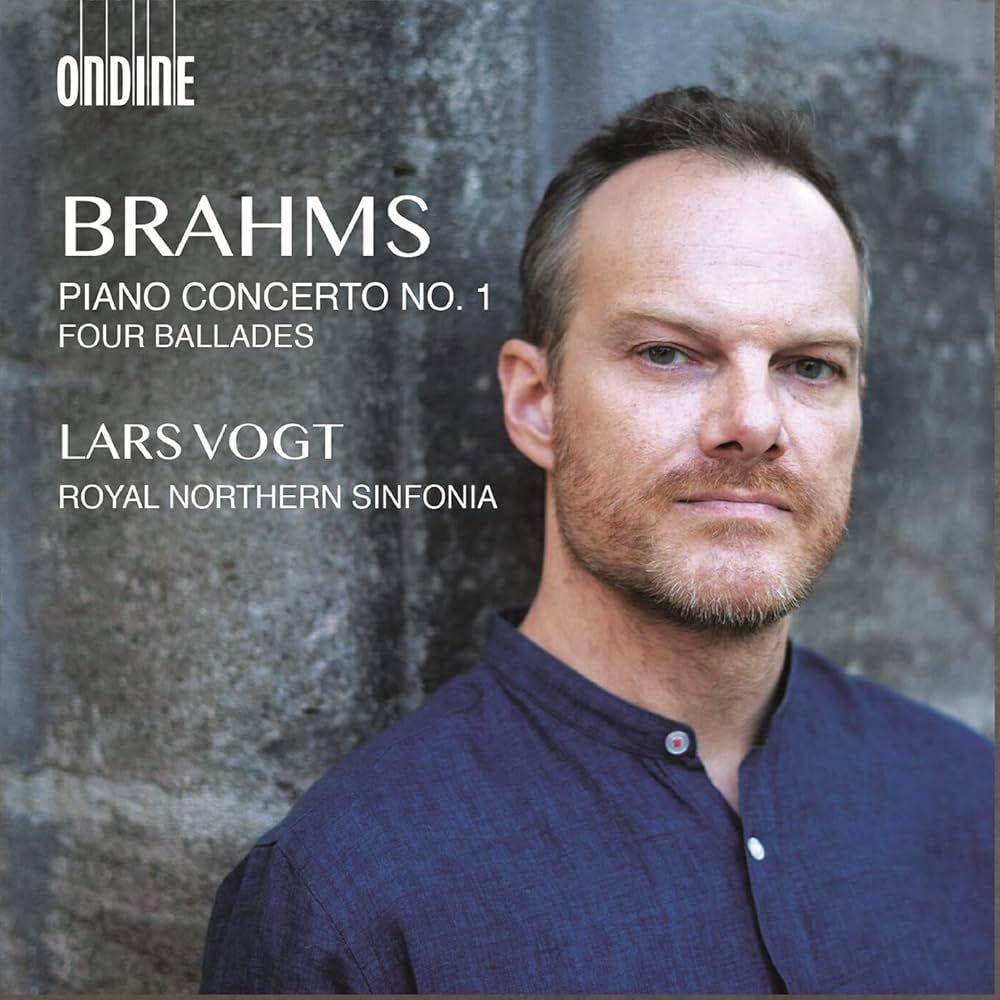
The superb German pianist Lars Vogt was taken from us in 2022, much too soon. His 2018 recording of the concerto with the Royal Northern Sinfonia on the Ondine label has much in common with the Berezovsky recording above, starting with Vogt conducting the orchestra from the keyboard. But also, textures are clearer and tempos are marginally quicker than many older recordings. I enjoyed hearing much of the orchestral detail which is obscured in other recordings. Occasionally I longed for more weight and power from the Royal Northern Sinfonia, but in truth they are nicely balanced with Vogt’s piano. While perhaps not quite as exciting as Berezovsky, Vogt manages such a wonderful musical line and has such a delicate touch, there is much to enjoy here. He is not fluid in the manner of Fleisher or Berezovsky, but fits in well with Curzon and Gilels. The sound is realistic and detailed.
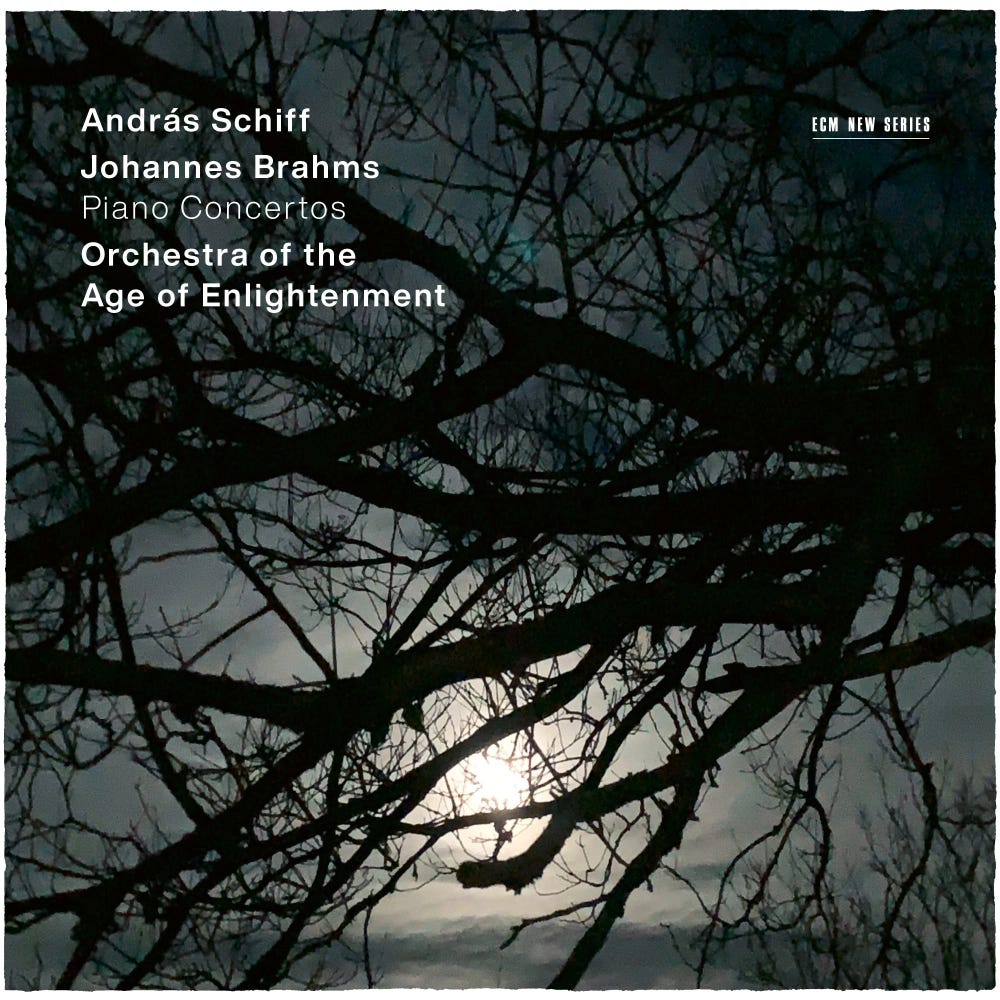
The 2019 recording from Sir András Schiff and the Orchestra of the Age of Enlightenment on the ECM label finds yet another pianist directing the orchestra from the keyboard. This is a “period” instrument recording, and indeed the OAE is a period instrument group. But this is an absolutely stunning performance complete with ferocity and plenty of weight. We are in similar territory here to Vogt and Berezovsky to be sure, with brisk tempos, crisp articulation, and transparent textures. Schiff plays a Blüthner piano built in 1859, the same year the concerto premiered, and you will notice differences in the timbre and sonority compared to more modern pianos. But it all works to great effect. The performance is as exciting and engaging as they come, but we still hear the great emotion in the first two movements, and Schiff brings great touch to the Adagio. The Abbey Road recording is full-bodied and nicely balanced.
Honorable Mention Recordings
R. Serkin / Cleveland / Szell (Sony 1954)
Rubinstein / Chicago / Reiner (RCA 1954)
Firkušný / Pittsburgh / Steinberg (EMI/Warner 1956)
Kempff / Dresden / Konwitschny (DG 1957)
Backhaus / VPO / Bohm (DG 1958)
Graffman / Boston / Munch (RCA/Sony 1959)
Serkin / Philadelphia / Ormandy (Sony 1966)
Barenboim / New Philharmonia / Barbirolli (EMI/Warner 1968)
Berman / Chicago / Leinsdorf (Sony 1980)
Ashkenazy / Concertgebouw / Haitink (Decca 1982)
Ax / Chicago / Levine (Sony 1984)
Douglas / LSO / Skrowaczewski (RCA 1988)
Gutierrez / RPO / Previn (Telarc 1991)
Kovacevich / LPO / Sawallisch (EMI/Warner 1991)
Arrau / Concertgebouw / Haitink (Universal 1993)
Moravec / Dallas / Mata (Sono luminus 1993)
Biret / Polish / Wit (Naxos 1996)
Pollini / BPO / Abbado (DG 1997)
Andsnes / CBSO / Rattle (EMI/Warner 1998)
Grimaud / Berlin / Sanderling (Warner 1998)
Buchbinder / Concertgebouw / Harnoncourt (Teldec/Warner 2000)
Zimerman / BPO / Rattle (DG 2005)
Angelich / Frankfurt / Jarvi (Warner 2008)
Pollini / Dresden / Thielemann (DG 2011)
Grimaud / BRSO / Nelsons (DG 2012)
Hough / Salzburg / Wigglesworth (Hyperion 2013)
Ohlsson / Melbourne / Otaka (ABC 2013)
Lewis / Swedish / Harding (HM 2016)
Buchbinder / VPO / Mehta (Sony 2016)
Ax / Concertgebouw / Haitink (RCO 2017)
Kim / Dresden / Chung (Accentus 2019)
Despax / BBC / Litton (Signum 2020)
Trpceski / WDR / Macelaru (Linn 2023)
Bronfman / Munich / Mehta (Munich 2024)
Thank you for joining me on this journey! I hope you have enjoyed this survey of Brahms’ Piano Concerto no. 1 and recommended recordings. As always, if you have any thoughts or comments about this post, feel free to send me a message.
See you next time for #97, Richard Strauss’ witty tone poem Till Eulenspiegel. Until then, take care.
_______________
Notes:
Hans von Bülow’s Letters to Johannes Brahms: A Research Edition, ed. Hans-Joachim Hinrichsen, transl. Cynthia Klohr, 2012, Scarecrow Press, Lanham, MD, p. 11.
The Musical Heritage Society Staff. Why Brahms Piano Concerto No. 1 Remains a Timeless Classic. Found online at heritagesociety.com.
https://www.azquotes.com/quote/1342011
https://en.wikipedia.org/wiki/Piano_Concerto_No._1_(Brahms)?scrlybrkr=40ad99ec#
Hi John and thank you for the very good presentation of such a great masterpiece as the Brahms's first piano concerto.
He is my preferred composer and I collect so many version of his operas, but I didn't know Berezovsky's version, which I'll definitely look into.
As always I have a couple of versions to suggest that I think are worth listening to: Moravec (one of ours preferred pianist) with Belohlàvek and the Czech Philharmonic Orchestra on Supraphon, Paul Badura-Skoda with Felix Koborov and a russian orchestra with a too long name on Genuin CD and Kun-Woo Paik with Eliahu Inbal and Czech Philharmonic Orchestra again.
I'm curious to know your opinion.
I'm struck by how many recordings you mention conducted by Szell. For piano concerti, everybody concentrates on the pianist, but the conductor is equally important. The balance between the piano and orchestra is essential. I've heard too many recordings where the pianist is wonderful, but the partnership with the orchestra simply isn't there.
Wonderful post as always. My goto recordings for both of the Brahm's piano concerti are Serkin/Szell.