Building a Collection #116: Brahms' Symphony no. 3
With recommended recordings

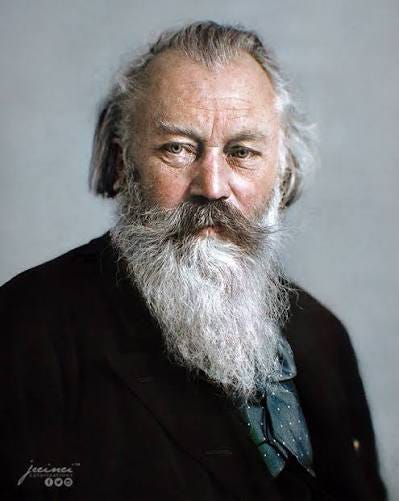
Building a Collection #116
Symphony no. 3 in F major, Op. 90
By Johannes Brahms
____________
“Since Haydn, a symphony is no longer a simple affair, but a matter of life and death.”
-Johannes Brahms
Back to Brahms on our survey, this time with his Symphony no. 3 in F major, sometimes considered the weakest of Brahms’ four symphonies (even if in my own ranking it is ranked above Symphony no. 2), and yet its riches and rewards can be fully realized once you give it time to marinate. Over time, Brahms’ Third has grown on me a great deal, and even in the process of preparing this survey, I have come to appreciate it more and more.
Johannes Brahms
Johannes Brahms (1833 – 1897) was a German composer of the Romantic era and is generally regarded to be one of the greatest composers ever. Even though Brahms was from the Romantic era, he was very much connected to the Classical forms as seen in the works of Haydn, Mozart, and especially Beethoven. In that sense, Brahms represented a “conservative” approach to musical tradition at a time when form and convention were changing due to Wagner and others. Brahms wrote symphonies and other orchestral works, chamber music, concertos, keyboard works, vocal, and choral music.
Brahms was from a musical family in Hamburg and showed a great deal of promise even at a young age. He began as a pianist and would often perform around Hamburg in eating and drinking establishments. By adulthood, Brahms had become friends with well-known musicians of the time. He befriended the violinist Joseph Joachim, a relationship that would be personally and artistically important throughout his life. But perhaps most important was his friendship with the famous composer Robert Schumann. Schumann, twenty-two years older than Brahms, became his most fervent advocate. Brahms likewise had tremendous esteem for Schumann. Brahms practically became a member of Schumann’s family, and after Schumann’s death at the too young age of 46, Brahms continued to be close friends with his widow, the pianist and composer Clara Schumann. Brahms never married, although he apparently had several romantic relationships throughout his life. There is speculation about whether Brahms and Clara were more than friends, and there is evidence that Brahms was probably in love with her.
Many of Brahms’ compositions have become universally known, and many are perennial favorites that are frequently programmed by orchestras around the world. As part of the “Big 3” of Bach, Beethoven, and Brahms, he occupies a central place in the history of classical music. My personal favorites by Brahms include his Symphony no. 1, Symphony no. 4, Ein Deutsches Requiem, Piano Concerto no. 1, Violin Concerto, Haydn Variations, and his Piano Trio no. 1.
Symphony no. 3
Brahms’ Symphony no. 3 was written in 1883, after the composer had taken five years off from writing symphonic works. In the intervening years, Brahms had written some of his other best loved works including his Violin Concerto, Piano Concerto no. 2, and the two overtures, the Tragic Overture and the Academic Festival Overture. The shortest of Brahms’ symphonies, the Third had its premiere in December 1883 in a performance by the Vienna Philharmonic under the baton of Hans Richter.
After spending the summer of 1883 in Wiesbaden working on the symphony, he played the piano part for his friend Antonín Dvořák in October with Dvořák commenting:
“I say without exaggerating that this work surpasses his first two symphonies; if not, perhaps, in grandeur and powerful conception—then certainly in—beauty.”
Brahms, like many composers of the time, had developed his own personal motto in musical notes. His motto was “free but happy”, represented by the notes F - A♭- F. Brahms decided to use these three notes to open the Third with a bold statement played out on woodwinds. While Brahms himself never confirmed that this opening was a personal statement of his, he also explained that he would always speak through his music and thus was often hesitant to comment on the meaning behind his music. Some musicologists have theorized that the F - A♭ - F sequence was a quote from his earlier friendship with composer Robert Schumann, and bears a striking resemblance to a musical phrase from Schumann’s Symphony no. 3 “Rhenish”. In any case, we don’t know for sure.
The symphony is laid out in four traditional movements as follows:
Poco allegretto (C minor)
Terry Williams of BBC Music Magazine explains each movement:
“The Allegro con brio of Brahms’s symphony is rich in rhythmic and lyrical invention, embracing a wide range of feeling from euphoria to melancholy. Brahms asks for a repeat of the brief exposition – without it, the listener misses the heightened sense of excitement before the development leaps in. After a turbulent ride, the music comes to rest with a gentle reminder of the opening motto theme.
The clarinet-led Andante has its moments of serenity, although they do not conceal an undercurrent of regret. Near its end, however, the violins are given the chance to shine with an ecstatic crescendo of joy before the coda is allowed to dissolve into silence.
Perhaps the tenderly nostalgic Poco allegretto that follows is a song of farewell to Schumann’s widow, Clara, the love that had once consumed the young Brahms for his friend and muse having never completely faded.
The finale Allegro begins confidently but storm clouds soon gather. After many mood and rhythmic twists, and what feels like the prospect of a triumphant finish, it eventually comes full circle, ending with a soft echo of the symphony’s opening bars. As dusk falls, it is Brahms the ‘inward and thoughtful’ one who has the final word, at least for the time being. The Fourth Symphony would tell a different story.”
The Third is the most different or enigmatic of Brahms’ four symphonies, and is also the most adventurous tonally. Brahms uses a combination of major and minor modes, even within the same movement, and the symphony doesn’t necessarily develop the way you might expect.
If Symphony no. 1 could be described as heroic or epic, and Symphony no. 2 as pastoral, and Symphony no. 4 as tragic, the Third occupies a more ambiguous world. The third movement Poco allegretto certainly has a tragic, mournful theme, but the Andante is more pastoral, and the outer movements are more dramatic and intense. The conclusion ends in a much quieter fashion than the other symphonies, where it returns to the opening theme in a more gentle manner.
The conductor Hans Richter who conducted the premiere proclaimed it Brahms’ ‘Eroica’ referencing Beethoven’s Eroica, and even urged Brahms to give it that name (Brahms declined). The symphony was well received at the outset, and even though Wagner had recently died, there was still a feud brewing between his supporters and Brahms’ supporters. In fact, some of the Wagner camp tried to interfere with the premiere, but were unsuccessful in doing so. The infamous music critic Eduard Hanslick even liked it, commenting that he believed it to be Brahms’ most complete artistic achievement.
For me personally, the two inner movements, the Andante and Poco allegretto are the most affecting and impactful parts of the symphony. They are the most emotionally varied and moving in my opinion. But for any performance of the Third, pacing, dynamics, phrasing, and clarity of texture are critically important.
Recommended Recordings
As usual, I’m listing my recommended recordings from oldest to newest by recording date.
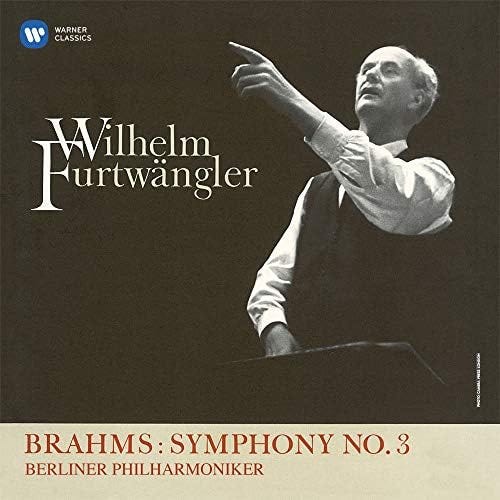
The first recommendation is from 1949, a live performance by the Berlin Philharmonic Orchestra under Wilhelm Furtwängler on EMI (Warner). This is vastly superior to his later 1954 recording, and captures both what makes this symphony great, as well as why Furtwängler was so great. The most intense moments of the symphony come hurtling off the page toward the listener with a ferocity that is absolutely thrilling. This is a captivating live performance which burns into the memory like no other. In Furtwängler’s hands, this symphony becomes one of the best I’ve ever heard. Nobody before or since Furtwängler could do what he did, which was to basically take the score apart and put it back together in his own interpretation. It’s not just that he did this with every piece he conducted (others have tried to do so), but that he did it so well in almost every case. Certainly here you can hear why he was so effective. Just listen from 7’30” in the second movement, I don’t think this can be played any better. His approach may not be to everyone’s taste, and I’m sure purists and audiophiles will scoff. But no matter, I love this recording. Now if only he had been recorded in better sound quality, or he had actually liked recording (he hated it). But this document captures a treasurable live performance.
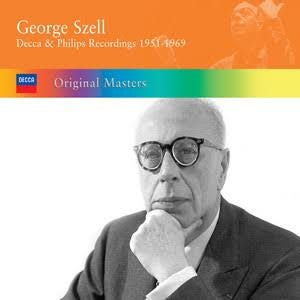
The next recommendation is from just a few years later in 1951 and features the Concertgebouw Orchestra, Amsterdam with legendary conductor George Szell at the helm in a Decca production produced by the famous producer John Culshaw. The combination of Szell’s structure, precision, and discipline paired with the warmth and refinement of the Concertgebouw is fascinating, as it comes across as more satisfying overall than Szell’s later Cleveland recording. I love how Szell brings dynamic change in the first movement, and the Andante is played with such sensitivity and lyricism by the Amsterdam band. Nothing is rushed, and the music is allowed to breathe and unfold naturally, which didn’t always happen with Szell. Just listen to how the orchestra sings out in the center section of the Andante. The Poco allegretto doesn’t linger, but also maintains its melancholic pull. The finale has great intensity, listen from 4’00” through 6’08” and you will hear what I mean. The drawback to this recording is the sound quality on the Decca version, which is thin, top heavy, shrill in places, and lacks depth. I have heard the Pristine XR remastering solves these issues, but I haven’t heard it. On performance grounds, this is a terrific performance.
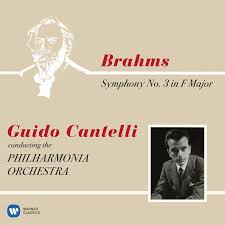
The tragic loss of the young Italian conductor Guido Cantelli in a plane crash in 1956 cut short one of the most promising careers in music. Cantelli’s 1955 recording of Brahms’ Third with the Philharmonia Orchestra in London for EMI (Warner) combines great warmth and personality with a wonderful singing line, and in addition Cantelli makes the most of the dramatic climaxes. The Philharmonia was an exquisite orchestra at the time, and they play wonderfully. Cantelli keeps the pulse moving forward, and doesn’t allow things to become slack, something that I listen for specifically with this symphony. Cantelli learned a lot of his precision and discipline from Toscanini, but I dare say Cantelli was better at bringing out more color and personality in the score, and was more flexible in phrasing, a real asset in Brahms. I really love the first three movements on this recording, all among the best on record. Recorded at Kingsway Hall in London, you will notice some odd sounding effects, especially that the violins seem to be separated left and right. The recording was made in both mono and experimental stereo, and I have to think the echo effect heard especially in the first movement is a result of that experimental stereo effect. It’s not a bad thing, although it takes a bit of adjustment when listening because it makes it appear the notes are being played off the beat, but I believe that is an aural illusion. Anyway, the performance is top notch.
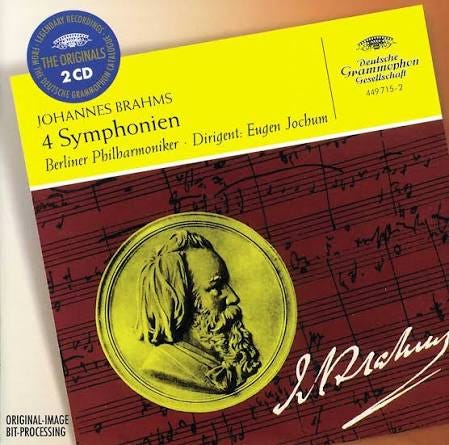
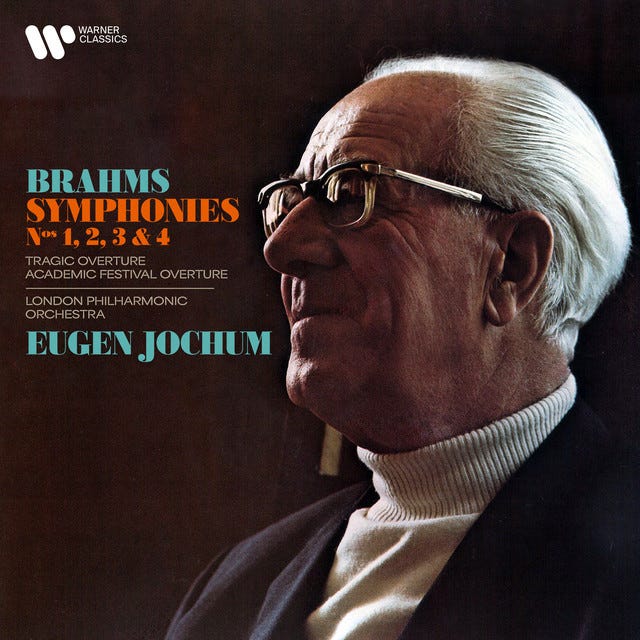
German conductor Eugen Jochum was one of my very favorite Brahms interpreters, and he recorded two complete cycles of the Brahms symphonies, and I am recommending the Third from both sets. First, from 1956 is Jochum’s recording on Deutsche Grammophon with the Berlin Philharmonic Orchestra. Recorded in mono in the Jesus-Christus-Kirche in Berlin, you will notice that the sound is a bit distant and rough-hewn with some lack of clarity. That has always put me off this set, but in listening to this recording, I am really impressed with how Jochum interprets the symphony. Again, there is flexibility in terms of phrasing and dynamics (listen to how Jochum takes the first three notes upward in a crescendo, which I love), but there is also a great deal of warmth and never a rush. But at important moments where tension builds, Jochum is near perfect at getting the BPO to project more strongly. The forward pulse is maintained very well, and articulation in key phrases has an edge that I really like. Jochum, for me, just really understood Brahms’ idiom. The warmth of the BPO in the Andante and Poco allegretto movements is a huge advantage. Jochum recorded the Third again in 1976 with the London Philharmonic Orchestra for EMI (Warner) as part of his eminently recommendable and superb complete set. Recorded at Kingsway Hall in London, as you might expect the sound is a great improvement over the Berlin recording, although the performance has a lot of similarities. Jochum is sometimes described as nothing more than a choirmaster, implying that all he did was stand up there and keep time. This is unfair, as we can hear on this recording just how involved Jochum would have been in the interpretation that is given. Jochum was certainly in the more traditional, more romantic vein with Brahms, but within that realm this performance has a great deal of bite and vitality. Again, the singing line is maintained marvelously, and there is a lot of attention paid to detail as well as pace, dynamics, and how phrases are presented. Like the BPO version, I love the focus and articulation of the LPO, there just seems to be a unity of purpose. The BPO might have a slight edge in the inner movements for sheer warmth, but the LPO has better sound and in any case the two are very similar. I might come across as rather gushing about Jochum’s Brahms, but in this symphony I really think he nails it both times. Recommended.
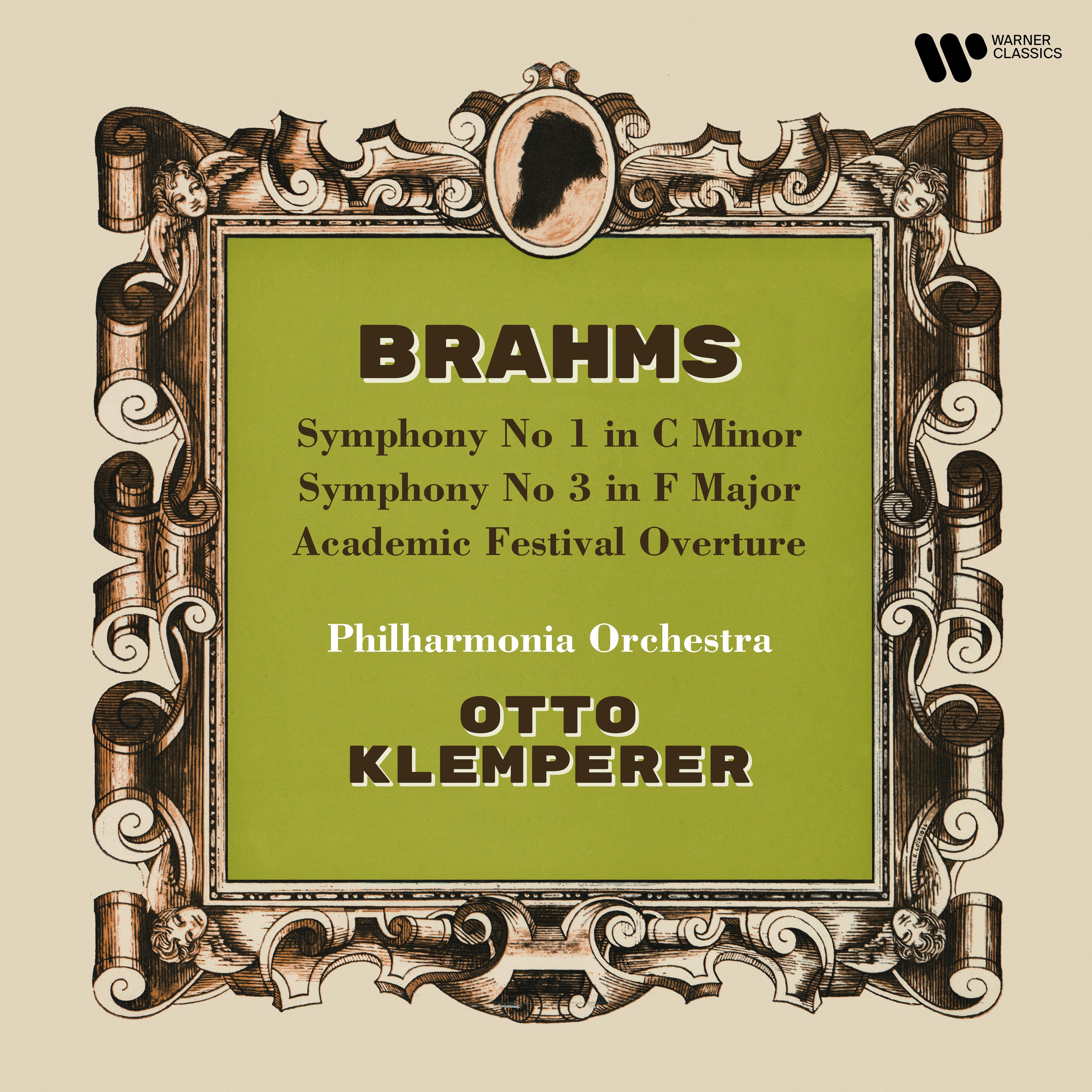
Which brings us to the outstanding 1957 recording by Otto Klemperer and the Philharmonia Orchestra on EMI (Warner), a reading which has deservedly earned a lot of praise down through the years. Somewhat like Jochum, Klemperer just had a knack for Brahms and things just sound right. Recorded in full stereo at Kingsway Hall with one of the world’s finest bands at the time, this is hard to beat. The sound is a bit forward, but you could certainly put this up against any newer recording from a sonic perspective. But Klemperer brings out the textures superbly, details are heard nicely, there is wonderful bloom and warmth from the Philharmonia, and while again this is a more traditional, more romantic reading, it just has such irresistible charm and refinement. Klemperer was certainly one of the finest Brahms conductors of the 20th century, and this recording is part of that legacy. Of course, Klemperer won’t win any speed races, that wasn’t his style. But his ability to build tension and to always maintain the musicality where we hear all the notes, was unmatched. Woodwinds, horns, and strings really project well on the recording, and the Philharmonia sounds terrific. Highly recommended.
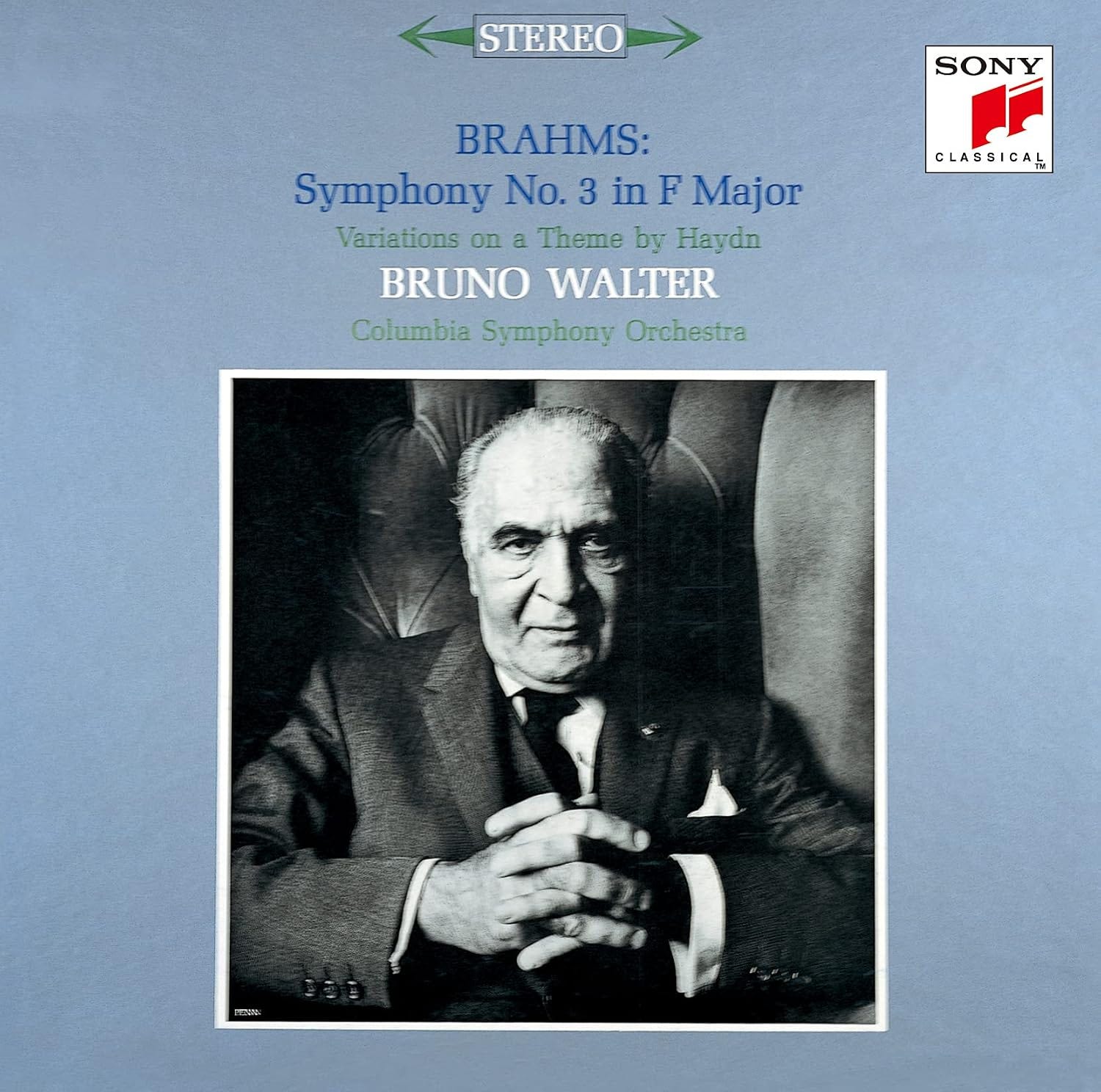
Bruno Walter was another heralded Brahms conductor, and here I’m recommending his so-called “Indian Summer” recording from 1960 with the Columbia Symphony Orchestra on Sony. Walter had recorded the symphony earlier in Vienna in the 1930s and again with the New York Philharmonic in 1953, and while those have their merits (especially the New York recording, which is very good), this final statement from Walter has superior sound and a reading which captures the pastoral and autumnal aspects of this symphony better than almost anyone else. First, the sound is excellent, warm and immediate, with perhaps a bit of tinniness on top but overall very good. The interpretation has such vitality and a rightness about it. Walter conveys through the CSO a warmth and humanity which is rare, and the spirit of Brahms just seems to live in each bar of the music, such is the wonderful way Walter communicates. One strike against the recording is that Walter doesn’t take the first exposition repeat in the first movement, a mistake in my view. But nevertheless this is a tremendous recording. Walter gives the music real backbone (listen at 5’20” in the opening movement), but not at the expense of the lyrical line. Pacing is such that everything flows naturally. The stereo sound from American Legion Hall in Hollywood is outstanding for the time period, or any period really.
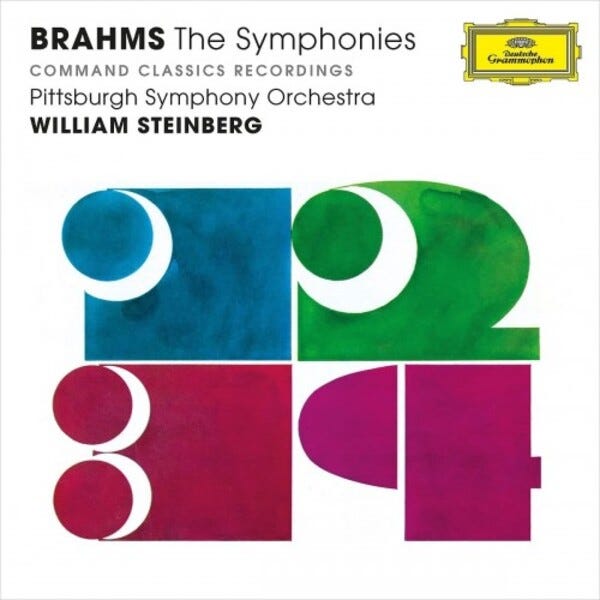
One big surprise on the survey for me was the 1962 recording of the Third by William Steinberg and the Pittsburgh Symphony Orchestra (originally on Command Classics, now reissued on Deutsche Grammophon). This recording, captured in very good stereo sound, is a direct and relatively unsentimental recording, but I think that’s part of why it works so well. Steinberg was always an underrated conductor, but you could really put this recording up against anyone. Steinberg is able to plumb the emotional depths without losing the forward momentum or dramatic intensity. While I don’t like that he skips the first movement repeat, he makes up for it in terms of pacing and phrasing. While some of the earlier PSO recordings with Steinberg were made at the old Syria Mosque, this one was made at Soldiers and Sailors Hall in Pittsburgh, a more generous and warm recording venue. The clarity and transparency of the sound is really good. What you will hear is a traditional reading that never gets bogged down in terms of flow, and one where Steinberg allows enough flexibility in terms of phrasing that you never feel it is overly analytical or driven like Szell or Toscanini. While perhaps not as rich and lyrical as Walter, this is darn good. Recommended.
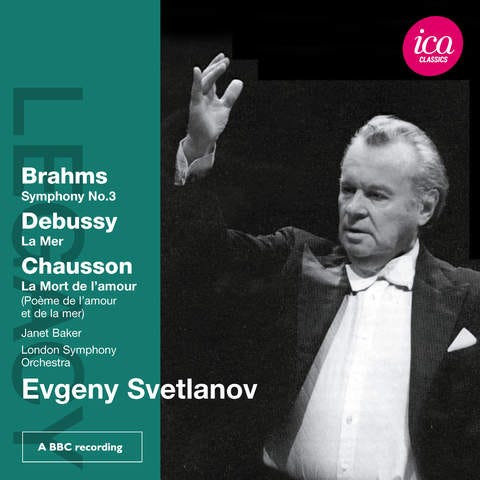
Another real surprise for me was Russian conductor Yevgeny Svetlanov’s incendiary live 1975 recording of the Third with the London Symphony Orchestra on the ica label. This is a powerful account, complete with passion and nicely recorded from the Royal Festival Hall in London. Svetlanov was a kind of “seat of the pants” conductor, molding and shaping phrases in seeming spontaneous fashion, and I mean that as a compliment for the most part. The pace is relatively spacious, and expression takes precedence over structure. It is a pity that the first movement repeat is not taken, but the rest of the performance is good enough to overlook that detail. The Poco allegretto is particularly emotive, with the LSO responding gloriously to Svetlanov’s direction. Rarely have I heard this sound so full of yearning. The finale is equally impressive, with a sense of purpose and drive. The blast at 0’46” will wake you up to be sure. But Svetlanov also allows the music to unfold naturally, and this being a live concert performance there is a feeling of rapt attention over the proceedings. No complaints about the sound, it is full and immediate. The applause is kept in.
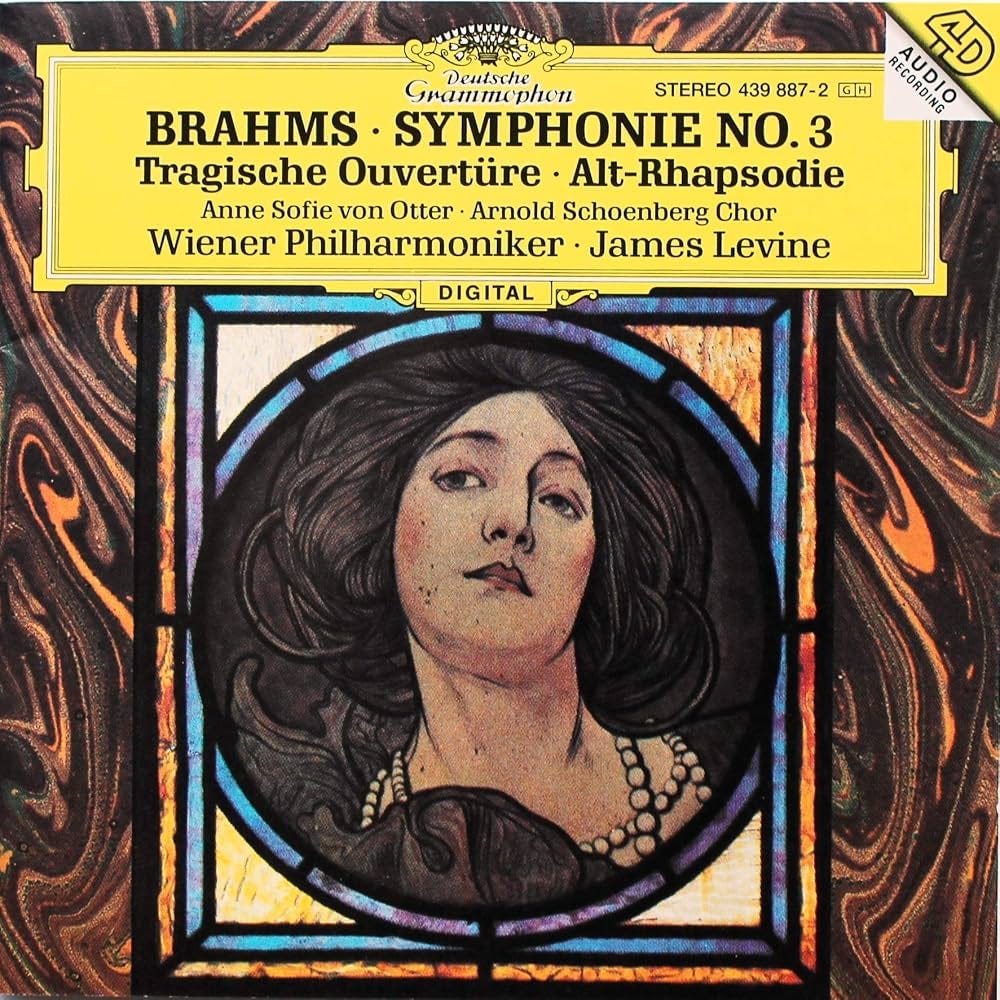
James Levine was an outstanding Brahms conductor, and he recorded two complete cycles. I’m recommending the Third from both cycles. The first is with the Chicago Symphony Orchestra from 1977 on RCA Red Seal (Sony), and what I like about this earlier one is its freshness, youthful vigor, and forward drive. The sound is a tiny bit treble heavy, but still warm and detailed. This is a more exciting performance than his later recording in Vienna (see below), although not quite as refined. But it makes an impact. The first movement comes through well, and the Andante is well shaped and sensitively played. I’m a fan of Levine’s time in Chicago, and this is a great example of his time there. I also recommend Levine’s later 1992 recording with the Vienna Philharmonic Orchestra on Deutsche Grammophon. The sound has more depth and balance, and while the performance is not quite as edgy as the Chicago version, it is a quite satisfying performance, especially with the wonderful Vienna strings and the warmth of the Musikverein recording venue. There are striking similarities with the earlier performance too, the beginning of the Andante is again so well judged. The Poco allegretto is even more affecting here, with the Vienna sound bringing a tender ambience which lends itself well to the sad nature of the movement. The sound is rich and natural, and it is a real pleasure to hear.
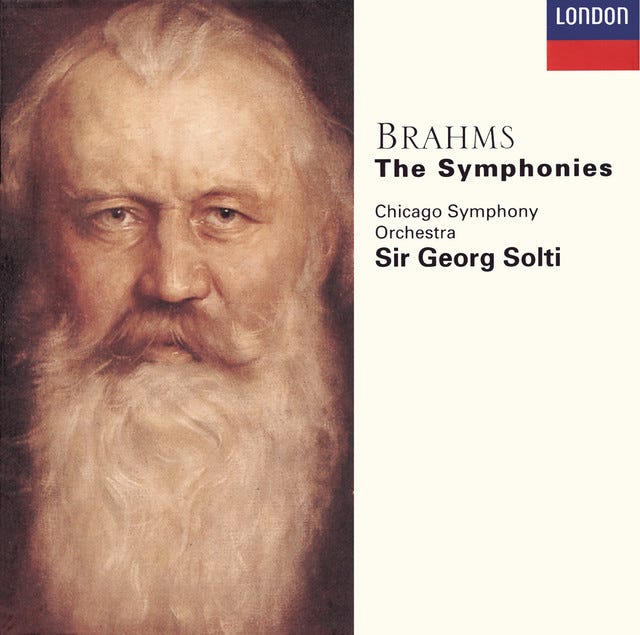
At the tail end of the analog recording age, Sir Georg Solti recorded the Third with the Chicago Symphony Orchestra for Decca, and I’ve been a fan of this complete Brahms set for a while. Recorded at Medinah Temple in 1978, the sound is full and lush. Some don’t care for Solti’s brash approach, but honestly that assessment of Solti is exaggerated, and here I find he is fully attuned to the symphony’s more lyrical moments, as well as the powerful climaxes. Solti and the CSO were a very fine match, and he brings out some of the most beautiful playing ever from the orchestra. I don’t think I’ve ever heard the Andante played so marvelously. Solti is more relaxed than on many of his recordings, and this leads to playing which really fits the Brahmsian moods well. This is one of my favorite Solti recordings.
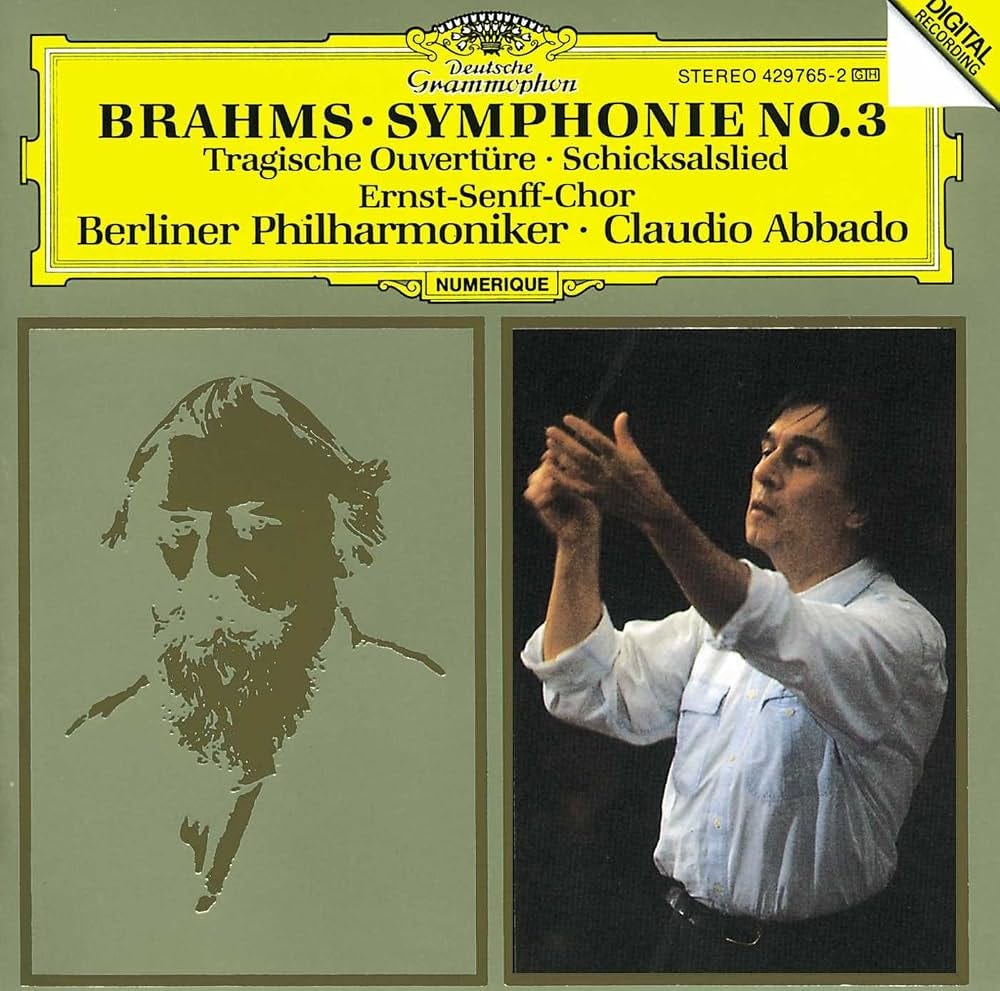
Moving ahead to 1989 we have Claudio Abbado’s excellent recording with the Berlin Philharmonic Orchestra on Deutsche Grammophon. Abbado’s entire Brahms set is very good, but I am particularly fond of the Third. While a relatively traditional reading, Abbado does a nice job of maintaining the tension throughout, and the BPO plays gloriously for him. The recorded sound is very good, balanced, detailed, and warm. Abbado was always gifted at highlighting the lyricism as a conductor, and that is why this symphony works so well for him. The Andante has tenderness and grace, while the Poco allegretto is heartbreaking in its pathos. The finesse, subtlety, and beauty of the BPO’s playing is really stunning here, and Abbado encourages a performance of vigor and expression. He infuses more passion here than on some of his later recordings. Recommended.
I have always liked German conductor Günter Wand’s way with Brahms. He is always pretty middle of the road and straightforward with his remarkably consistent readings of these works, and he recorded the Brahms symphonies several times. I am recommending his live 1990 account with the North German Radio Symphony Orchestra (NDR Sinfonieorchester) on the Profil label, although his other versions are good as well. What makes this one stand out for me is the live recording, which I believe brings an extra ounce of electricity and spontaneity to the performance which was recorded live in Cologne. There is plenty of thrust and lyrical feeling here, and it is clear Wand had a deep understanding of this music and how he wanted to convey it. The NDR orchestra plays very well, certainly there is no hint of them being a regional radio orchestra. The sound is full and resonant, quite like you might hear in an actual live performance. But in terms of clarity and polish, you would never know this is a live performance. Wand can even be a little bit sneaky in terms of varying the pace and dynamics in ways that I really enjoy. Recommended.
![Günter Wand, Brahms, NDR-Sinfonieorchester – Symphonies 1, 2 & 3 – 2 x CD (Compilation), 1997 [r33393407] | Discogs](https://substackcdn.com/image/fetch/$s_!nQCw!,f_auto,q_auto:good,fl_progressive:steep/https%3A%2F%2Fsubstack-post-media.s3.amazonaws.com%2Fpublic%2Fimages%2F76045626-bd0e-4f3a-b454-245a2f50aebc_599x519.jpeg "Günter Wand, Brahms, NDR-Sinfonieorchester – Symphonies 1, 2 & 3 – 2 x CD (Compilation), 1997 [r33393407] | Discogs")
I’m also recommending Wand’s later live recording of the Third from 1997, also with the NDR Sinfonieorchester, this time on RCA. While the interpretation is remarkably similar to the Profil performance above, the sound is a bit more well balanced, and for me the actual performance is even more taut and well played, this time from Hamburg rather than Cologne. I think Wand must have enjoyed recording these symphonies live, and the quality of the performances is very consistent. Wand brings a certain authority to this reading, and even some flexibility in terms of tempo and phrasing. Overall tempos are somewhat on the faster side considering the reading is pretty traditionally shaped. Also, the transparent recording means we can hear a lot of detail, especially the inner voices from the orchestra which lack definition in some other recordings. The first movement is handled especially well in my view, and Wand is a master at managing the shifting dynamics and dramatic climaxes. The Poco allegretto is perhaps more allegretto than “poco” would indicate, but it still has great warmth and expression to it.
![Brahms, SWR Stuttgart Radio Symphony Orchestra, Celibidache – Symphonies 2 & 3 – CD (), [r15716048] | Discogs](https://substackcdn.com/image/fetch/$s_!S-pI!,f_auto,q_auto:good,fl_progressive:steep/https%3A%2F%2Fsubstack-post-media.s3.amazonaws.com%2Fpublic%2Fimages%2Fd406b403-4739-469f-8284-b4c9c370e231_597x600.jpeg "Brahms, SWR Stuttgart Radio Symphony Orchestra, Celibidache – Symphonies 2 & 3 – CD (), [r15716048] | Discogs")
The iconoclastic conductor Sergiu Celibidache recorded the Third several times, but I find his live 1976 recording with the Stuttgart Radio Symphony Orchestra on Deutsche Grammophon to be outstanding in every way. His later recording in Munich is just too slow and for me loses momentum. But here tempos are reasonable, even on the brisk side at times, but it all fits together as a whole nicely. In the first movement, just listen at 7’00” until about 8’00”, this is intense and energetic. He doesn’t take the first movement repeat, which is a shame. But the Andante is lovely and expressive. The Poco allegretto is very fine, if a bit unsentimental. The finale has a good pace to it, and Celibidache knew how to build tension marvelously, which he does. The overarching narrative is that Celibidache builds the sound and drama gradually as the movement progresses, and you can really sense that. The sound is good for a live recording from the 1970s, although balances are not always ideal. Like always with Celibidache, I admire the flexibility he encourages from the musicians, I find that this works well in Brahms. This is one of my favorite Celibidache recordings.
![Amazon.com: Brahms: Symphonies [3 CD]: CDs & Vinyl](https://substackcdn.com/image/fetch/$s_!9yTB!,f_auto,q_auto:good,fl_progressive:steep/https%3A%2F%2Fsubstack-post-media.s3.amazonaws.com%2Fpublic%2Fimages%2Fe360782d-0b36-4fe2-a3ee-2f6735e9ff43_1000x1000.jpeg "Amazon.com: Brahms: Symphonies [3 CD]: CDs & Vinyl")
Jumping ahead to 2013, the more modern take on the Third from Riccardo Chailly and the Gewandhausorchester Leipzig on Decca is invigorating and fresh. Some will say Chailly is too “cool” in his approach to Brahms, but I disagree in that he finds the right balance between structure, musical line, and tempo. It’s true there is less deep expression than in more traditional accounts, but this is an undeniably musical account which has exceptional sound quality and detail. The first movement is pushed forward the way I like to hear it, with no wallowing in phrases, but rather keeping the focus on the drama unfolding. The Leipzig orchestra provides tremendous playing, and you can hear all the instruments well in a nicely transparent recording. The flow of the Andante is just right, and Chailly is very thoughtful here in his phrasing. The Poco allegretto is absolutely beautiful, warm and lush, but also lilted so well and with just the right amount of pathos and melancholy. The finale is pushed forward more than most, and phrasing is exciting and engaging throughout. Listen at 1’40” through 2’12”, this is good stuff. When this set first came out, the reception was rapturous, and then critics seemed to cool on Chailly a bit. But I think they had it right to begin with, as this recording shows.
Another relative surprise for me was the live 2016 recording from American conductor Leonard Slatkin with the Detroit Symphony Orchestra, part of their complete set of the symphonies on the DSO’s own label. The beginning is a bit soft-grained for my taste, but things quickly improve. While it is a mainstream reading in many ways, Slatkin seems to have a real feel for tempo and phrasing that pays attention to the lyrical side of things. The first movement just keeps getting better as it moves along, and the climax at 11’43” is deeply felt and well done. This is a romantic reading to be sure, and I was so impressed by the depth of tone produced by the DSO. Inner voices come through well too, and the sound engineering is very good. Indeed, the bass line comes through particularly well. Where Chailly dazzles, Slatkin comforts in the sense that this is a big, sweeping, epic view of Brahms and tempos are mainstream. But the care and thoughtfulness put into the performance are clearly evident. For a live recording, the reading has a cohesiveness that is rare. Give a listen to the Poco allegretto, this is sublime. Overall I find this a really satisfying recording.
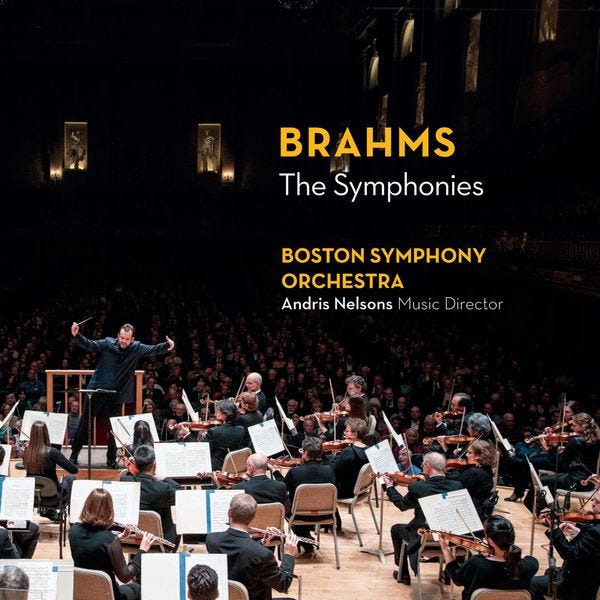
Much as I don’t really buy the hype around Andris Nelsons as a conductor, there is no doubt he has made some good recordings. While I wasn’t as enthralled with his live 2017 complete set of the Brahms symphonies with the Boston Symphony Orchestra (on the BSO’s label) as many were, the Third from the set is the highlight of the set in my view. Going back to the recording confirmed for me that this is a performance of real stature and feeling. From the beginning, the first movement blazes a trail and keeps a tempo that I very much enjoy. The sound is warm and detailed, I love how the woodwinds are captured so well. Having heard so many concerts in person at Symphony Hall over the years, I find the sound here very true to life in that space. Nelsons way with pacing makes sense, and he reminds me of Chailly’s approach in some ways. Nelsons relaxes in the second and third movements, bringing the tempo to a slower point, and i find this works quite well as long as the orchestra plays in a responsive way, which the BSO certainly does. There is a lot of pathos and feeling in the third movement, and it is played so sensitively. The finale captures the same drive as the first movement, and I love the amount of detail in the brass and woodwinds again. Applause is edited out. Overall, I would give this a warm recommendation.
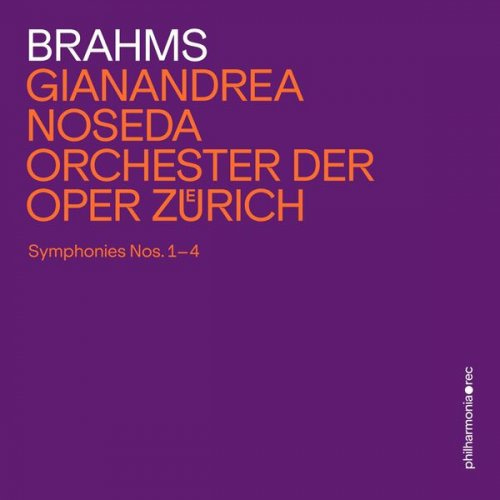
A brand new recording of all the Brahms symphonies appeared in 2026 from Giandrea Noseda and the Orchestra of Opera Zurich on their own house label. I didn’t have the highest expectations of this recording, as previous recordings from this orchestra with Fabio Luisi left me flat. Noseda is also, for me, a hit and miss conductor, at least on record. But I was very pleasantly surprised by this recording. Noseda’s experience in the opera pit gives him a solid understanding of the progression of a narrative and how the music should flow, and this is ideal for the Third. The way Noseda shades the dynamics seems ideal, and tempos are in the mainstream. But the phrasing is high on drama, and I really like the way he gets the orchestra to build and release tension. Noseda is also attuned to the rhythmic side of Brahms, and gives phrases that extra little bounce that works very well in the outer movements. I was also impressed with the quality of playing from the Zurich orchestra, there is plenty of character and cohesion. The Andante has such warmth and charm, I went back and listened to it again. Noseda really gets the woodwinds and strings to sing out marvelously. The Poco allegretto is one of the best I’ve heard, it seems Noseda emphasizes the lilting quality of the music, and the slight crescendo at the end of each phrase is almost like a dance in its lightness and rhythmic sense. The finale is similar to the first movement, phrasing is direct and incisive, and I found myself really drawn into the performance. The sound quality is very good, resonant but not overly so, and there is good balance and depth. Recommended.
Other Recordings of Brahms’ Third You May Like
VPO / Walter (HMV 1936)
Philadelphia / Ormandy (Sony 1946)
LPO / Van Beinum (Decca 1946)
Czech / Abendroth (Profil 1951)
Philharmonia / Toscanini (Warner 1951)
NBC / Toscanini (RCA 1952)
Baden Baden / Schuricht (SWR 1954)
Minneapolis / Dorati (Universal 1955)
LPO / Boult (Naxos 1955)
Bamberg / Keilberth (Andromeda 1955)
BSO / Monteux (ica 1956)
VSO / Keilberth (Orfeo 1956)
VSO / Klemperer (Orfeo 1956)
VPO / Kubelik (Decca 1957)
Chicago / Reiner (RCA 1957)
Concertgebouw / Mitropoulos (Orfeo 1958)
BPO / Kempe (Warner 1960)
VPO / Karajan (DG 1961)
VSO / Sawallisch (Philips/Universal 1961)
BBC / Monteux (ica 1962)
LSO / Dorati (Mercury / Universal 1962)
BPO / Karajan (DG 1964)
Cleveland / Szell (Sony 1966)
NYPO / Bernstein (Sony 1966)
VPO / Barbirolli (Warner 1968)
Concertgebouw / Haitink (Philips/Universal 1970)
Philadelphia / Ormandy (Sony 1972)
Dresden / Sanderling (BMG 1972)
VPO / Kertesz (Decca 1973)
Munich / Kempe (Profil 1974)
BBC / Boult (ica 1977)
BPO / Karajan (DG 1978)
BRSO / Kubelik (Orfeo 1983)
NDR / Wand (RCA 1983)
NYPO / Mehta (Sony 1984)
Cleveland / Ashkenazy (Decca 1993)
SCO / Mackerras (Telarc 1997)
COE / Berglund (Ondine 2000)
LPO / Alsop (Naxos 2004)
Netherlands / Van Zweden (Brilliant 2006)
Dresden / de Burgos (Genuin 2007)
Leipzig / Blomstedt (Decca 2008)
BPO / Rattle (Warner 2009)
Philharmonia / Dohnanyi (Signum 2009)
Budapest / Fischer (Channel 2009)
Helsingborgs / Manze (CPO 2009)
ORR / Gardiner (SDG 2009)
BRSO / Jansons (BR-Klassik 2010)
LPO / Jurowski (LPO 2010)
Dresden / Thielemann (DG/Unitel 2014)
SCO / Ticciati (Linn 2017)
NDR / Hengelbrock (NDR 2017)
Bergen / Gardner (Chandos 2018)
Leipzig / Blomstedt (Pentatone 2021)
Luzerne / M. Sanderling (Warner 2022)
Munich / Mehta (Munich 2023)
COE / Nézet-Séguin (DG 2024)
That’s a wrap. Thank you as always for reading, and I genuinely hope you are able to check out some of the outstanding recordings of this symphony. It has been a fun journey.
Join me next time when we will cover #117 on the list, Richard Strauss’ Eine Alpensinfonie. See you then!
_________________
Notes:
Burkat, Leonard; liner notes for the 1998 recording (William Steinberg, conductor; Pittsburgh Symphony Orchestra; MCA Classics).
Dotsey, Calvin (30 April 2018). “Secrets of the Rhine: Brahms’ Symphony No. 3”. Houston Symphony. Retrieved 6 April 2021.
Gal, Hans (1963). Johannes Brahms. New York: Alfred A. Knopf. p. 217.
MacDonald, Malcolm (1990). Brahms (1st ed.). Schirmer. ISBN 0-02-871393-1.
Swafford, Jan. Johannes Brahms: a biography 1997:448ff discusses the writing of the Violin Concerto.on 7 November 2014. Retrieved 6 December 2017.
Williams, Terry. Brahms Symphony No. 3: a guide to his most enigmatic symphony and its best recordings. BBC Music Magazine July 25, 2024. Found online at https://www.classical-music.com/features/recordings/brahms-symphony-3
https://en.wikipedia.org/wiki/Symphony_No._3_(Brahms)
https://www.goodreads.com/author/quotes/72792.Johannes_Brahms
Try also SKROWACZEWSI on Oehms label: a gem.
Hello John for this complete list of classic interpretations with some outsider like Slatkin and Noseda which I hadn't heard before, so I'll check them out.
Three others version that I think are worth considering are: von Dohnanyi/Cleveland on Warner, Janssons/ Oslo on SIMAX and Jurowski/Pittsburgh on Pentatone.