Building a Collection #114: Mozart's Clarinet Concerto
With recommended recordings

Building a Collection #114
Clarinet Concerto in A major, K. 622
By Wolfgang Amadeus Mozart
________________
I am thrilled you have chosen to join me on this journey, and if you are so inclined I hope you will go back and read about your favorite pieces we have already covered, along with recommended recordings. We are currently at #114 and we arrive once again at a work by Wolfgang Amadeus Mozart. This time it is his delightful Clarinet Concerto in A major, completed in 1791 for the clarinettist Anton Stadler. The concerto was completed only two weeks before the composer’s death, and is considered by many to be his swan song. If so, it is certainly a relatively happy one. Today it is considered the premiere clarinet concerto in existence, and is certainly an audience favorite.
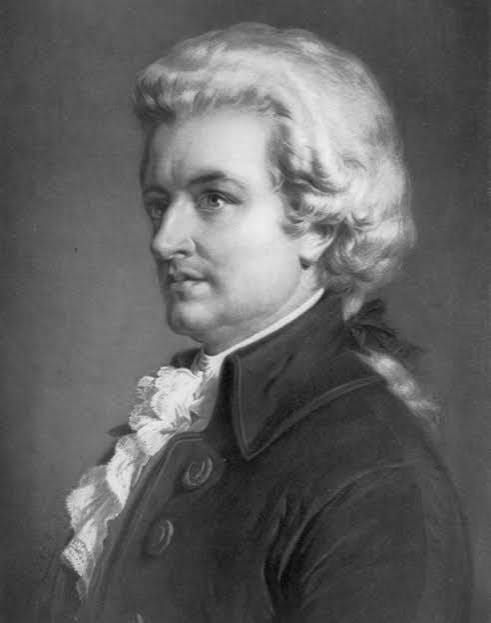
Wolfgang Amadeus Mozart
The incomparable genius Wolfgang Amadeus Mozart (1756 – 1791) was an Austrian composer of opera, symphonic works, concertos, choral and vocal works, keyboard pieces, orchestral works, and chamber music. Despite his short life, Mozart produced more than 800 works, and scholars say he likely composed even more that will never be known or recovered. Mozart was the only son of a proud, infamous, and rather exploitative father by the name of Leopold Mozart. When Leopold realized his son’s prodigious talent, he toured him all around Europe to show him off. It is debated whether these trips contributed to Mozart’s chronic illnesses, as he had bouts of typhus and smallpox during childhood. In any case, it left Mozart with a lot of resentment for his father. Indeed, Mozart would later boycott his own father’s funeral.
Although Mozart was employed off and on by royalty beginning in 1782, he was essentially self-employed. He married Constanze Weber in 1783 without his father’s approval. Astonishingly, by the age of 20 Mozart had written nine operas, five violin concertos, at least 30 symphonies, sets of divertimentos and serenades, many liturgical works, six sonatas, and six concertos for piano. Although Mozart had several teachers, including his father, he was increasingly influenced by Michael Haydn (younger brother of legendary composer Franz Josef Haydn). Between the years 1782 and 1786, Mozart produced a group of piano concertos from no. 12 to no. 25. He would go on to write only two more piano concertos before his death. His final five operas are generally considered his greatest: Le Nozze di Figaro (The Marriage of Figaro), Don Giovanni (Don Juan), Cosi Fan Tutte, Die Zauberflöte (The Magic Flute), and La Clemenza di Tito (The Clemency of Titus). His symphonic production reached its apex with his final four symphonies, nos. 38 – 41.
If you are looking for more information on Mozart, there are some very fine books available:
Mozart: A Life by Maynard Solomon (Harper 1995)
Mozart: The Man Revealed by John Suchet (Pegasus 2017)
Mozart: The Reign of Love by Jan Swafford (Harper 2021)
Clarinet Concerto
Mozart’s Clarinet Concerto was written in 1791, shortly before the composer’s death. It is one of the great concertos in the repertoire regardless of solo instrument. The concerto is structured in three movements in the traditional fast - slow - fast sequence as follows:
The concerto was originally written for the basset clarinet, an instrument which can play some lower notes not possibly on a conventional clarinet. In the 20th century, the work was transcribed for the conventional clarinet. Even though the original manuscript was lost, there is widespread agreement among scholars that the work was meant for the basset clarinet. In performances and recordings today, the basset clarinet is the more common choice.
One reason for this strong belief is that the virtuoso clarinettist the piece was written for, Anton Stadler, invented the basset clarinet to be able to have an extended lower range. Mozart first became familiar with the basset clarinet in 1787, and he wrote a part for it in Così fan tutte (1789). The concerto was to be Mozart’s last instrumental work, and last completed work of any kind. It is believed that Stadler gave the premiere of the work in October of 1791 in Prague. At the time, the basset clarinet was a rarity, and since the original manuscript was lost, the standard version which was published in 1801 had the solo part for the conventional Clarinet in A. The basset clarinet died off after Stadler’s death, only to be revived in the 20th century, with the design being based on Stadler’s sketches.
Mozart’s Clarinet Concerto is by far the most frequently performed concerto for the clarinet.
Calvin Dotsey, annotator for the Houston Symphony, says of the concerto:
“Mozart reserves new themes for the soloist, placing a canonic treatment of the opening theme in the place where a second melody would normally appear. When the clarinet enters, it plays its own version of the main theme and introduces several new ones, passing through a rich succession of keys. Throughout, Mozart fully exploits the different sonorities of the clarinet, from the clear, pure high notes to the warm middle register and the chesty lower range. The soloist’s forays into darker, minor modalities add expressive complexity to the music’s elegant beauty.
An orchestral passage leads to a developmental section featuring the soloist. The mood gradually intensifies until a more dramatic orchestral passage brings the music back to the main themes. Mozart omits the traditional cadenza (an extended, improvised passage for soloist alone) at the end of the movement; instead he leaves space for brief, improvised musings for the clarinet at various points throughout.
The slow second movement is a marvel of artful simplicity; its undisturbed, serene beauty make it one of Mozart’s loveliest creations. Reflecting Mozart’s skill as an opera composer, it is effectively a three-part aria for the clarinet, which assumes the role of a soprano singer. The movement begins with a long melody whose phrases are introduced by the clarinet and then echoed by the orchestra. A central section focuses completely on the soloist, whose part includes more ornamental figuration. The opening melody then returns in abbreviated form, followed by a coda.
The fast and playful finale takes the form of a rondo, in which a main melody alternates with contrasting episodes. After the soloist and orchestra introduce the jaunty main theme, the soloist launches into a sweet, complimentary secondary theme that becomes increasingly expressive and developmental as it unfolds. The main theme then makes a brief return, leading to a contrasting episode in a minor key. Surprisingly, Mozart then reprises the second theme first, withholding the full return of the main melody for the concerto’s joyful conclusion.”
Recommended Recordings
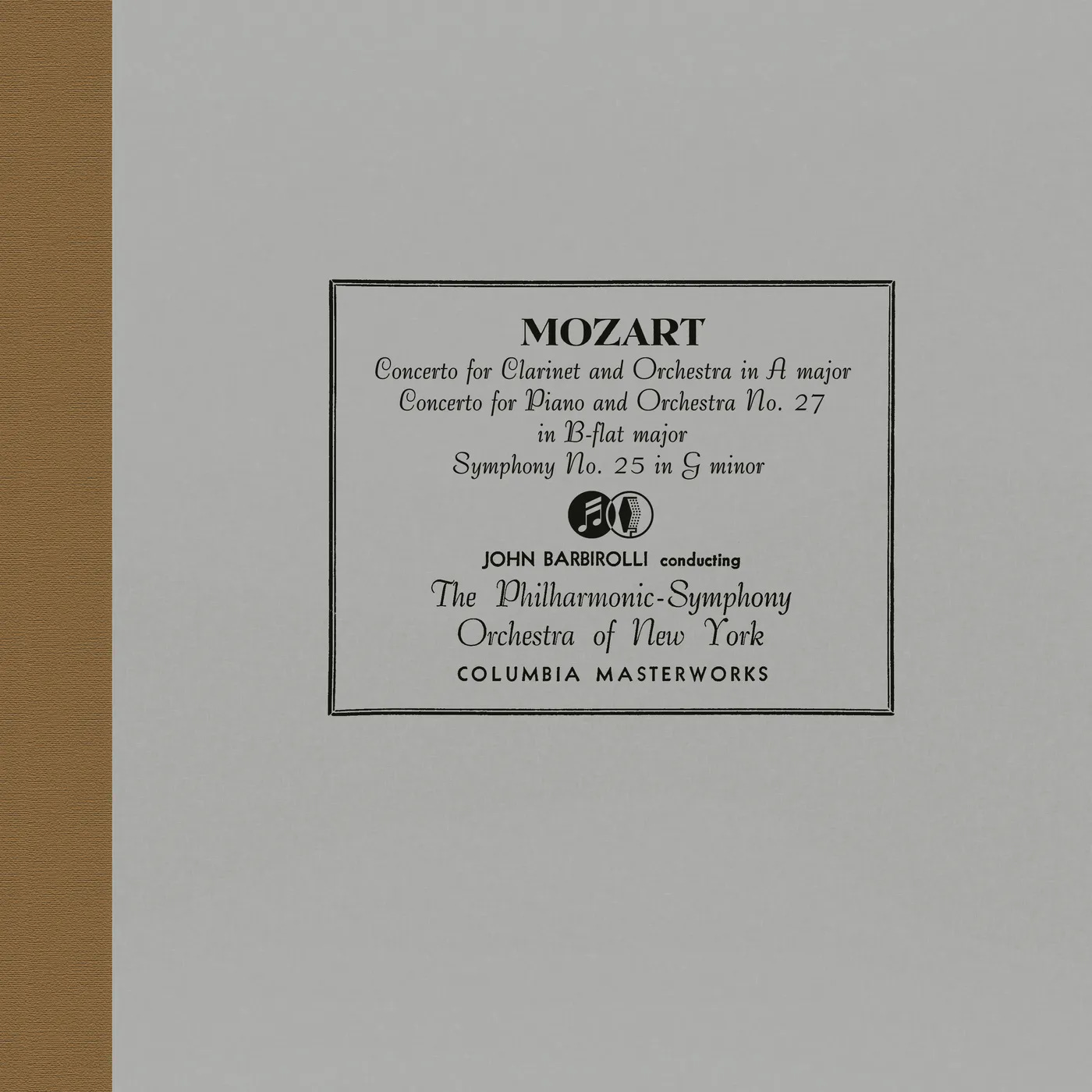
My first recommendation goes all the way back to 1942, and features the world famous jazz clarinettist Benny Goodman playing the concerto with Sir John Barbirolli and the New York Philharmonic on the Sony label. Goodman would record the piece again later at Tanglewood with Charles Munch and the Boston Symphony Orchestra, but this earlier performance is better and is in good sound for 1942. Of course Goodman uses a conventional clarinet, but the character and fluidity of his playing is impressive. He was an accomplished classical musician, and he clearly loved this concerto, as he played it many times. At times his tone has some tremolo, which I believe was from Goodman and not the recording itself. Some purists will dismiss Goodman out of hand in this repertoire, but I really find this to be a quite charming and worthy performance. Tempos are moderate, never too fast, and phrasing is quite effective. I find this to be a very enjoyable recording.
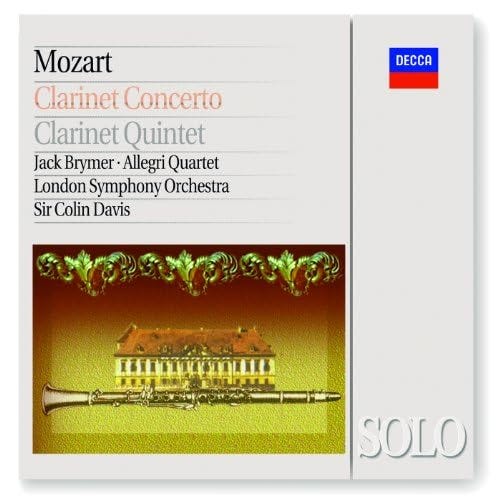
One of the very finest, if not THE finest, clarinettist of the 20th century was English clarinettist Jack Brymer, and I would like to recommend two of his recordings of the Mozart concerto. The first is from 1964 with the London Symphony Orchestra under Colin Davis on Decca. This is a most genial performance, with old school charm and grace, and of course Colin Davis was generally a reliable guide with Mozart. But the real star, of course, is Brymer. His entrance is understated, but soon you understand what made him so special as a soloist. His tone is subtle, yet sustained, but also has a golden halo around it. His touch is light, but fluid and flowing at the same time. There is such a delightful way about his playing that is hard to describe, but it is beguiling. It is so ideal for Mozart, light enough to capture the moods, but he also brings the virtuosity when needed in the faster runs. He also makes dynamic changes when called for, and as things move along we hear more extroverted playing, but never harsh or overdone. The Adagio is meltingly beautiful, and not rushed in the least. The Rondo is superb, well balanced, and nicely sprung by Davis and the LSO as well. But Brymer’s playing is captivating.
![MOZART Clarinet Cto BRYMER Oboe Cto BLACK MARRINER [CD] West Germany PDO | eBay](https://substackcdn.com/image/fetch/$s_!A1lN!,f_auto,q_auto:good,fl_progressive:steep/https%3A%2F%2Fsubstack-post-media.s3.amazonaws.com%2Fpublic%2Fimages%2Ff918577d-15a7-477c-8343-e90f6a6e4532_400x394.jpeg "MOZART Clarinet Cto BRYMER Oboe Cto BLACK MARRINER [CD] West Germany PDO | eBay")
Sticking with Brymer, I’m also recommending his 1973 recording with Neville Marriner and the Academy of St. Martins-in-the-Fields on the Philips label (now on Decca). The sound is more intimate, but still rich and full from the ASMF. Brymer brings many of the same qualities to this performance, his sparkling tone delivered with the utmost control and subtlety, but also with impressive panache. He is miked a bit closer this time, but only marginally so, and the sound is excellent. This is once again a bit in the old school mode for Mozart, but it is such a charming and loveable performance, I find it irresistible. The directness and almost innocence in Brymer’s tone is something you just have to hear. The Adagio is not quite as broad as with Davis, which is a good thing. The Rondo is not overly juiced as you might hear on more recent recordings, and this makes for a lovely lilt and rhythm, with Marriner always having good instincts with Mozart. It is hard to choose really between this and the Davis, both are very fine.
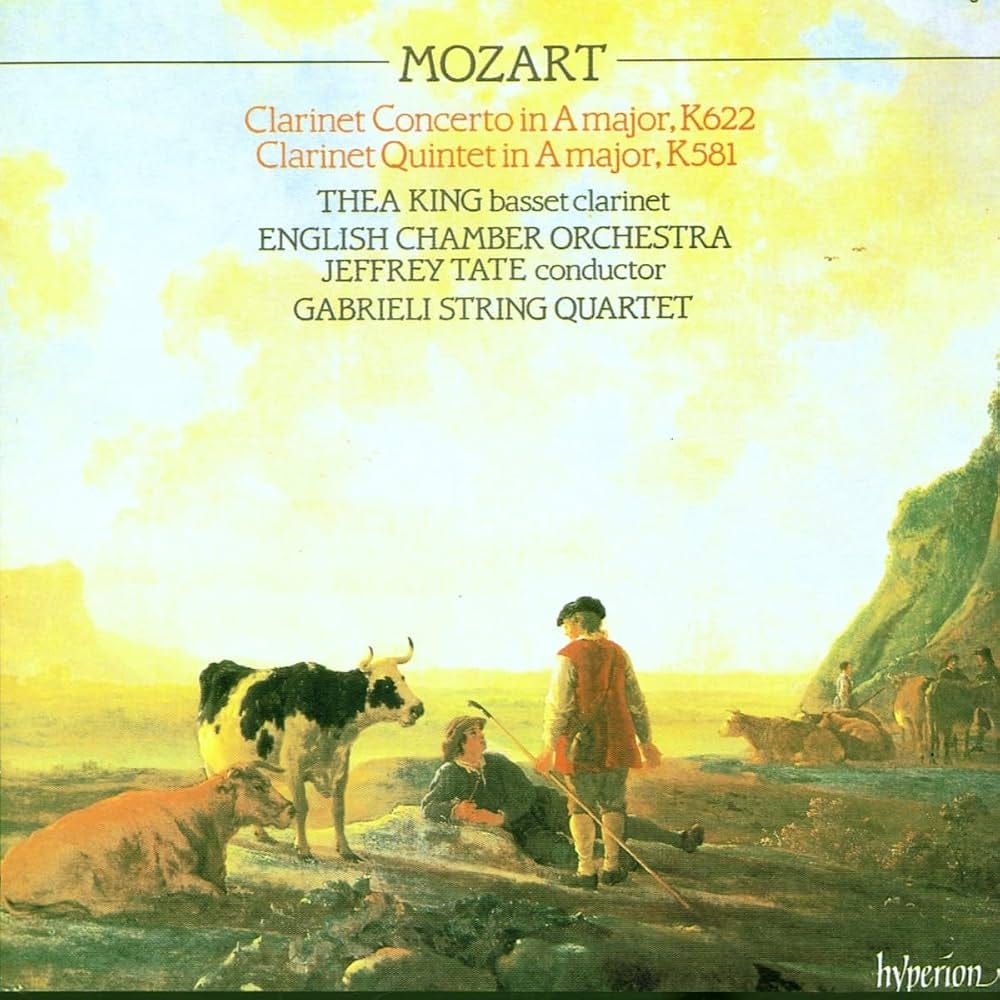
Moving ahead to 1985, there is the outstanding recording from another legendary British clarinettist, this time Thea King. She is joined by the English Chamber Orchestra and Jeffrey Tate on the Hyperion label. Once again we have a performance of great charm and feeling, with excellent sound from St. Barnabas’ Church in London. Tate and the ECO are not speed demons to be sure, and this is another relatively traditional performance. You will immediately notice that King’s tone is more pungent and woody than Brymer, and that King is more assertive in her phrasing and articulation. But as you listen, you will notice that the difference is she employs more dynamic variation across each movement, playing louder at times, while also pulling back in some wonderfully subtle moments. This gives the performance real personality. I believe she is also miked more closely than Brymer. Tate and the ECO are no strangers to Mozart of course, and they play with aplomb even if pacing is a tad slower than many other versions on the list.
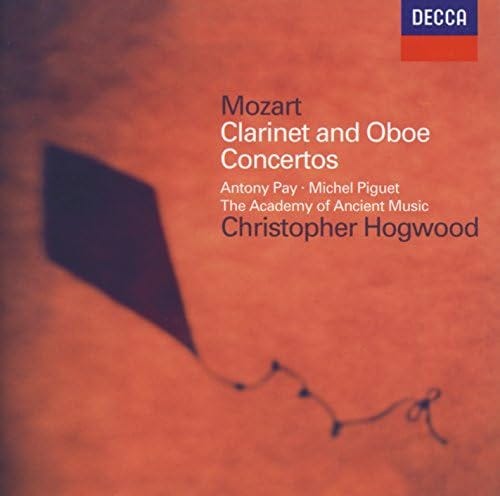
The 1985 period instrument recording by clarinettist Antony Pay and the Academy of Ancient Music under Christopher Hogwood on Decca has great vitality and lift. I have long admired how Hogwood was able to create a fuller sound than most period ensembles, as evidenced here. Pay’s solo contribution is quite satisfying, and he uses a period basset clarinet which I believe helps. It has a nicely rounded, warm, and woody sort of sound that feels right for this concerto. Pay’s articulation has character and style. His fluency in the final Rondo is exhilarating. Tempos are brisk, but never rushed, and dynamics are well considered. The sound from Walthamstow Town Hall in London is excellent.
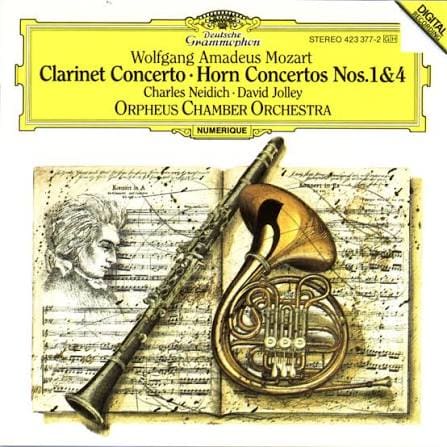
The 1987 recording by American clarinettist Charles Niedich and the Orpheus Chamber Orchestra on Deutsche Grammophon is a constant delight. Niedich plays with composure, panache, and a great deal of dynamic personality. At this time the Orpheus was one of the greatest chamber orchestras in the world, and the sound is superb. Niedich has such good instincts here in terms of when to pull back and play softer and with more subtlety, although his louder moments are noticeably loud and seem to be miked quite close. But the sense of teamwork and collaboration here is strong, and there is a great deal to enjoy. Niedich’s playing has a sparkle to it, and I like how he plays with individual flair.
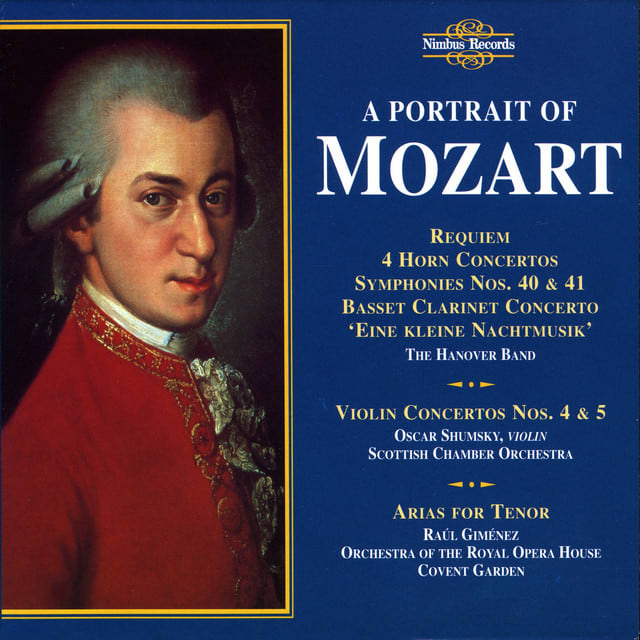
One surprise find for me is the 1989 recording with clarinettist Colin Lawson and The Hanover Band on period instruments with Roy Goodman directions on the Nimbus label. All Saints Church in Tooting, London provides an atmospheric yet detailed sound stage, and Lawson uses a basset clarinet to great effect. I found this a most affecting performance without lots of flash, but with a lot of personality and joy. The Hanover Band sounds terrific here, full and completely in sync with Lawson. The Adagio is moving without becoming mushy, and the Rondo is in just the right spirit and mood. There is also plenty of virtuosity and musicality, but the musicians let Mozart come through most of all.
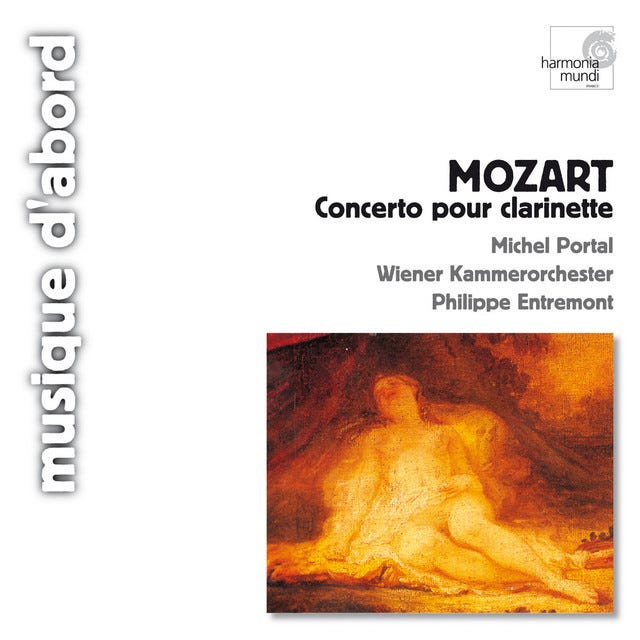
French pianist and conductor Philippe Entremont recorded an award winning disc of Tchaikovsky string music with the Vienna Chamber Orchestra back in the day for Naxos, and here is Entremont and the VCO again with clarinettist Michel Portal, this time on the deutsche harmonia mundi label (I could not find this recording on streaming services, but found it on YouTube). Many of the same qualities as that Tchaikovsky album come through here as well, namely clarity, transparency, a fuller modern instrument sound, ideal tempos, dynamics, and phrasing. But Michel Portal also provides a sophisticated, smooth, intelligent, and most effective clarinet solo. There is just a lot of musical experience and wisdom in this performance, even if the clarinet is ever so slightly recessed in the picture. This is a charming, fun, and warm hearted recording.
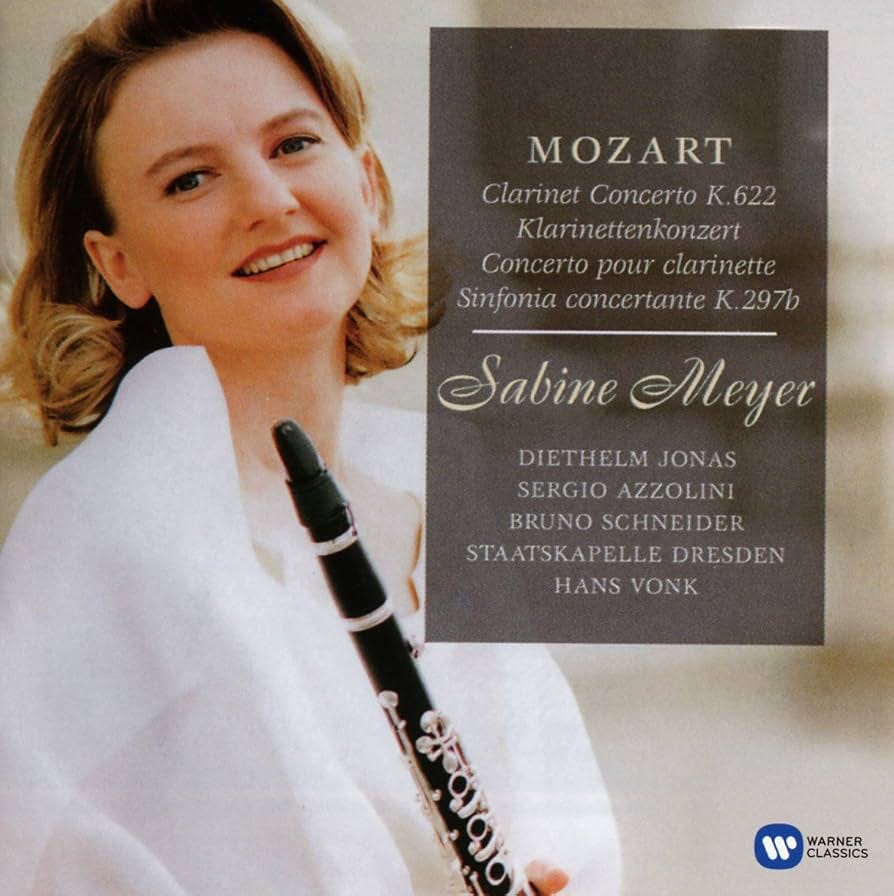
Enter the great German clarinettist Sabine Meyer, with at least three commercial recordings of the Mozart concerto to her credit. The first two I am recommending here, the first being from 1990 with Hans Vonk and the Staatskapelle Dresden on EMI. Meyer’s playing is direct and relatively no-frills, but everything seems just right in terms of phrasing, tempos, her rounded tone, and sense of having this music in her bones. Vonk was always an underrated conductor, and here he and the Dresdeners acquit themselves nicely. This is “full fat” Mozart, with a larger orchestral sound and modern instruments. But they are fleet of foot, and the mood they strike is ideal. Meyer is particularly adept at the faster runs, and at adding personality through varying her loudness and softness. Her playing has a sparkle and a sense of authority about it. Just listen to the first few minutes of the Rondo, this is simply exceptional. She varies between staccato and legato almost effortlessly, depending on the phrasing she wants. The sound is very good.
![Mozart, Krommer, Sharon Kam, Württembergisches Kammerorchester – Clarinet Concertos – CD (), 1998 [r8576532] | Discogs](https://substackcdn.com/image/fetch/$s_!Ujwp!,f_auto,q_auto:good,fl_progressive:steep/https%3A%2F%2Fsubstack-post-media.s3.amazonaws.com%2Fpublic%2Fimages%2F1ef8a71e-40ff-4174-b630-bc082fa18484_300x294.jpeg "Mozart, Krommer, Sharon Kam, Württembergisches Kammerorchester – Clarinet Concertos – CD (), 1998 [r8576532] | Discogs")
Next up is Israeli German clarinettist Sharon Kam in a 1997 recording with Jörg Faerber and the Württembergische Kammerorchester Heilbronn on Teldec (Warner). This is another excellent performance, though if you are used to Meyer’s tone (above), Kam will come across as slightly more acerbic and piercing, as she has a more extroverted style. But it works, and Kam has the chops for the more tricky passages. I do like when she backs off a bit more than when she is louder. But listening to this once again, I came away quite impressed with the Württemberg chamber group much more than I expected. Faerber leads a performance which never overshadows Kam, but which really complements the soloist very well. The soloist is miked more closely than the orchestra, and occasionally I wished to hear the orchestra a bit more clearly, but overall this is a strong recommendation.
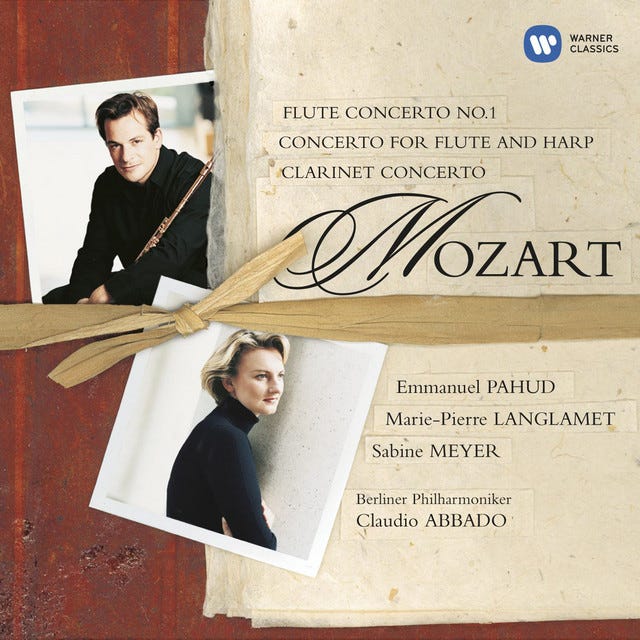
Sabine Meyer recorded the concerto again in 1998 with Claudio Abbado and the Berlin Philharmonic for EMI (Warner), and it is really quite similar to her earlier Dresden account. Of course there is the ever poised and brilliant BPO with a rather inspired Abbado on the podium. The opening movement has a wonderful pulse and terrific forward momentum. Meyer for her part once again produces a golden tone, varying dynamics and phrasing so well that come away feeling that the piece shouldn’t be played any other way. Meyer is a big advocate for the basset clarinet for the Mozart concerto, and she uses it in all of her recordings. I really enjoy when Meyer goes to the lower part of the instrument’s register, she produces a very rich tone. I find this to be every bit the equal of her earlier recording, and the sound is a bit more immediate and clear as well. This is a refined, beautifully performed, and completely recommendable version of this concerto.
The 2000 recording from clarinettist Nicholas Cox and the Royal Liverpool Philharmonic Orchestra under the baton of Roy Goodman on the RLPO’s own label is another winning performance. Roy Goodman, mostly known for his time with the period group The Hanover Band, here conducts the modern instrument Liverpool orchestra. Cox produces a darker and richly hued tone with his basset clarinet, and while his tone is not quite as rounded as Meyer’s his playing has a wonderfully expressive quality to it, and he also chooses where to play louder and when to back off. His phrasing in the middle section of the Allegro is very enjoyable. The Adagio doesn’t linger, and the Rondo is given a splendid performance, ideally paced with enough breathing room for Cox to make the most of his phrases and especially the faster runs. The sound is very good, although I find the sound a bit aggressive at certain points, but it’s a small matter. Recommended.
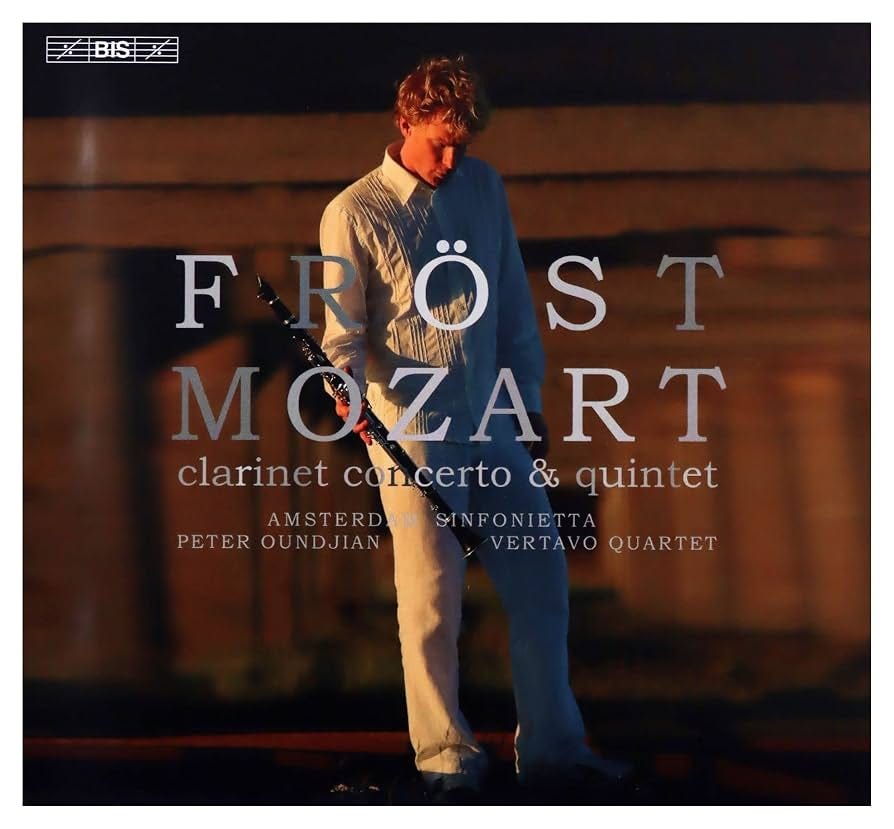
Swedish clarinettist Martin Fröst is one of the most acclaimed clarinettists in the world, and his 2003 recording with the Amsterdam Sinfonietta under Peter Oundjian on the BIS label sounds fresh and stylish. Fröst is a bit understated at the opening, but he creates a delectable tone and clearly has the full measure of how to vary his phrasing depending on what Mozart wrote. Fröst soon shows he knows how to bring the music to life, marginally increasing his volume and clarity in key moments. The Rondo is superb, with Fröst bursting forth with some stunning work in the faster sections, and while the tempo is brisk, it is never at the expense of the music. This is a delightful performance which manages to convey the genius of Mozart while also keeping things light and playful when needed. The BIS sound deserves special mention for clarity and detail.
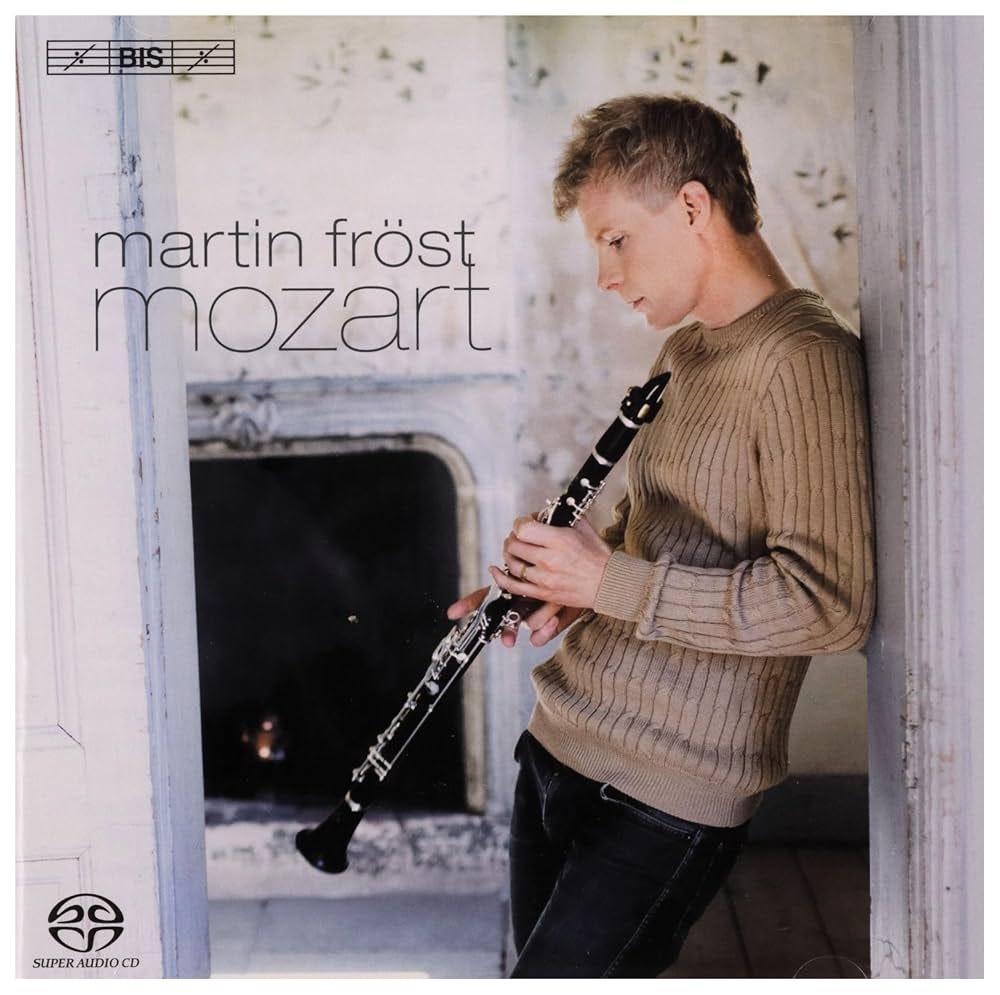
Turning again to Martin Fröst, his more recent recording from 2010 with the Deutsche Kammerphilharmonie Bremen on BIS is also recommended. Once again Fröst shows great touch and delicacy, and turns things up a notch when needed. The Bremen group is one of the premier chamber orchestras in the world, and the clarity and transparency of their sound is a delight. It is a near ideal partnership. They capture the colors and moods superbly, and while this is a somewhat more polished performance than his previous recording, Fröst is a consummate artist who still carries the expressive weight needed for the work. The Adagio is especially moving, I find that Fröst allows the music to breathe and unfold at just the right pace and dynamics. The Rondo is jaunty and well sprung, but all the while Fröst’s playing remains smooth and refined. Certainly a top contender.
![Michael Collins plays Works for Clarinet and Orchestra by Mozart, Copland and Kats-Chernin [Swedish Chamber Orchestra; Chandos] - The Classical Source](https://substackcdn.com/image/fetch/$s_!UUbE!,f_auto,q_auto:good,fl_progressive:steep/https%3A%2F%2Fsubstack-post-media.s3.amazonaws.com%2Fpublic%2Fimages%2F1ccd24b1-66f1-4482-8f15-92912cafc5f2_210x200.jpeg "Michael Collins plays Works for Clarinet and Orchestra by Mozart, Copland and Kats-Chernin [Swedish Chamber Orchestra; Chandos] - The Classical Source")
British clarinettist Michael Collins has been one of the foremost clarinettists in the world for some time now. His 2012 recording of the concerto on Chandos with the Swedish Chamber Orchestra is fully satisfying and deserves a recommendation. The sound is rich and full, and Collins leads from the clarinet a performance of personality and charm. Collins’ playing is refined and straightforward with plenty of nice little touches. He has an uncanny sensitivity for what is needed in each phrase in terms of dynamics and articulation. The miking of Collins is a bit over resonant at times, but the spacious and atmospheric acoustic is mostly a good thing. The Swedish orchestra is very fine indeed, and seems less impacted by the reverberation. In any case, this performance is a delight. We will encounter Collins again below.
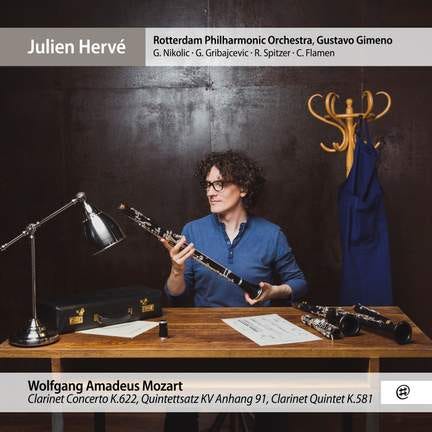
One other big surprise for me is the 2017 recording by clarinettist Julien Hervé on the Nomad label. He is joined by the Rotterdam Philharmonic under Spanish conductor Gustavo Gimeno. Hervé has a bright tone but also a lightness and charm to his playing that is terrific. His fluid, smooth technique through some of the faster sections is a joy, and the Rotterdam orchestra maintains momentum and tension throughout. The Adagio is on the less sentimental side, while the Rondo is taken at a sensible, yet brisk pace. There is much to enjoy here, and after listening to this several times, I became enamored with Hervé’s style and skill. The conclusion is wonderful, as the horns in the orchestra come through nicely, and the lower range of the clarinet is captured well. Recommended.
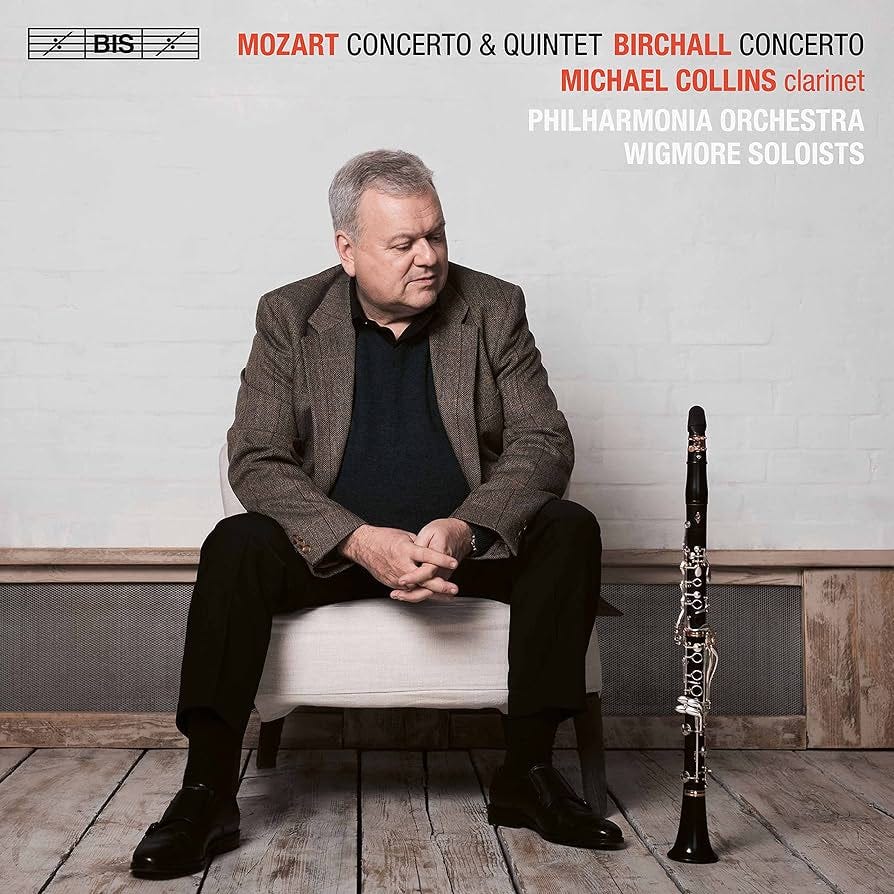
We return to Michael Collins again, this time in 2021 with the Philharmonia Orchestra on the BIS label. Collins leads the orchestra himself (as he did in the previous recording), and the Philharmonia are captured a bit more closely and certainly more clearly. Collins doesn’t have as much echo and reverberance as the earlier recording. But what remains the same is Collins’ creamy tone and assured virtuosity. If anything, I would say Collins is marginally less strident here, which I happen to like. He uses a basset clarinet in both recordings, but here he sounds warmer, more controlled, and generally more at home. Collins was once the first chair clarinettist for the Philharmonia, and they seem to have a nice sense of teamwork. This is a reading of charm and grace, with Collins playing sweetly and seemingly effortlessly. This is not a fast performance, the Adagio comes in slower than average, and the Rondo is marginally slower (though certainly in the mainstream). Speaking of the Rondo, Collins produces a sparkling tone, rhythmically alert and dynamically pleasing. His phrasing is simply delightful. The sound from Henry Wood Hall in London is outstanding, full, and detailed. This may be my favorite recording of all for this work.
Other Recordings of Mozart’s Clarinet Concerto You May Like
Kell / Zimbler (Decca 1950)
Cahuzac / DR / Woldike (Danacord 1952)
De Peyer / LSO / Maag (Philips 1959)
Brymer / RPO / Beecham (EMI/Warner 1959)
Gigliotti / Philadelphia / Ormandy (Sony 1963)
Leister / BPO / Kubelik (DG 1967)
Prinz / VPO / Böhm (DG 1972)
Stoltzman / ECO / Schneider (RCA 1980)
Shifrin / Mostly Mozart / Schwarz (Delos 1984)
A.Marriner / London Mozart Players / Glover (EMI/Warner 1985)
Johnson / ECO / Leppard (ASV 1985)
Schmidl / VPO / Bernstein (DG 1987)
Stoltzman / ECO (RCA 1991)
Ottensamer / VPO / C. Davis (Philips 1992)
Cohen / Cleveland / Dohnanyi (Decca 1995)
Farrall / Britten Sinfonia / Cleobury (BMG 1997)
Collins / Russian National / Pletnev (Dg 2000)
P. Meyer / Paris / Nelson (Erato 2005)
Krirkku / Tapiola / Storgårds (Ondine 2005)
Carbonara / Orchestra Mozart / Abbado (DG 2006)
Bliss / Royal Northern Sinfonia / Venzago (Signum 2014)
Ottensamer / Salzburg / Goodwin (Sony 2015)
Fuchs / BPO / Gilbert (BPO 2018)
S. Meyer / Basel / Antonini (Alpha 2024)
That wraps it up for this installment of Building a Collection. Please join me next time for #115, Mendelssohn’s Overture to a Midsummer Night’s Dream. See you then!
________________
Notes:
Adelson, Rob (Fall 1997). “Reading between the (Ledger) Lines: Performing Mozart’s Music for the Basset Clarinet”. Performance Practice Review. 10 (2): 152–191. doi:10.5642/perfpr.199710.02.03.
Dotsey, Calvin. Swan Song: Mozart’s Clarinet Concerto. Houston Symphony. January 19, 2023. Found online at https://houstonsymphony.org/swan-song-mozarts-clarinet-concerto/.
Einstein, Alfred (1962). Mozart, His Character, His Work. Translated by Arthur Mendel, Nathan Broder. Oxford: Oxford University Press. ISBN 978-0-19-500732-9. OCLC 31827291.
Hildesheimer, Wolfgang (1983). Mozart. London: Dent. ISBN 978-0-460-04347-2.
Holoman, D. Kern (1992). Evenings with the Orchestra: A Norton Companion for Concertgoers. W. W. Norton & Company. ISBN 0-393-02936-0.
Jacobson, Julius H. (2003). The Classical Music Experience: Discover the Music of the World’s Greatest Composers. Vol. 2. narrated by Kevin Kline. Sourcebooks. ISBN 1-57071-950-0.
Lawson, Colin (1996). Mozart: Clarinet Concerto. Cambridge: Cambridge University Press. ISBN 978-0-521-47929-5.
McCarthy, James (February 2012). “The best recordings of Mozart’s Clarinet Concerto”. Gramophone.
Poulin, Pamela L. (Fall 1982). “The Basset Clarinet of Anton Stadler”. College Music Symposium. 22 (2): 67–82. JSTOR 40375184.
Zaslaw, Neal; Cowdery, William (1991). The Compleat Mozart: A Guide to the Musical Works of Wolfgang Amadeus Mozart. Norton. ISBN 0-393-02886-0.