Building a Collection #112: Handel's Music for the Royal Fireworks
With recommended recordings

Building a Collection #112
Music for the Royal Fireworks (HWV 351)
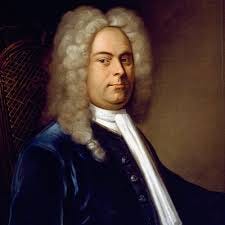
George Frideric Handel
_______________________
“Let equal fire our souls inflame,
And equal zeal employ,
That we the glorious spring may know,
Whose streams appear’d so bright below.”
– G.F. Handel
Welcome back to Building a Classical Music Collection! I am grateful you are here. In this series, we are exploring the Top 250 Classical Works of All-Time, and we are counting our way up the survey. We have now progressed to #112 on the survey. For this spot we will cover George Frideric Handel’s Music for the Royal Fireworks, a piece that has only grown in popularity in recent decades.
George Frideric Handel
George Frideric Handel (1685 - 1759) was a German British composer of the Baroque era known for his oratorios, operas, anthems, concerti grossi (large concertos), and orchestral works. Handel was trained in Halle, Germany and worked in Hamburg and Italy before settling in London in 1712, where he became a naturalized citizen in 1727.
Handel became known for his blend of German choral tradition and Italian baroque in opera, essentially perfecting the baroque style, as well as being credited with founding the English oratorio form. Along with Bach and Vivaldi, Handel is considered one of the most famous composers of the Baroque era.
Handel’s family was not from the upper class, and at that time in Germany the arts were patronized almost exclusively by the wealthy. His father was a barber and wanted George Frideric to be a lawyer. But from a young age, Handel was a precocious musical talent, learning the violin, oboe, harpsichord, and organ. He also began to study, and even copy, famous pieces of music from selected composers of the time. George Frideric began composing at the age of nine, and around the age of 11 (sources disagree on the exact year), Handel traveled to Berlin to meet famous Italian composers of the time Giovanni Bononcini and Attilio Ariosti.
Handel attended the University of Halle beginning in 1702 and also accepted a position as organist at the Calvinist Cathedral in Halle (even though Handel was Lutheran). He met composer Georg Philipp Telemann around this time, and of course Telemann would also go on to great fame. Telemann was studying law in Leipzig at the time, but the two shared thoughts, ideas, and opinions about music and they would become good friends. While part of his duties in Halle was to provide church music, none of his sacred music from the period has survived. Still, comments from others that knew Handel at the time praised his gift for melody and harmony.
Handel moved to Hamburg in 1703 after his one-year contract in Halle expired, and he gave up university to move to a place where musical opportunities were more abundant. During his Halle years, Handel had apparently been made an offer by the King to study in Italy with the understanding he would return and work at the King’s pleasure. Being increasingly attracted to secular music, and not fond of the idea of being a subject of the King, Handel rejected the offer. He wanted the personal freedom to follow his own path, and the move to Hamburg was part of his plan. During his time in Hamburg, Handel found work as a violinist and harpsichordist with the Oper am Gänsemarkt, and began composing operas in earnest. His first two operas, Almira and Nero, were produced in 1705.
Story has it Handel was invited to Italy by one of the Medici sons in 1706, the young Medici having the hope of reviving Italian opera by bringing in one of the best young composers of the day. Handel produced several sacred works during this time including his Dixit Dominus (1707) and several cantatas. In addition to some oratorios in Italian, Handel also produced his first operas in Italian including Rodrigo (1707) and Agrippina (1709), the latter being a great success. Handel also began borrowing his own prior melodies for new works, something that was rather common at the time and a practice Handel would continue doing throughout his career.
Eventually by the year 1712 Handel had moved permanently to England, living off stipends from the Queen for his compositions, and relying on commissions for new music from wealthy patrons (usually earls and dukes). In 1723 Handel moved into a Georgian house at 25 Brook Street, London where he would live for the rest of his life, and which is now the site of the Handel House Museum. After moving here, Handel would produce three of his most successful operas, Giulio Cesare, Tamerlano and Rodelinda in 1724 and 1725. Many of Handel’s operas were performed at the Queen’s Theatre (now His Majesty’s Theatre) between the years 1711 and 1739.
Handel would continue producing operas well into the 1730s, although he increasingly became interested in oratorios, anthems, concertos, and orchestral music. In 1719 Handel was asked to help develop the newly founded Royal Academy of Music, and then later was instrumental in founding the famous opera house Covent Garden Theatre. Of the 42 operas Handel composed, some of the more well-known which have remained in the repertoire include Acis and Galatea, Agrippina, Ariodante, Giulio Cesare, Hercules, Rodelinda, Orlando, Semele, and Serse among others.
As mentioned, Handel had become familiar with oratorio much earlier and his first attempt at the genre was Il trionfo del tempo e del disinganno from 1707, and his second was La resurrezione from 1708. As Handel became more confident in his work, and after being influenced by such composers as Arcangelo Corelli and Alessandro Scarlatti, he began writing English language oratorios which included sophisticated choral numbers, and he began replacing Italian soloists with English soloists. Other oratorios which Handel became known for include Saul, Israel in Egypt, Solomon, and of course The Messiah.
Handel’s anthem Zadok the Priest was commissioned for the coronation of King George II in 1727 and became so popular it has been played at every royal coronation ceremony since. Other works by Handel that have remained popular over the centuries include Water Music (see below), Music for the Royal Fireworks, Organ Concertos, Concerti Grossi op. 3 and op. 6, and Alexander’s Feast.
Handel became blind in 1752 as a result of an eye injury suffered in a carriage accident in 1750. He died in 1759 at home and is buried at Westminster Abbey in London.
Music for the Royal Fireworks
The Music for the Royal Fireworks is a suite in D major composed by Handel under commission from King George II of Great Britain in 1749 especially to be used for the fireworks in London’s Green Park to celebrate the end of the War of Austrian Succession and the Treaty of Aachen in 1748.
In the preparations for the music, Handel had an argument with the Master-General of the Ordinance about which instruments could be used. The Master-General was adamant that no strings could be used, only woodwinds and percussion. Handel was not pleased with this but gave in against his will. A full rehearsal performance was scheduled for six days before the actual performance, but Handel was also unhappy that the rehearsal performance was scheduled for Vauxhall Gardens rather than Green Park. As it happens, over 12,000 people flocked to Vauxhall to attend the rehearsal, which was a massive crowd, and which created quite a traffic mess.
The performance was given on April 27, 1749, with Handel and the musicians housed in a building built specially for the occasion. The music turned out to be more successful than the fireworks themselves, as it was a rainy day and there were several misfires. In addition, one building was set on fire, a woman’s dress was set ablaze, and one of the soldiers setting up the display had his hand blown off during a rehearsal for the 101 cannons that were used.
The work is in five movements as follows:
Overture (Adagio – Allegro – Lentement – Allegro)
Bourrée
La Paix (Largo alla siciliana)
La Réjouissance (Allegro)
Menuets I and II
It was scored for a large wind band ensemble consisting of 24 oboes, 12 bassoons and a contrabassoon (originally serpent, later scratched out), nine natural trumpets, nine natural horns, three pairs of timpani, and side drums which were given only the direction to play ad libitum as no side drum part was written by Handel.
Handel re-scored the suite for full orchestra for a performance on 27 May in the Foundling Hospital. Handel noted in the score that the violins were to play the oboe parts, the cellos and double basses the bassoon part, and the violas either a lower wind or bass part. The instruments from the original band instrumentation play all the movements in the revised orchestral edition except the Bourrée and the first Menuet, which are played by the oboes, bassoons, and strings alone. It is this version that is heard most often on recordings, although there are a handful which use the original score.
Recommended Recordings
While earlier recordings with arrangements by Leopold Stokowski and Hamilton Harty were for large, modern orchestras, in recent decades the historically informed performance movement and period instrument ensembles have dominated the catalog of recordings. In my view this has been largely a positive development, and I must admit that having heard more recent recordings for so long now that going back to some of those older recordings is a bit of a shock in terms of the sluggish tempos.
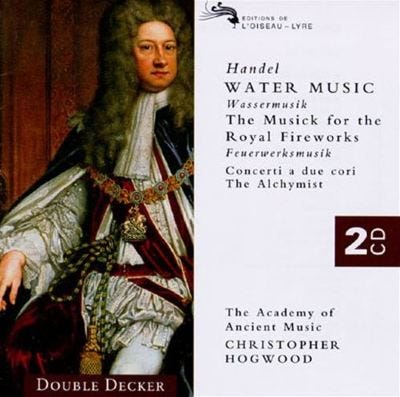
Period instrument and historically informed practice conductor and scholar Christopher Hogwood is sometimes overlooked with Pinnock, Gardiner, and Savall out there, but his 1981 recording of Fireworks with the Academy of Ancient Music on the L’Oisseau-Lyre label (Decca) rivals the best. If the introduction in the Overture is a bit sleepy, things quickly pick up and I enjoy how piquant the brass instruments are throughout. Speeds are marginally slower than other period instrument performances, but that is not a bad thing when melodies and rhythms are weaved and sprung as they are here. Hogwood spends time on the Bourrée, La Paix, and Menuets bringing out the lyrical color and moods. Good sound, perhaps a bit too recessed in the strings and some woodwinds, but overall very good.
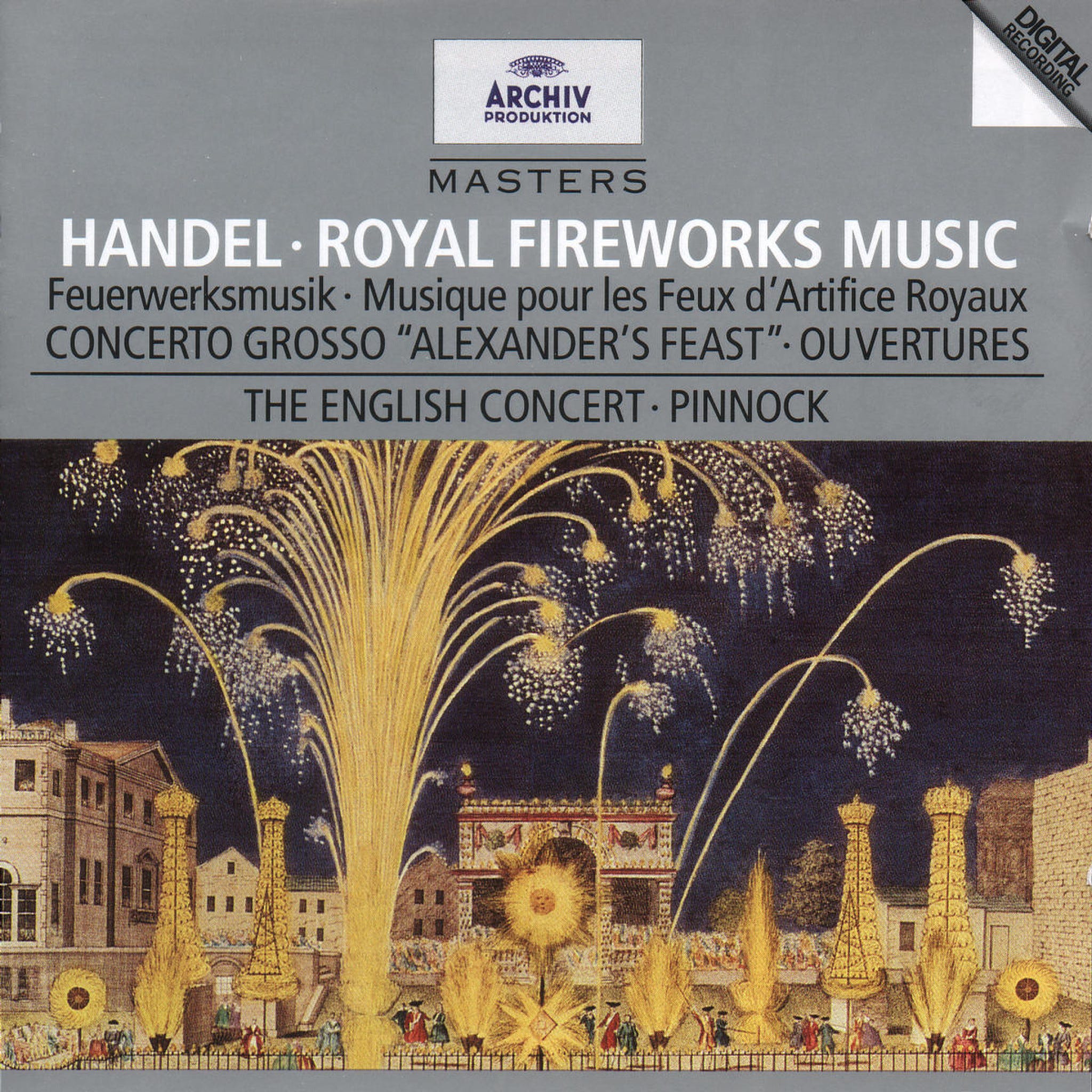
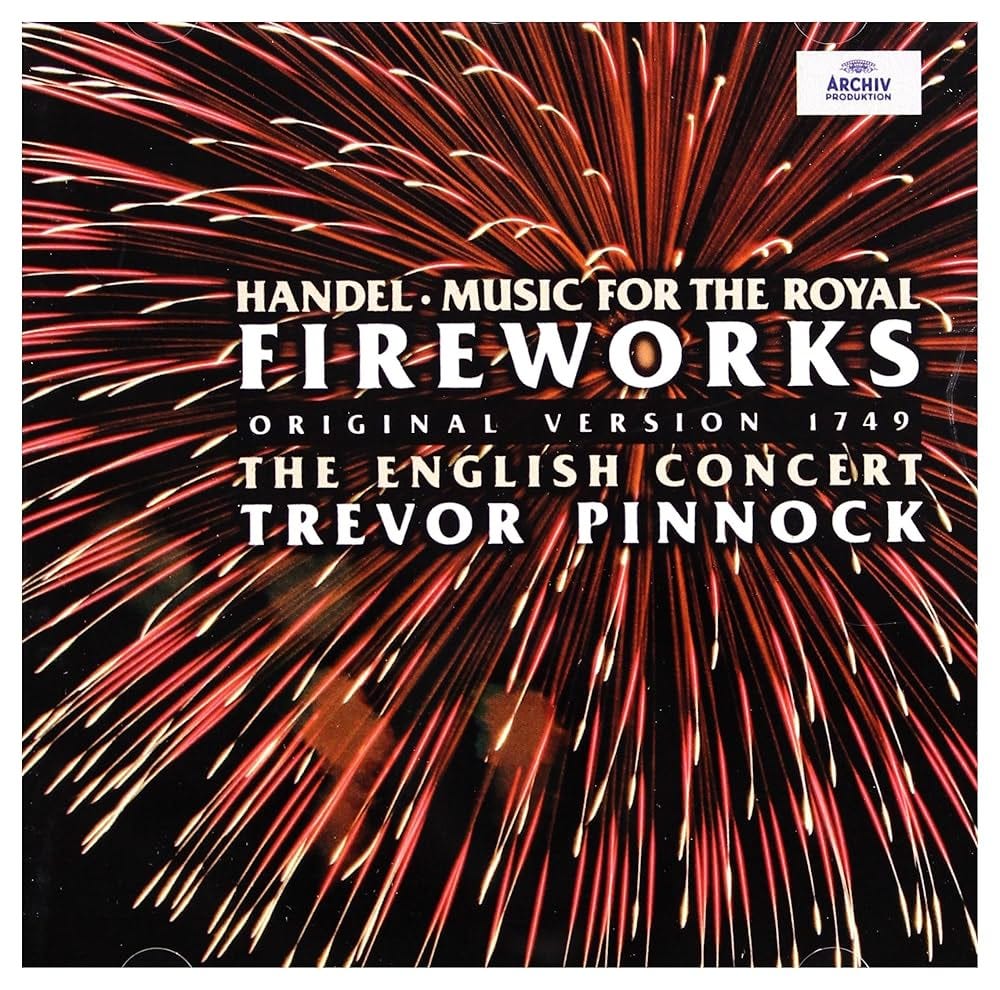
Trevor Pinnock and The English Concert recorded a terrific Fireworks on the Archiv (Decca) label in 1984. This recording stands out for its freshness, clarity, and lively tempos. This was the first of two recordings Pinnock has made of Music for Royal Fireworks (see below for the second one), and I firmly believe that this piece benefits greatly from period instruments and historically informed practices. I am also fond of the use of snare drums. Pinnock was a trailblazer and was extremely consistent in the quality of the recordings he made. This is a prime example. Everything just feels right. If this were my only recording of the piece, I would be very satisfied indeed. Pinnock recorded it again in 1990, again with the The English Concert for Archiv this time using the original 1749 scoring. It is every bit as winning as the first recording, and well worth hearing for the differences between the scores. The second one boasts marginally warmer sound from Henry Wood Hall, and perhaps a bit more spontaneity. But honestly, they are both among the best recordings of this work. Pinnock’s approach and phrasing are consistently sensible, and yet everything moves forward with a purpose. These are highly enjoyable and fully recommended recordings.
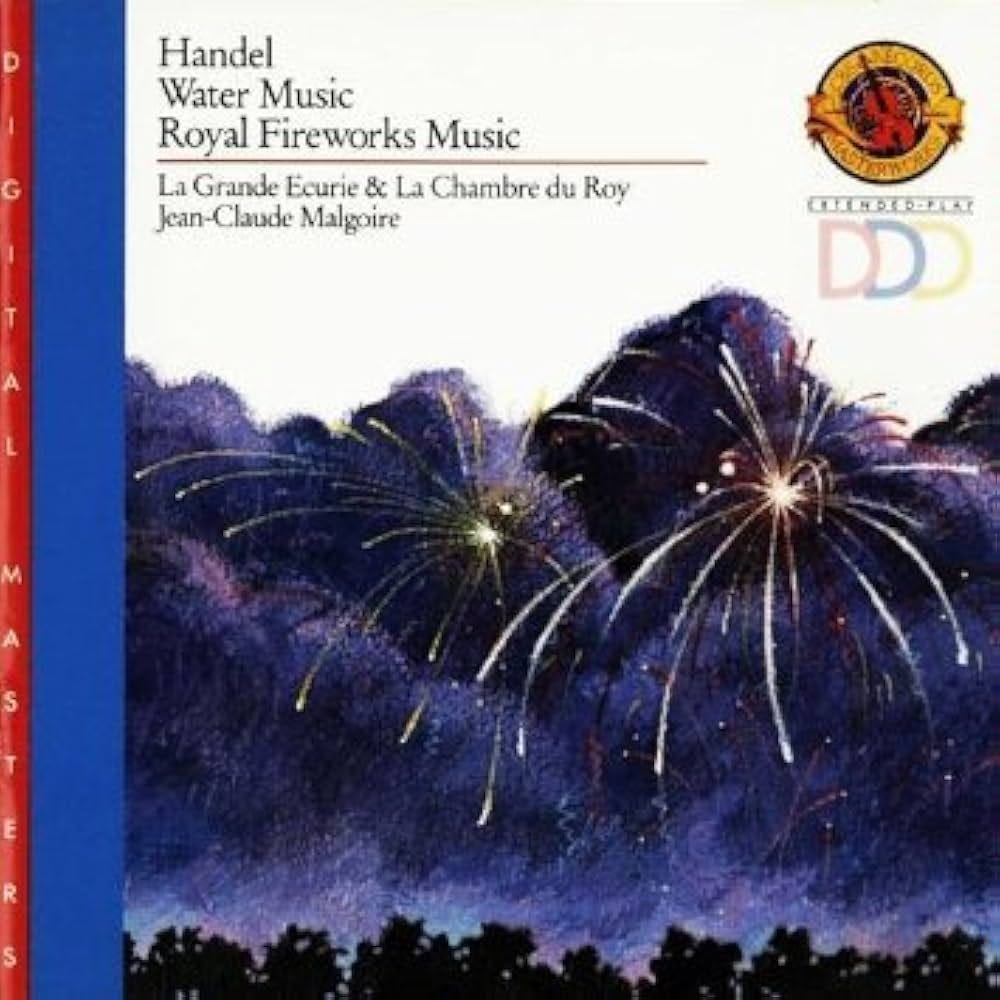
The recording which introduced me to this music was from 1986 on the CBS (Sony) label with Jean-Claude Malgoire and his period instrument group La Grande Écurie et la Chambre du Roy. It still sounds really good to me, and so I’m recommending it even if it is partially for sentimental reasons. There are some similarities with Pinnock’s first recording, and I find it a quite invigorating performance. This one may be even more fleet footed than Pinnock, but certainly nothing extreme. The sound is very good as well.
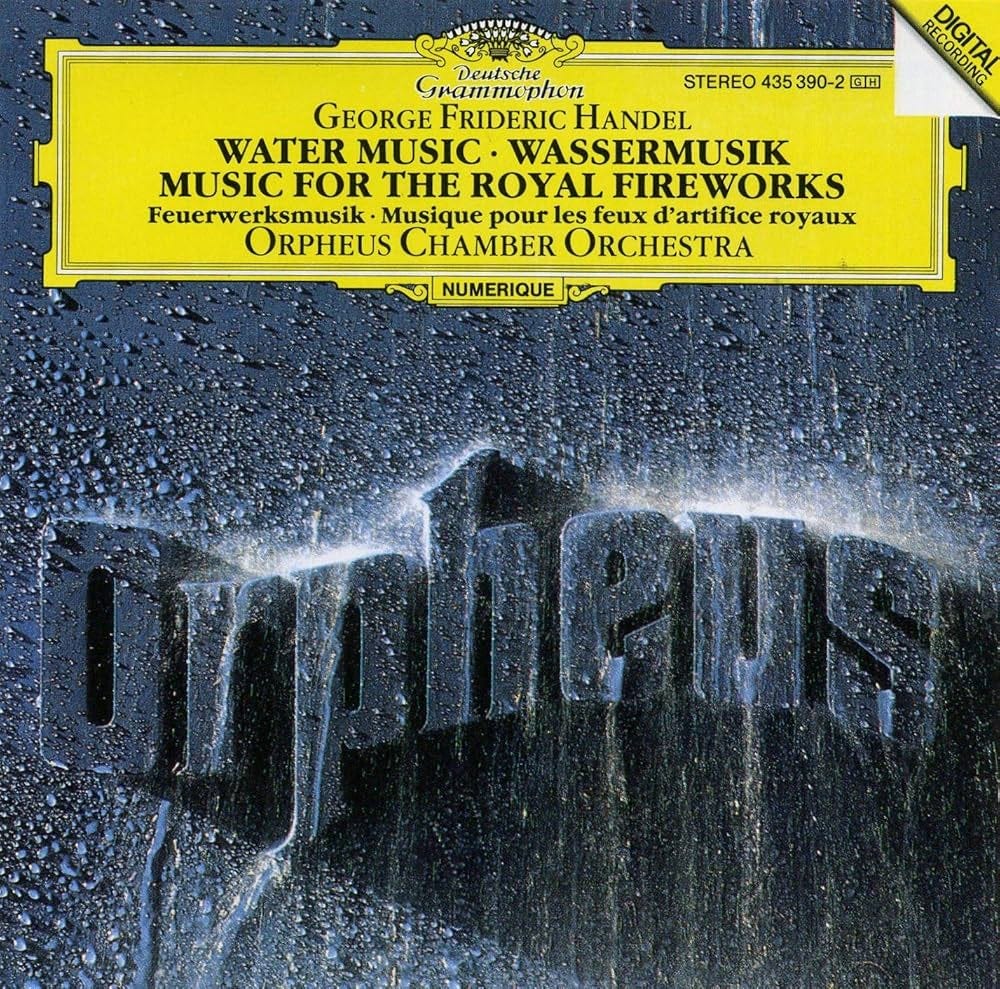
Next up is the excellent 1992 recording by the Orpheus Chamber Orchestra on Deutsche Grammophon. The Orpheus group uses modern instruments, but they do it with a vitality and freshness which is constantly bringing out new details. The sound is warm, detailed, and balanced and the unity and coherence of the musicians, even without a conductor, are exemplary. While perhaps not creating quite the rustic soundscape of Pinnock or Savall (see below), the Orpheus recording is very enjoyable in its own right, and they even give themselves some freedom to improvise.
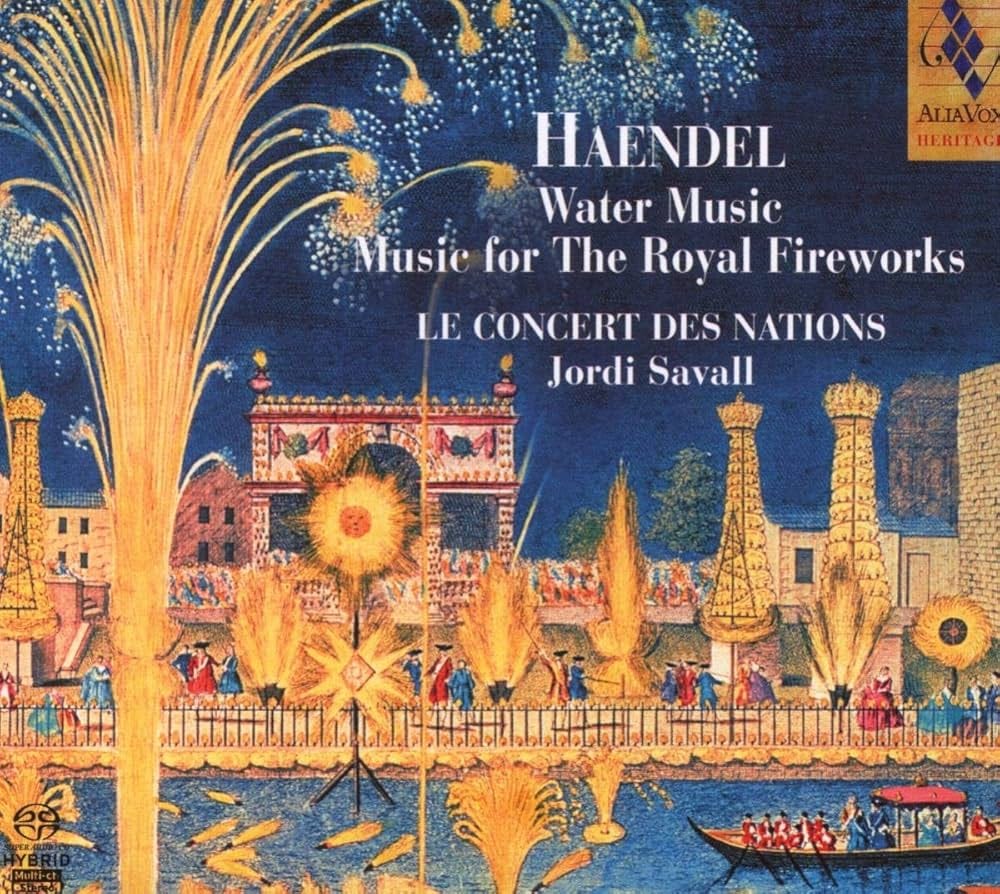
The 1993 recording by Spanish period instrument specialist Jordi Savall and his group Le Concert des Nations on the AliaVox label is outstanding. The sound is spacious, detailed, and warm and achieves great clarity. This vibrant and lively playing on a very high level, and I love the way Savall builds excitement and textures throughout. The horns cut through with a glorious, pungent sound, and there is a palpable energy pervading the entire recording. The tempos are in the mainstream for period performances, and what it comes down to is excellent execution and while it may not supersede others on the list, it is right near the top.
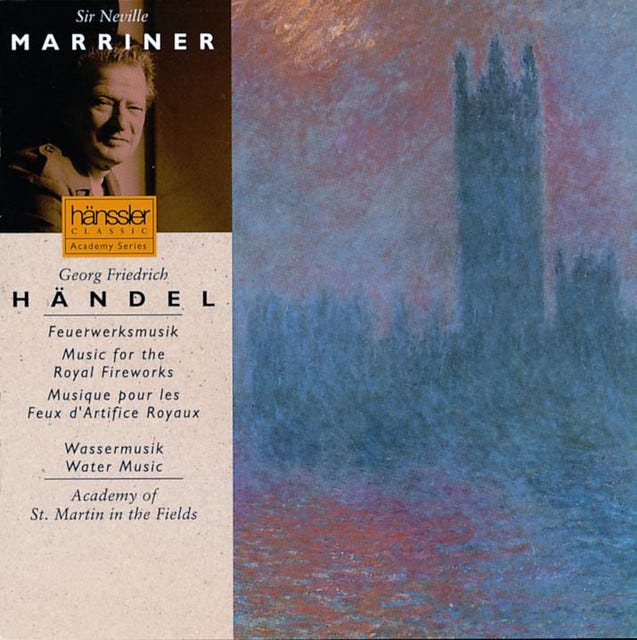
Sir Neville Marriner’s first recording with the Academy of St. Martin-in-the-Fields from 1971 on Decca is perfectly fine, but his later 1993 recording with the ASMF on the haenssler label is even better. What’s the difference? First better sound, with more dynamic range and better perspective. But mostly it sounds like Marriner has incorporated some historically informed practices into this version, and it is an altogether more flexible and more exciting performance. Modern instruments are used, but given how they approach the piece, the fuller and more rounded sound pays dividends. Marriner uses some marginally quicker tempos than earlier, but we still hear the characteristically smooth ASMF strings and certainly more vibrato than you would hear in a period instrument recording. Altogether, this has to be one of my favorite Marriner recordings. The Réjouissance is really rollicking here. I will forgive Marriner for taking the Menuet so slow. I should note the brass fanfare (with what sounds like three trumpets) between the slower opening and the quicker section in the Overture is splendid.
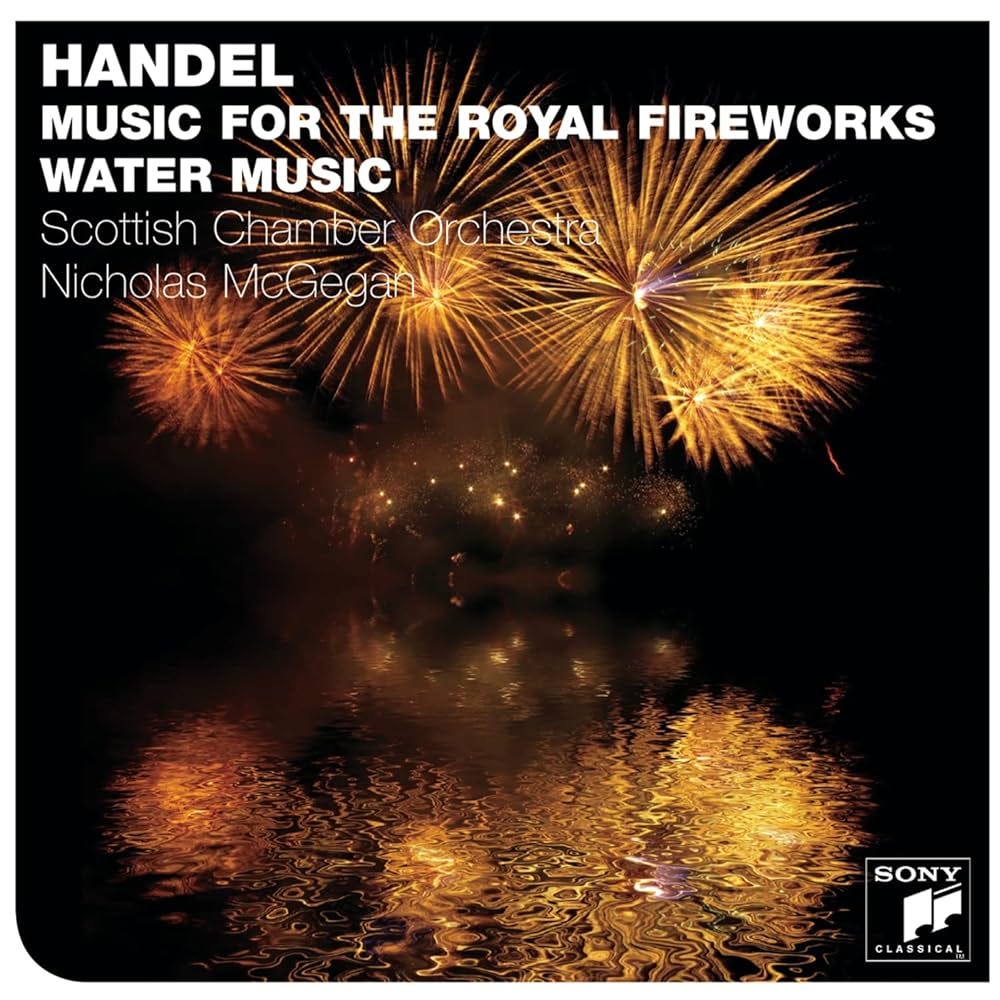
An unexpected find was Nicholas McGegan’s 1998 recording with the Scottish Chamber Orchestra on Classic FM/Conifer/Sony. The vibrancy and joy come bursting forth from the opening chords, and there is a forward impetus I love. Nothing extreme, but McGegan definitely shows his place as one of the most accomplished period instrument conductors here. The horns and trumpets are simply fantastic (some of the trills are amazing), and this is one of the best versions of the opening movement Overture I’ve heard. The SCO has long been one of the foremost chamber orchestras, and while I presume they use modern instruments, this could easily be taken for a period instrument performance. It is never less than fresh and moving, and I actually like the rather up-close sound.
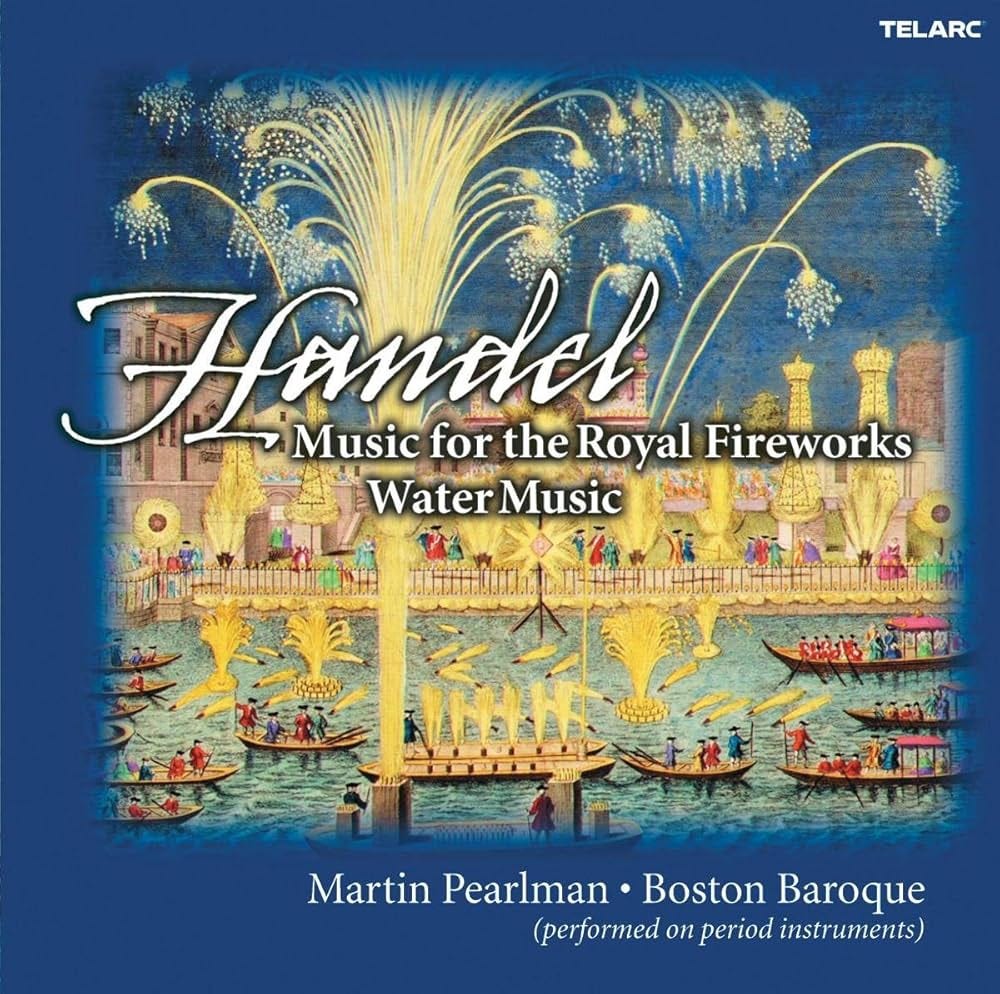
Boston Baroque, founded in 1973 by harpsichordist and conductor Martin Pearlman, recorded a wide swath of baroque repertoire in their years recording for Telarc, and their 2002 recording of Fireworks is one of my favorites. Made in the superb acoustic of Mechanics Hall in Worcester, MA (USA), the sound is warm, clear, and inviting. The broad opening gives way to a jauntier remainder of the Overture and listen to just how well this is played by the brass and strings. Tempos are in the mainstream for recordings in the past few decades, and Pearlman coaxes from Boston Baroque a flowing lyricism in the central movements. Overall, this is a very satisfying version and of course it is paired with Water Music.
![Handel – Zefiro, Alfredo Bernardini – The Musick For The Royal Fireworks – CD (Album, Reissue, Stereo), 2015 [r23549231] | Discogs](https://substackcdn.com/image/fetch/$s_!uXbF!,f_auto,q_auto:good,fl_progressive:steep/https%3A%2F%2Fsubstack-post-media.s3.amazonaws.com%2Fpublic%2Fimages%2F45635e56-af8a-405d-ba1c-8fc024dcd07d_599x538.jpeg "Handel – Zefiro, Alfredo Bernardini – The Musick For The Royal Fireworks – CD (Album, Reissue, Stereo), 2015 [r23549231] | Discogs")
Another terrific recording is the 2006 Fireworks by the Italian period instrument group Zefiro Ensemble directed by Alfredo Bernardini on the Outhere label. I was quite enthusiastic about this release when it first came out, and it remains a favorite of mine. The drumroll at the beginning is unique, and while the brass predominates the opening, Zefiro maintains a delightful lilt and jaunty mood throughout the Overture, and I love how the horns cut through with some spice. Dynamics are also carefully controlled, creating tension and some thrilling moments. The Bourrée is played about as well as I’ve ever heard it, never getting bogged down. The more pastoral La Paix is not overly sentimental, which I like. La Réjouissance builds to a proper weight and bounce, while also keeping a light touch. All in all, this is a superb version that has style and panache.
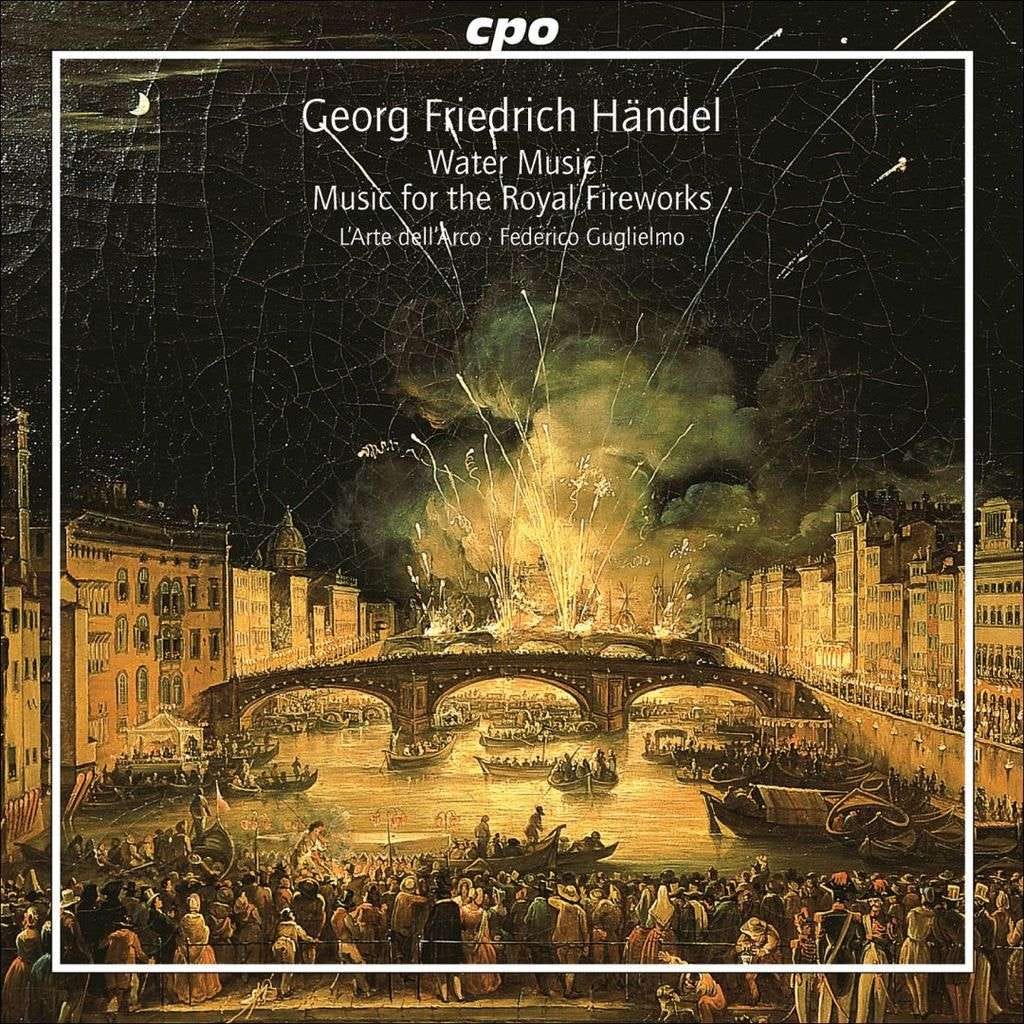
The final recording on my recommended list is by the group L’Arte dell’Arco under the direction of Federico Guglielmo released in 2008 on the CPO label. This may actually be my favorite of the whole lot, in that the group uses more improvisation than usual, and while on some recordings such deviations don’t work, here they most certainly do. Yes, this is a period instrument band, but at least on this recording the sound they produce is quite full and immediate. Tempos are in the mainstream, but I am fond of how Guglielmo lets the music swell, rise, and fall, and how the musicians seem free to use ornamentation and it really works. In the Overture, when the quick trumpet fanfares come through beginning at around 2’20”, I love how they pierce through the strings, and while the horns are a bit further recessed, they can also be heard to good effect. The Bourrée and La Paix receive more gentle treatment than from Zefiro but are played beautifully. La Réjouissance packs a nice punch and moves along quite nicely, just listen to the horns braying. The sound has depth and warmth, and while balance is not always ideal, it is similar to what you might hear in a live performance. Strongly recommended.
You May Also Enjoy These Recordings of Music for the Royal Fireworks
Berlin Philharmonic / Kubelik (DG 1963)
English Chamber Orchestra / Leppard (Philips/Universal 1971)
ASMF / Marriner (Decca 1971)
Collegium Aureum (DHM 1971)
English Chamber Orchestra / Richter (Archiv 1973)
Paillard Chamber / Paillard (Warner 1973)
Cleveland Symphonic Winds / Fennell (Telarc 1978)
Stuttgart / Münchinger (Decca 1982)
English Baroque Soloists / Gardiner (Philips/Universal 1984)
Concertgebouw Chamber Players / Preston (Decca 1991)
London Classical Players / Norrington (Erato 1996)
Tafelmusik / Lamon (Sony 1997)
Linde Consort / Linde (Warner 1999)
Concert Spirituel / Niquet (Glossa 2002)
Collegium 1704 / Luks (Accent 2024)
We have reached the end of another installment in our Building a Collection series. Thank you once again for reading! I hope you can join me next time when we discuss #113 on our list: Gioachino Rossini’s William Tell Overture. See you then!
________________
Notes:
“British Citizen by Act of Parliament: George Frideric Handel”. Parliament.uk. 14 April 2009. Archived from the original on 4 May 2012. Retrieved 13 April 2012.
Burrows, Donald (1994). Handel. Oxford University Press. ISBN 0-19-816470-X.
Dean, Winton; Knapp, John Merrill (1987). Handel’s Operas, 1704–1726. Vol. 1. Oxford: Clarendon Press. ISBN 0-19-816441-6.
Dean, Winton (1982). The New Grove Handel. New York: W.W. Norton & Co. ISBN 0-393-30086-2.
Dent, Edward Joseph (2004). Handel. R A Kessinger Publishing. ISBN 1-4191-2275-4.
Fraser, Antonia; et al. (2005). Gunpowder Plots: A Celebration of 400 Years of Bonfire Night. London: Penguin Books. ISBN 978-0-14-190933-2.
Hicks, Anthony (2013), “Handel, George Frideric”, Grove Music Online, Oxford University Press, doi:10.1093/gmo/9781561592630.article.40060, ISBN 978-1-56159-263-0, archived from the original on 10 January 2022, retrieved 10 January 2022.
Holdsworth, Rachel (March 2013). “Fire And 18th Century Traffic Jams: Handel And The Royal Fireworks”. londonist.com. Retrieved 3 December 2017.
Hunter, David (2015). The Lives of George Frideric Handel. Boydell & Brewer. p. 85. ISBN 978-1-7832-7061-3.
Lang, Paul Henry (1966). George Frideric Handel. New York: W.W. Norton & Co. LCCN 66011793/MN/r842.
Levy, Imogen (2 June 1953). “Guide to the Coronation Service”. Westminster Abbey. Archived from the original on 5 December 2010. Retrieved 28 May 2012.
Mainwaring, John (1760). Memoirs of the Life of the Late George Frederic Handel. London: Printed for R. and J. Dodsley.
Marx, Hans Joachim (1998). Händels Oratorien, Oden und Serenaten: Ein Kompendium. Göttingen: Vandenhoeck & Ruprecht. ISBN 3-525-27815-2.
Preface notes and score, Fr. Chrysander, Water-Music, Firework-Music, Concertos and Double Concertos for Full Orchestra by George Frederic Handel, reprinted 1965, Gregg Press, New Jersey, US.
Schoelcher, Victor (1857). The Life of Handel. Translated by Lowe, James. London: Robert Cocks & Co.
Simon, Jacob (1985). Handel, a celebration of his life and times, 1685–1759. National Portrait Gallery (Great Britain). p. 212.
Young, Percy Marshall (1966). Handel. New York: David White Company.
https://www.goodreads.com/author/quotes/4149202.Georg_Friedrich_H_ndel?scrlybrkr=e9ebcefe
https://en.wikipedia.org/wiki/George_Frideric_Handel
https://en.wikipedia.org/wiki/Music_for_the_Royal_Fireworks?scrlybrkr=e9ebcefe#
It needs an extra movement: music to fight fires by! 😁
Thank you John. In my opinion you could also consider the Robert King's version on Hyperion label. A very good interpretation of the original score.