Building a Collection #107: Strauss' Der Rosenkavalier
With recommended recordings

Building a Collection #107
Der Rosenkavalier Op. 59
By Richard Strauss
________________
“Bear in mind that you are not making music for your own pleasure, but for the pleasure of your audience.”
-Richard Strauss
Welcome back! At #107 in our count “up” is the beloved opera Der Rosenkavalier, by Richard Strauss. Der Rosenkavalier (The Rose-Bearer) is the most popular Strauss opera and was a rousing success from the time of its premiere. While written in 1909 and 1910, in the opera Strauss liberally used waltzes and other more melodic and tonal music redolent of an earlier time period. It is rich, full-fat, and delightfully enjoyable music and helped make Strauss enormously popular around the world.
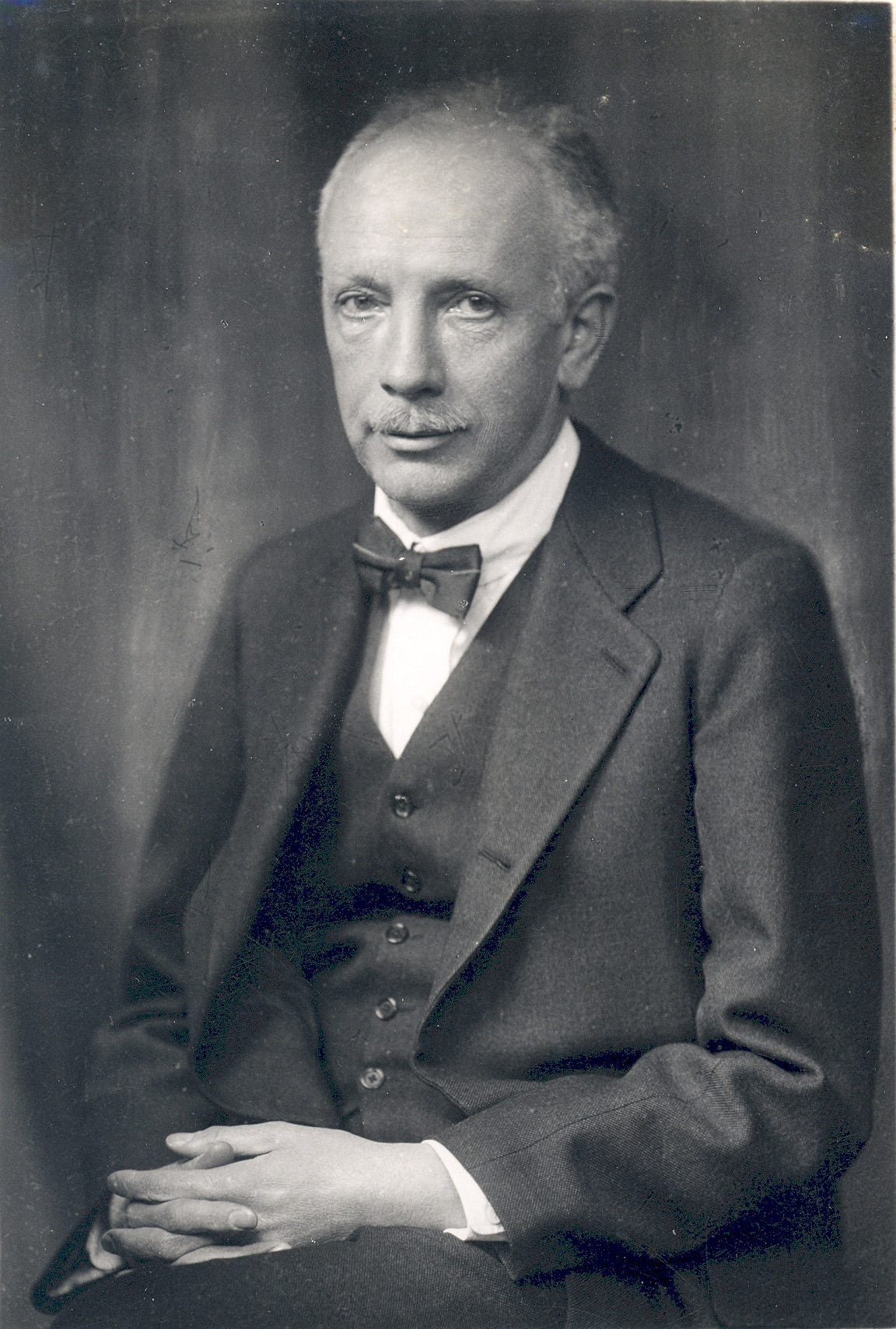
Richard Strauss
Richard Georg Strauss was born in Munich in 1864, the son of the principal horn player in the Munich Court Orchestra. No relation to the Strauss family of Vienna waltz fame, Richard showed musical aptitude early on and took lessons in piano, violin, music theory, harmony, and orchestration. By the time Strauss reached adulthood, he was producing musical compositions of great maturity and sophistication. His father was one of his primary teachers, but he also learned under Ludwig Thuille, a family friend. Overall, his musical education was conservative in style. At the age of 17, he published his Serenade for 13 Winds, Op. 7, which led the conductor Hans von Bülow to declare Strauss “the most striking personality since Brahms.” Von Bülow would prove important in giving Strauss his first assistant conductor position. Through these early developments in his career, Strauss would grow to admire the writings of Schopenhauer and Nietzsche, and the music of Wagner and Liszt. Strauss would go on to have a very long composing and conducting career, which would take him all over Europe and to the United States.
The influence of Wagner in particular on Strauss’s style was to be significant, but at least initially his musically conservative father forbade him from studying it. The music of Richard Wagner was viewed with deep suspicion by the elder Strauss, and it was not until the age of 16 that Richard was able to obtain a score of Tristan und Isolde. In 1882 he went to the Bayreuth Festival to hear his father perform in the world premiere of Wagner’s Parsifal. There are surviving letters to his father detailing his seemingly negative impression of Wagner and his music. Later in life, Strauss would admit that he deeply regretted his conservative hostility to Wagner’s music.
Beginning with the “symphonic fantasy” Aus Italien in 1886, Strauss would begin a phase of his career where he would compose many of the most extraordinary tone poems in classical music history. It became evident that Strauss had a natural affinity and ability to write music for orchestra. Strauss brought the tone poem to its apogee with such works as Don Juan (1888-89), Ein Heldenleben (A Hero’s Life)(1897-98), and Also sprach Zarathustra (1895-96). Strauss possessed a supreme gift for using all the colorful possibilities of the orchestra to dramatic effect, as few ever have. Other well-known Strauss tone poems include Till Eulenspiegels lustige Streiche (Till Eulenspiegel’s Merry Pranks), Eine Alpensinfonie (An Alpine Symphony), Sinfonia Domestica, Don Quixote, Metamorphosen, and Tod und Verklarung (Death and Transfiguration).
Although Strauss grew up in a time when music was changing, with some composers such as Wagner and Bruckner looking ahead by using more groundbreaking styles, Strauss was more conservative. Strauss idolized Mozart and Brahms. Of Mozart, Strauss said, “The most perfect melodic shapes are found in Mozart; he has the lightness of touch which is the true objective.” Of course, Strauss’ music does not sound like Mozart, but he certainly had a gift for melody not unlike Mozart. Strauss knew Brahms personally and actually assisted in the preparation for the world premiere of Brahms’ Symphony no. 4 during his time at the Meiningen Court Orchestra. Strauss would later refer to this time as his “BrahmsschwärmereiIn” or “Brahms Adoration”. One of the reasons he revered Brahms was because Brahms himself was also a conservative composer in the sense of paying homage to past masters with rich, melodic themes and traditional structures.
In his use of logic and structure, Strauss had the goal of creating music that tells a story and has meaning. Strauss was one of the most “programmatic” composers in history, in other words he composed music that was written to describe extra-musical things. The music follows a narrative and is meant to be descriptive or to evoke a scene or a mood through a theme or motif. This is one of the most defining features of Strauss’ music, as he himself said, “I want to be able to depict in music a glass of beer so accurately that every listener can tell whether it is a Pilsner or a Kulmbacher.” As such, the music of Strauss is very accessible, relatively easy to follow, and is decidedly tonal in nature. Strauss did not care to be avant-garde, at least not until the latter part of his career. Strauss did face critics that called his music “kitsch”, meaning music which is intended to evoke emotions, sentimentality and positive feelings, but which lacks authenticity and which is superficial and shallow. The accusation that Strauss’ music is kitschy is unfair and inaccurate in my opinion. In any case, if Strauss composed music full of meaning easily accessible to the common listener, what is wrong with that? Aaron Copland would follow a similar path, and that worked out well. Strauss’ development of the symphonic poem in itself was a significant departure from tradition, even though Tchaikovsky was doing something similar.
Around the turn of the century, Strauss became the director of Berlin’s Hofoper, and thus his interests turned more toward composing opera. After writing those many tone poems, for years Strauss had been gradually moving toward writing more opera. In the early years of the century, Strauss would compose some of his best loved operas including Salome (1903-05), Elektra (1906-08), and Der Rosenkavalier (1909-10). He would continue with several other critically acclaimed operas: Ariadne auf Naxos, Die Frau ohne Schatten, Die ägyptische Helena, and Arabella. From 1919 to 1924, Strauss was the principal conductor of the Vienna State Opera, and in 1920 he co-founded the Salzburg Festival with Max Reinhardt (incidentally the character of Uncle Max in Rodgers and Hammerstein’s The Sound of Music is based on Reinhardt) and set designer Alfred Rolle. The Salzburg Festival would go on to become one of the most renowned music festivals in the world and is still going strong over one hundred years later. Strauss would compose more operas during wartime, which were somewhat more adventurous musically, and they were also well-received.
Strauss’ creative output dipped somewhat as he aged, but he then had an “Indian Summer” period from 1942 until his death in 1949 during which he composed several of his most moving and influential pieces including Metamorphosen, Oboe Concerto, Horn Concerto no. 2, and his heartbreaking Four Last Songs.
The latter part of Strauss’ career became embroiled with World War II and more particularly with the Nazi regime in Germany. Strauss’ relationship with Nazism is complicated. In 1933, Strauss was appointed to two positions within Nazi Germany, first as director of the Reichsmusikkammer (Reich Chamber of Music), which promoted “good German music” which was composed by Aryans and seen as consistent with Nazi ideals, while suppressing other, “degenerate” music, which included atonal music, jazz, and, especially, music by Jewish composers. The Chamber was founded in 1933 by Joseph Goebbels as part of the Reich Chamber of Culture, and it operated until the fall of the Nazi Germany in 1945. Strauss was also appointed principal conductor of the Bayreuth Festival, which was founded by Richard Wagner and mostly celebrated his music, after Arturo Toscanini resigned as a protest against the Nazi party. While Strauss has been criticized often for his apparent collaboration with the Nazis, his daughter-in-law was Jewish and it seems clear that much of his cooperation with the authorities was done to save her life and the lives of her children (Strauss’ Jewish grandchildren).
Strauss was essentially apolitical in his views, and he did not believe that art and politics should mingle. At the outbreak of World War I, Strauss was asked to sign a manifesto from German artists supporting the role of Germany in the war. Several colleagues signed it, but Strauss refused, noting in his diary “Declarations about war and politics are not fitting for an artist, who must give his attention to his creations and his works.”
The truth is Strauss never joined the Nazi party, and he carefully avoided situations where he would be forced to interact with Nazi officials. Strauss’ cooperation was motivated by his hope that Hitler would elevate German art and music, and because Strauss wanted to protect the reputation of composers such Mahler, Debussy, and Mendelssohn whose music had been banned. In 1933, Strauss wrote in his private notebook:
“I consider the Streicher–Goebbels Jew-baiting as a disgrace to German honour, as evidence of incompetence—the basest weapon of untalented, lazy mediocrity against a higher intelligence and greater talent.”
Because Strauss continued to rise in international prominence, the Nazis could not simply discard him. Ultimately, Strauss’ decision to remain apolitical as the head of the Reich Chamber of Music and Bayreuth was not tenable. Strauss is quoted as saying at the time,
“In November 1933, the minister Goebbels nominated me president of the Reichsmusikkammer without obtaining my prior agreement. I was not consulted. I accepted this honorary office because I hoped that I would be able to do some good and prevent worse misfortunes, if from now onwards German musical life were going to be, as it was said, “reorganized” by amateurs and ignorant place-seekers.”
Strauss privately scorned Goebbels and called him “a pipsqueak”.
In 1935, Strauss comic opera Die schweigsame Frau premiered in Dresden, an opera that he had worked with his Jewish friend and librettist Stefan Zweig. Because Strauss insisted on Zweig’s name being given equal billing for the opera, the opera was boycotted by the Nazi authorities and later banned after only a few performances. Strauss wrote a letter to Zweig saying,
“Do you believe I am ever, in any of my actions, guided by the thought that I am ‘German’? Do you suppose Mozart was consciously ‘Aryan’ when he composed? I recognise only two types of people: those who have talent and those who have none.”
The letter was intercepted by the Nazi authorities, and Strauss was dismissed from his post as head of the Reich Chamber of Music. Strauss thereafter used his considerable influence to prevent his daughter-in-law and grandchildren from being taken to a concentration camp. Sadly, Strauss could not save other members of his extended family, and some perished in the gas chambers.
In 1945, Strauss completed Metamorphosen, a piece written for 23 strings, in what is his most emotional and heart-wrenching work. Strauss poured out into the music his profound sorrow at the destruction of German artistic institutions including the bombing of every great opera house in Germany. At the end of the war, he wrote:
“The most terrible period of human history is at an end, the twelve-year reign of bestiality, ignorance and anti-culture under the greatest criminals, during which Germany’s 2000 years of cultural evolution met its doom.”
Strauss is derided in some musical circles because he became quite formulaic in his symphonic poems and operas, and indeed some have the same characteristics. Some argue that Strauss did not grow as a composer as he aged, but rather recycled his old ideas, and just made them more sensationalistic and bombastic. Personally, I believe this is complete rubbish, reflecting snobbery and elitism. If you don’t like Strauss or any other composer, that is your preference. But the fact remains that Strauss’ music is still among the most often played music in the classical music world, and if it happens to lift your spirits and make you feel good, then that is a gift.
Der Rosenkavalier
The opera Der Rosenkavalier was a joint creation of Strauss and dramatist Hugo von Hofmannsthal, and is an original story. What they created is one of the most sophisticated and witty operas ever, both in terms of content and tone. The opera is cast in three acts and is set in the 18th century.
By the time Strauss turned to Der Rosenkavalier, he had already explored more adventurous and dissonant ground with his operas Salome and Elektra, so the more conservative tone of Der Rosenkavalier is a hearkening back in time. Even so, Strauss’ orchestration is rich in textures, melodies, and color, as he employs subtle and effective sonorities throughout. His frequent use of waltzes is a sentimental touch designed to fit the time period. The waltzes used in each act are some of Strauss’ most sumptuous orchestral works, and they often are heard on their own in the concert hall or in the more formal Rosenkavalier Suite (1945). Probably the most famous music from the opera takes place in Act III in a trio featuring the characters Octavian, Sophie, and Marschallin where Strauss created music which ideally suits the emotions of young love combined with mature restraint.
Der Rosenkavalier premiered in 1911 in Dresden and was an immediate smash hit with audiences. The original language is German, and it has also been translated into Italian and English for some performances in those countries. While Strauss tried to capitalize on its success with later operas, none of them reached the heights of Der Rosenkavalier, and it is arguably the high point of his career.
Below is a list of the main characters in the opera:
The Marschallin, Princess Marie Thérèse von Werdenberg - soprano
Octavian, Count Rofrano, her young lover - mezzo-soprano
Baron Ochs auf Lerchenau, the Marschallin’s cousin - bass
Sophie von Faninal - high soprano or soubrette
Here is the synopsis of the opera from The Metropolitan Opera:
Act I
Vienna, during the last years of the Habsburg Empire. The Marschallin, Princess von Werdenberg, has spent the night with her young lover, Octavian, Count Rofrano. He hides when a page brings breakfast, then again when loud voices are heard in the antechamber. The unexpected visitor is the Marschallin’s country cousin, Baron Ochs auf Lerchenau. Bursting into the room, he brags about his amorous conquests and his upcoming marriage to Sophie von Faninal, the young daughter of a wealthy bourgeois. When he asks the Marschallin for advice as to which cavalier could present Sophie with the traditional silver engagement rose, she suggests Octavian—who suddenly, to avoid discovery, emerges from his hiding place disguised as a chambermaid. The baron instantly starts to make advances towards “Mariandel,” who quickly makes her escape as the room fills with the daily crowd of petitioners and salespeople. Among them is a singer, whose aria is cut short by Ochs’s wrangling with a lawyer over Sophie’s dowry. The Baron hires a pair of Italian intriguers, Annina and Valzacchi, to locate the shy servant girl.
When the room is cleared, the Marschallin, appalled by the thought of the rude Ochs marrying the innocent young girl, muses on her own waning youth. The returning Octavian is surprised to find her in a distant and melancholy mood. He passionately declares his love but she can only think about the passing of time and tells him that one day he will leave her for a younger woman. Hurt, he rushes off. The Marschallin tries to call him back, but it is too late. She summons her page and sends Octavian the silver rose.
Act II
On the morning of her engagement, Sophie excitedly awaits the arrival of the cavalier of the rose. Octavian enters and presents her with the silver rose on behalf of the Baron. Sophie accepts, enraptured, and the two young people feel an instant attraction to each other. When Ochs, whom Sophie has never met, arrives, the girl is shocked by his crude manners. Ochs goes off to discuss the wedding contract with Faninal, and Sophie asks Octavian for help. They end up embracing and are surprised by Annina and Valzacchi, who summon Ochs. The outraged Octavian grazes the Baron’s arm with his rapier and Ochs melodramatically calls for a doctor. In the ensuing confusion, Sophie tells her father that she will not marry the Baron, while Octavian enlists Annina and Valzacchi to participate in an intrigue he is hatching. When Ochs is alone, nursing his wound with a glass of wine, Annina, sent by Octavian, appears with a letter from “Mariandel,” asking Ochs to a rendezvous. Intoxicated with his own charm, the Baron is delighted at the prospect of a tête-à-tête. When he refuses to tip Annina, she determines to get even.
Act III
At Octavian’s instigation, Annina and Valzacchi prepare the back room of a dingy inn for Ochs’s rendezvous. Before long, the Baron and “Mariandel” arrive for a private supper. As she coyly leads him on, grotesque apparitions pop out of windows and secret panels, terrifying the Baron. Annina, disguised as a widow, runs in crying that Ochs is the father of her many children. When the police appear, Ochs claims that “Mariandel” is his fiancée. The arriving Faninal, furious at his future son-in-law’s behavior, summons Sophie to set matters straight, then faints and is carried off. At the height of the confusion, the Marschallin enters. Octavian takes off his disguise and the Marschallin explains to Ochs that it was all a farce. He finally admits defeat and leaves, pursued by the innkeeper and various other people who all demand payment of their bills. Left alone with Octavian and Sophie, the Marschallin laments that she must lose her lover so soon but nevertheless accepts the truth. She gives the bewildered Octavian to Sophie and quietly leaves the room. The young lovers realize that their dream has come true.
Recommended Recordings
The success of Der Rosenkavalier recordings hinges on the quality of the singing of the principals in the performance, but also on the conducting, as the orchestral music plays such an essential role in this opera. As always in this series, the recording recommendations below go from the oldest to newest chronologically.
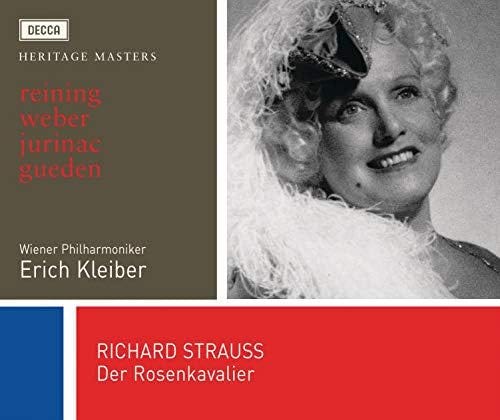
The first recording I would like to recommend is the classic 1954 account by Erich Kleiber and the Vienna Philharmonic and Vienna State Opera Chorus available from Decca and Naxos. This is a mono studio recording, and the sound is generally not great even for its time, but it is the performance that matters. The main roles are taken by Maria Reining, Sena Jurinac, Hilde Güden, and Ludwig Weber. While Kleiber’s conducting is a highlight with his light and pointed direction being somewhat more like Mozart than Strauss. But I find it delightful that Kleiber doesn’t wallow in the lushness of the score but keeps it lighter and flowing. Jurinac and Güden are both charming, and while Reining is not in quite as full voice as some other Marschallins on this list, her characterization is fully mature and effective.
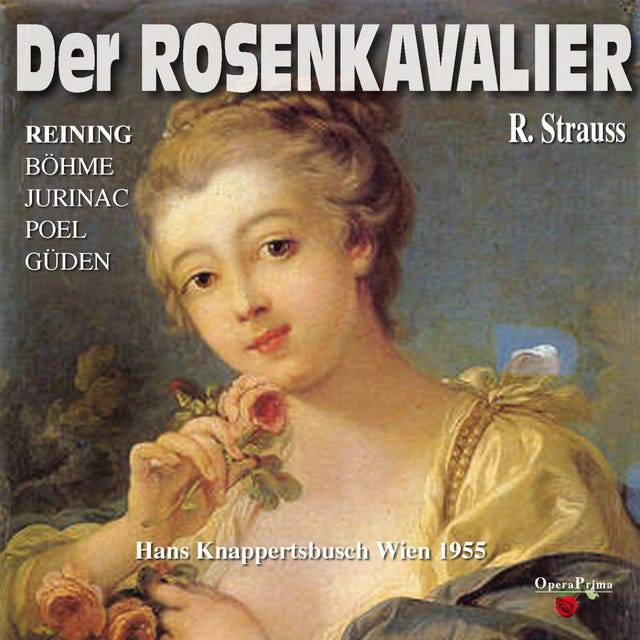
Sometimes Hans Knappertsbusch could be too plodding, too slow, and lacking in the necessary impetus, but his 1955 live mono recording of Der Rosenkavalier with the Vienna Philharmonic and Vienna State Opera Chorus on RCA as well as Golden Melodram is a beautiful example of how great Knappertsbusch could be relaxed and flexible in the best way possible. The main roles are taken by Maria Reining, Sena Jurinac, Hilde Güden, and Kurt Böhme. The female singers are just as effective as on the above Kleiber recording, and Böhme is endearingly idiomatic. The sound is marginally better than the Kleiber, but coughs and noises from the audience can be heard. For me, it is not an issue but might be for some listeners.
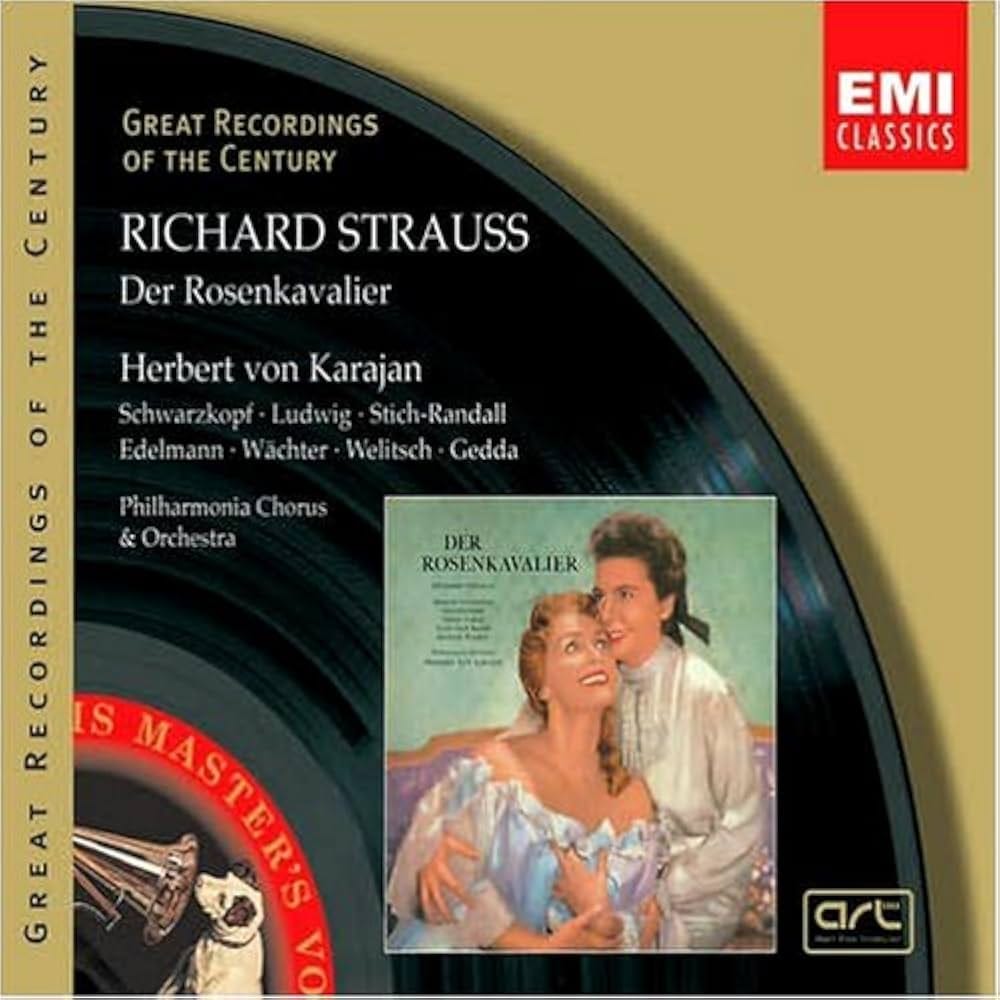
The next recording is the venerable 1956 recording by Hebert von Karajan on EMI (Warner) featuring the Philharmonia Orchestra and Chorus joined by the Choruses of Loughton High School for Girls and Bancroft’s School. The main soloists are Elisabeth Schwarzkopf, Christa Ludwig, Teresa Stich-Randall, Otto Edelmann, Eberhard Wächter, Paul Kuen, Kersten Meyer, and Nicolai Gedda. Ludwig is especially successful here, as is Stich-Randall, both singing with distinction. Gedda does a fine job, as long as you don’t mind his somewhat nasally projection. Schwarzkopf is often seen as the biggest asset in this recording, and she is excellent of course, although I don’t think she is the finest Marschallin on record. In my view Karajan is the real star here, leading a reading which is refined, lustrous, and detailed. His is a more classical view of the work, perhaps not surprising coming from a time period where he conducted a lot of Mozart.
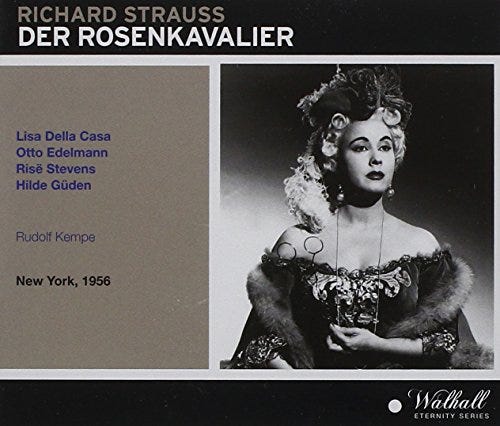
Rudolf Kempe’s live recording from 1956 of Der Rosenkavalier with the Orchestra and Chorus of the Metropolitan Opera on the Walhall label is recommended, and even though it is a very old mono recording, the performance is just so good it must be on the list. Kempe is certainly one of the big stars here, he conducts Strauss with vitality, sparkle, and wit. The cast is excellent, with Lisa Della Casa, Otto Edelman, Risë Stevens, Hilde Gueden, and the rest of the supporting cast is outstanding too. Of course, this music is luxurious and beautiful, and the Met orchestra plays very well. While there are better sounding Rosenkavaliers, there are none with more personality and charm.
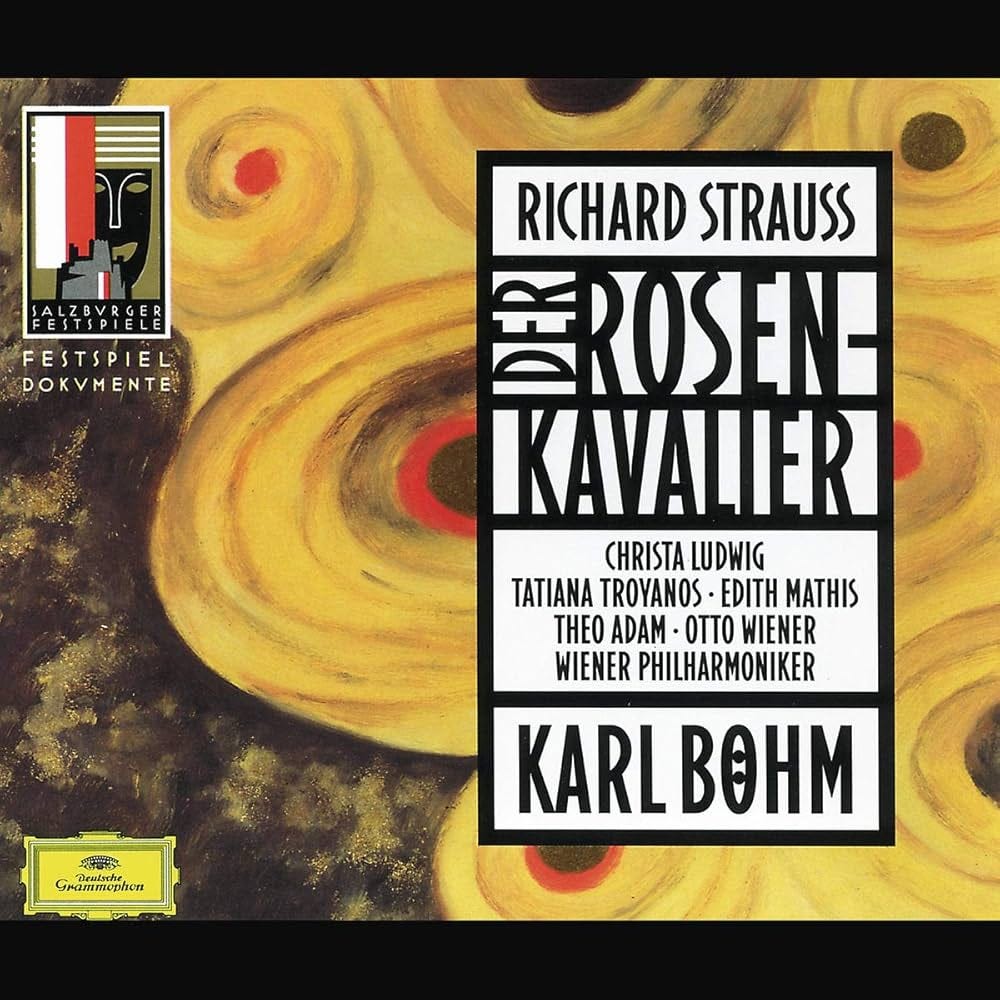
Moving ahead to 1969 we have the live stereo recording of Der Rosenkavalier from Karl Böhm with the Vienna Philharmonic and the Vienna State Opera Chorus on Deutsche Grammophon. The four main roles are sung by Christa Ludwig, Tatiana Troyanos, Edith Mathis, and Theo Adam. As is often the case with live recordings, we can hear some coughing and stage noises and movements, but still for a live recording (from the Salzburg Festival) it is very good. Ludwig makes an excellent Marschallin, even rivaling Schwarzkopf on the classic Karajan set. Troyanos is believable as the boyish Octavian, and Mathis brings a lot of personality as well as a good voice to Sophie. Böhm was at his best conducting live in my opinion, and this instance is no exception. He has some extra juice in the tank, and while he certainly never goes over the top, I enjoy the sparkle, wit, and charm he brings out of the VPO. The VPO sounds terrific.
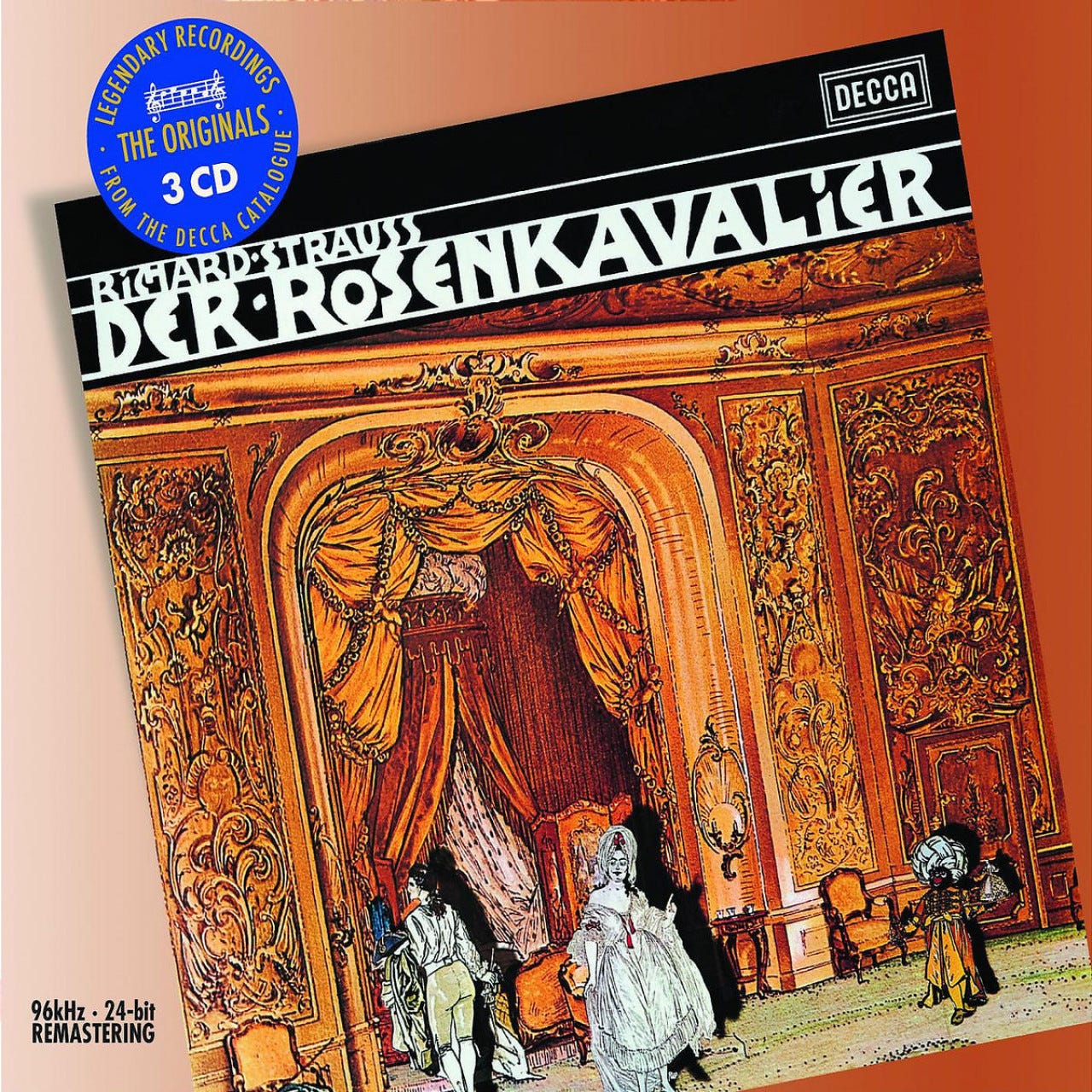
Also, from 1969 we have the outstanding studio recording of Der Rosenkavalier from Sir Georg Solti and the Vienna Philharmonic and Vienna State Opera Chorus on Decca. First, the sound here is superior to any of the recordings that predate it, being made in the old Sofiensaal which boasted exceptional acoustic qualities. The main soloists are Régine Crespin, Yvonne Minton, Helen Donath, and Manfred Jungwirth. I really like Crespin’s Marschallin, she sounds every bit the part in terms of voice and vocal acting. Minton is an effective and believable Octavian, and Donath handles Sophie’s role with grace and seeming ease. While I have some reservations about Jungwirth as Ochs, that is hardly a stain on the set. There is the bonus of having Luciano Pavarotti here as the Italian Singer, and he is simply the best on record in his small, but significant contribution. This is certainly one of the top two or three recordings of this opera.
Der Rosenkavalier on Video
The great Carlos Kleiber recorded Der Rosenkavalier twice on video, the first time in 1974 with the Munich Philharmonic for Deutsche Grammophon, and the second time in 1994 with the Vienna Philharmonic and Vienna State Opera Chorus again for Deutsche Grammophon. While the older performance finds Kleiber more energized and propulsive as a conductor, it is the later recording I am recommending due to the better overall quality of singing and a marginal preference for the luster of the VPO. Kleiber is slightly more relaxed here, not a bad thing with this opera, but his insights are deeper and more considered. The cast includes Anne Sofie Von Otter, Felicity Lott, Barbara Bonney, and Kurt Moll. Bonney and Moll are two of my all-time favorite singers and they both are superb here, Von Otter sings gloriously, and Lott is completely satisfying as well. Kleiber lives up to his usual very high standard. This would be my first choice if you want the opera on video.
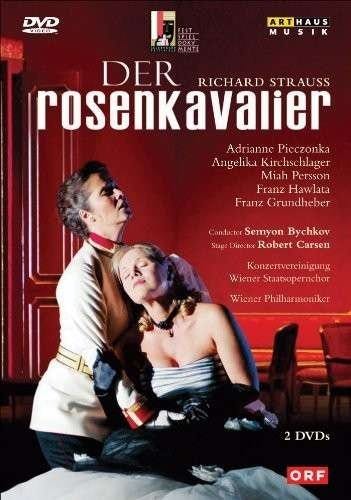
The other video production I like is the 2004 Salzburg Festival recording by Semyon Bychkov and the Vienna Philharmonic and the Concert Chorus of the Vienna State Opera on Arthaus. The staging is not completely traditional, but on musical and artistic grounds this is an excellent performance. The main cast includes Adrianne Pieczonka, Angelika Kirchschlager, Franz Hawlata, and Miah Persson. Kirchschlager and Persson are outstanding in their roles, really nearly ideal in their portrayals of Octavian and Sophie. Bychkov is so impressive here, and I guess I didn’t fully realize what a superb opera conductor he is. There is a lot of energy and virtuosity from the VPO, and I quite like this as a more modern take on the opera.
Other Der Rosenkavalier Recordings You May Like
Metropolitan Opera / Reiner (Walhall 1949)
Vienna Philharmonic / Krauss (Guild 1953)
Covent Garden / Solti (Pristine 1959)
Vienna Philharmonic / Varviso (Decca 1964)
Vienna Philharmonic / Bernstein (Sony 1971)
Bavarian State Opera / C. Kleiber (Orfeo 1973)
Munich Philharmonic / C. Kleiber (DG 1974 DVD)
Rotterdam / de Waart (Philips 1976)
Vienna Philharmonic / Karajan (DG 1982)
Dresden / Haitink (EMI/Warner 1990)
Munich Philharmonic / Thielemann (Decca 2009)
Metropolitan Opera / Weigle (Decca 2017)
Berlin Staatskapelle / Mehta (Arthaus 2020)
As always, thank you for reading. You are the reason I keep putting in the time and effort for this series. I hope you get a chance to hear Der Rosenkavalier, it is a beautiful opera which I think you will enjoy.
Join me next time for #108 in the series when we discuss Max Bruch’s Violin Concerto no. 1. See you then!
_________________
Notes:
Boyden, Matthew (1999). Richard Strauss. Boston, Massachusetts: Northeastern University Press.
Brennan, Gerald. Reisig, Wayne Gerard. Schrott, Allen. Woodstra, Chris. All Music Guide to Classical Music, The Definitive Guide. All Media Guide. Pp. 1321, 1331. Backbeat Books, San Francisco. 2005.
Culshaw, John. Putting the Record Straight. Viking Press. 1982. Pg. 204.
Gilliam, Bryan; Youmans, Charles (2001). “Richard Strauss”. Grove Music Online.
Kennedy, Michael (1999). Richard Strauss: Man, Musician, Enigma. Cambridge, England: Cambridge University Press. ISBN 978-0-521-02774-8.
Moore, Ralph. Richard Strauss’s Der Rosenkavalier: A survey of all ten studio recordings and selected live performances. https://www.musicweb-international.com/classrev/2018/Aug/Strauss_Rosenkavalier_survey.pdf.
Reuth, Ralf Georg (1993). Goebbels. Harcourt Brace. ISBN 9780151360765. times when an artist of my rank has to ask a pipsqueak.
“Richard Strauss – Tone-Poem, Death and Transfiguration, Opus 24” Archived 2008-04-15 at the Wayback Machine (and other works), Old And Sold.
Richard Strauss & Romain Rolland (1968). Rollo Myers (ed.). Richard Strauss & Romain Rolland: Correspondence. Calder, London.
Youmans, “The Role of Nietzsche in Richard Strauss’ Artistic Development”, 339.
https://www.azquotes.com/author/20851-Richard_Strauss
https://en.wikipedia.org/wiki/Reich_Chamber_of_Music
https://en.wikipedia.org/wiki/Richard_Strauss
https://en.wikipedia.org/wiki/Der_Rosenkavalier?scrlybrkr=40ad99ec#